



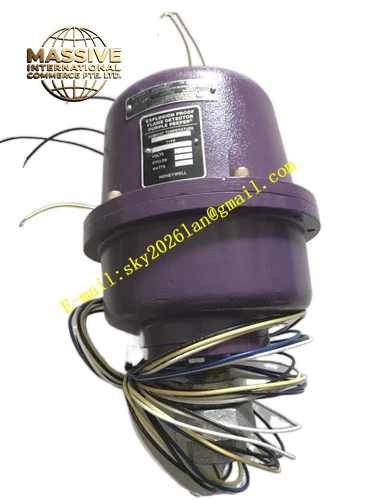
Description
Honeywell C7012F1052
Technical Specifications
- Detection band: 190–270 nm ultraviolet
- Detection response time: ≤0.2 seconds
- Output signal: SPDT dry contact, contact rating 2 A / 220 V AC
- Supply voltage: 220 V AC 50 Hz
- Operating temperature: -40 °C to +80 °C
- Detection angle: 90° conical field of view
- Protection rating: IP65
Functional Features UV photosensitive tube detects flame-specific ultraviolet radiation, immune to ambient visible light and infrared thermal radiation interference. Response time ≤0.2 seconds, quickly outputs protection signal after flameout. Shutter-style mounting structure, prevents dust accumulation from blocking the detection window. Built-in ignition current monitoring, detects burner ignition circuit status. Explosion-proof enclosure, suited for flammable industrial combustion site installation. Fault self-test, triggers fault alarm when the photosensitive tube ages or circuit breaks.
Application Scenarios Flame detection for industrial gas and fuel-fired boilers Flameout protection loops for heating furnaces and incinerators Burner safety interlock systems Spare part replacement for reduced sensitivity and no-output faults in legacy flame detectors
Performance Parameters
- Detection range: Stable detection of 0.1 m² flame within 5 meters
- Contact mechanical life: 100,000 operations
- Insulation resistance: ≥100 MΩ
- Ambient light rejection: 10,000 lux direct visible light without false alarm
- Explosion-proof rating: Ex d ⅡC T4
Material Composition Die-cast aluminum explosion-proof enclosure Ultraviolet photosensitive detection tube Tempered glass detection window Stainless steel adjustable mounting bracket Waterproof cable gland Silicone rubber sealing ring
Structural Features Cylindrical sealed cast aluminum enclosure. Front tempered glass detection window. Rear waterproof cable gland for supply and signal cabling. Side stainless steel mounting bracket, adjustable installation angle. High-temperature resistant powder coating on enclosure surface, withstands furnace radiation heat.
Working Principle Ultraviolet radiation from combustion flames passes through the detection window to illuminate the internal UV photosensitive tube. When the tube receives ultraviolet energy, it conducts, triggering the internal relay to actuate, outputting a “flame present” dry contact signal to the burner safety controller. When the flame extinguishes and ultraviolet radiation disappears, the photosensitive tube cuts off, relay releases, outputting “flameout” signal to trigger interlock shutdown. The self-test circuit continuously monitors photosensitive tube on-resistance; component aging or circuit break triggers fault alarm.
Installation Requirements Align detector field of view directly at the combustion flame, no obstructions in the line of sight. Mount the detector at least 0.5 meters away from the furnace body, avoid long-term high-temperature radiation exposure. Tighten cable gland to maintain enclosure seal. After power-up, perform a simulated flame test to verify detector output operation. Adjust detection angle to ensure the full flame length stays within the field of view.
Usage Notes Dust and oil buildup on the detection window blocks ultraviolet transmission; clean the window surface quarterly. Direct strong ambient light into the detection view causes false alarms; adjust angle to avoid external light sources. Never open the explosion-proof enclosure under live power, this breaks explosion-proof seal integrity. Long-term high radiation exposure shortens photosensitive tube life; install a heat shield over the probe.