


Description
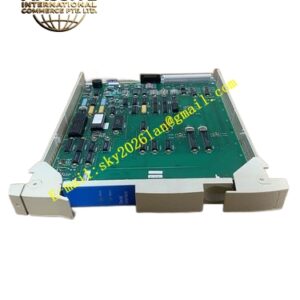
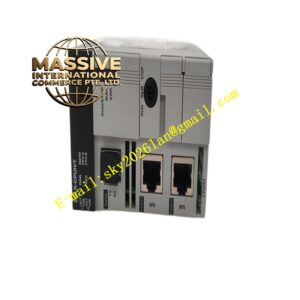
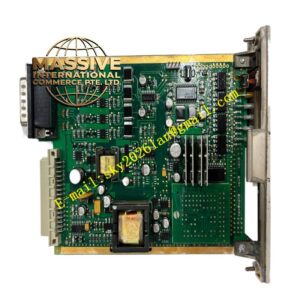
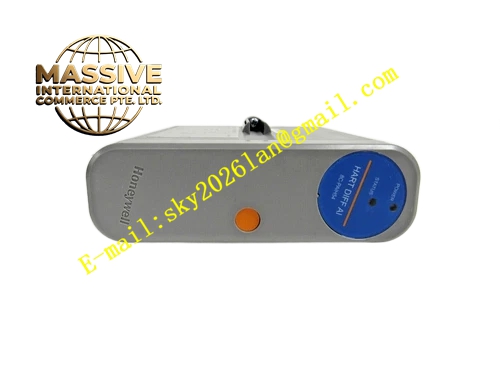
Honeywell 900G02-0202
Technical Specifications
- Channel count: 2 RTD input channels
- Supported sensor: Pt100 platinum RTD
- Connection types: 2-wire, 3-wire, 4-wire
- Resolution: 16-bit ADC
- Backplane interface: HC900 expansion serial bus
- Supply power: 24 V DC from backplane
- Operating temperature: 0 °C to +60 °C
- Mounting: Standard 35 mm DIN rail
Functional Features 3-wire and 4-wire lead resistance compensation, eliminates measurement error from long field cables. 16-bit high-resolution ADC, delivers 0.1 °C measurement accuracy. Open sensor detection, triggers channel fault when RTD element breaks. Digital input filter smooths temperature signal, suppresses field noise. Hot swap support, module replacement without system shutdown. Sensor type and wiring mode configurable via HC900 programming software.
Application Scenarios Small process reactor temperature measurement HVAC chilled water temperature sensing Heat exchanger temperature monitoring Spare part replacement for failed RTD input modules Temperature loop integration for skid-mounted process equipment
Performance Parameters
- Measurement accuracy: ±0.1 °C over -200 °C to +850 °C range
- Lead resistance compensation: Up to 50 Ω per lead
- Update rate: 25 ms per channel
- Open sensor detection response: <200 ms
- Mean time between failures: 550,000 hours
Material Composition ABS flame-retardant housing 16-bit ADC chip Precision RTD excitation current source Platinum reference resistor Removable screw terminal block Gold-plated backplane connector
Structural Features Narrow rectangular DIN-rail mount housing. Front removable terminal block labeled per RTD channel. Side expansion bus connector mates to adjacent HC900 modules. Front power and fault status LEDs. Integral DIN rail locking clip.
Working Principle The module supplies precision constant excitation current through the connected RTD sensor. Current flow across the RTD element produces a voltage proportional to element resistance. The 16-bit ADC measures this voltage, converting resistance values to temperature using the Pt100 resistance-temperature curve. 3-wire and 4-wire configurations measure lead resistance separately, subtracting lead voltage drop from the final measurement. Open sensor detection monitors excitation current; no current flow indicates a broken RTD element, triggering a channel fault flag.
Installation Requirements Clip the module to the DIN rail. Connect RTD sensors using shielded 3-wire or 4-wire cable. Configure sensor type and wire count in HC900 programming software. Verify measured temperature matches a calibrated reference sensor after power-up.
Usage Notes Route RTD wiring using shielded cable, away from high-voltage cable trays. Use 3-wire or 4-wire connections for long cable runs; 2-wire connections only suit short cable lengths. Never apply 24 V power to RTD input terminals, this destroys the excitation circuit. Do not mix RTD channels with voltage inputs; RTD channels supply excitation current.