


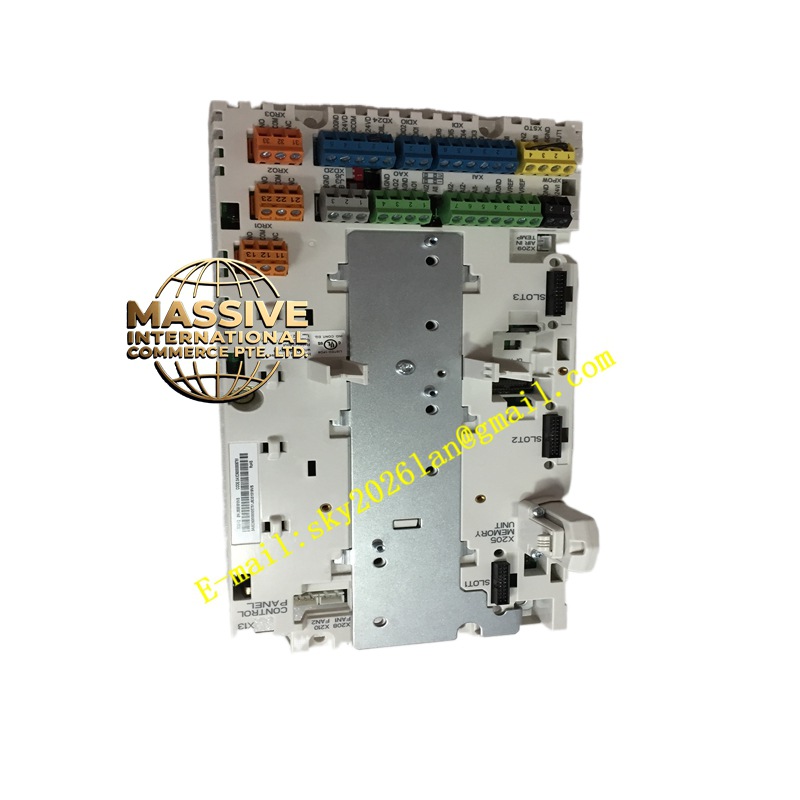
Description
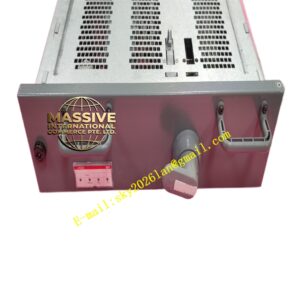
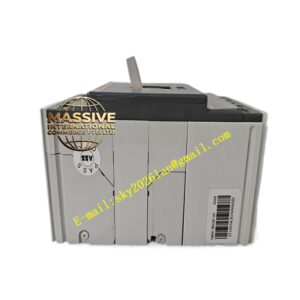
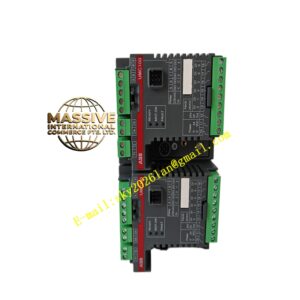
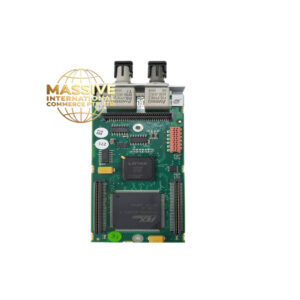
ABB UDC920BE
Technical Specifications:
- Input Signals: Thermocouples, RTDs (Resistance Temperature Detectors), linear resistors, and linear voltage.
- Working Power Supply: 100-240 VAC, 50/60 Hz.
- Power Consumption: Less than 5W.
- Control Algorithm: PID with automatic tuning.
- Sampling Rate: 10 Hz.
- Control Output: Relay or Solid State Relay (SSR), rated at 3A at 250 VAC.
- Accuracy: ±0.2% of span.
- Resolution: 0.1°C or 0.1°F.
- Dimensions: 48 x 96 x 110 mm.
- Weight: 350 g.
Functional Features:
- Adaptive Control: Features self-tuning PID algorithms that automatically adjust to process dynamics.
- High-Precision Measurement: Delivers exceptional accuracy and 0.1-degree resolution for critical process variables.
- Network Integration: Supports Ethernet, PROFIBUS, and Modbus protocols for remote monitoring and configuration.
- Flexible Configuration: Modular architecture allows customization to meet specific application requirements.
Application Scenarios:
- Process Industries: Temperature, pressure, flow, and level control in petrochemical, pharmaceutical, and food & beverage processing.
- Power Generation: Regulation of boiler temperatures and cooling systems.
- Metallurgy: Precise thermal management in smelting and rolling processes.
- Building Automation: HVAC systems, lighting, and ventilation control.
Performance Parameters:
- Operating Temperature: -10°C to +55°C.
- Storage Temperature: -20°C to +70°C.
- Humidity Tolerance: 20% to 95% non-condensing.
- Response Time: Fast dynamic response to process disturbances.
Material Composition:
Housed in a robust metal enclosure with high-quality internal solid-state electronics designed for long-term industrial reliability.
Structural Features:
Compact panel-mountable form factor with an intuitive local display and membrane keypad for easy setpoint adjustment and trend viewing. Clearly labeled terminal blocks facilitate efficient field wiring.
Working Principle:
The controller continuously samples the process variable via its analog inputs, compares it to the desired setpoint, and executes PID calculations. It then adjusts the relay or SSR output to modulate the heating or cooling element, maintaining the process at the exact target value.
Installation Requirements:
- Ensure proper panel cutout dimensions for a secure fit.
- Provide adequate ventilation around the controller to prevent overheating.
- Route sensor and output wiring separately from high-voltage power cables.
Usage Precautions:
- Verify sensor type and wiring polarity before applying power.
- Perform auto-tuning after installation to optimize PID parameters for the specific process.
- Ensure all terminal screws are properly torqued to prevent intermittent connections.