


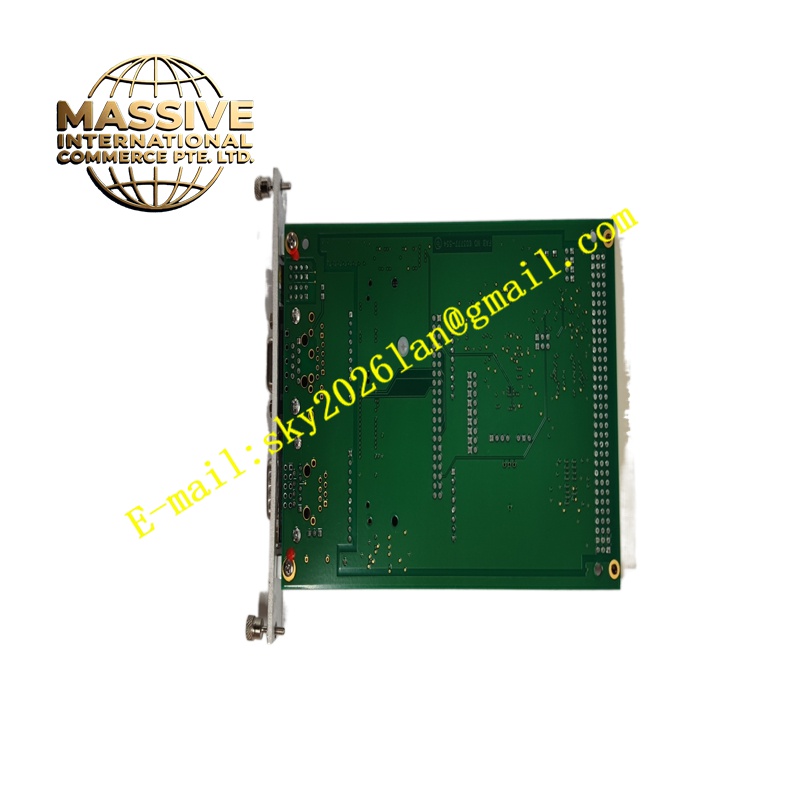
Description
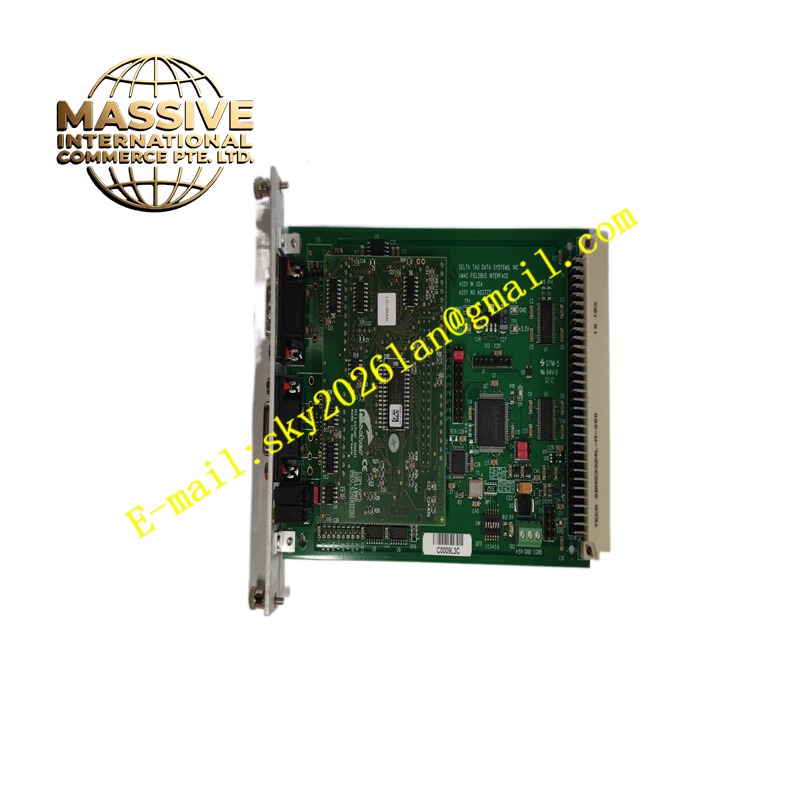
Delta Tau ACC-72E
Technical Specifications 12 channels of differential RS-422 quadrature encoder input; maximum input pulse frequency 40MHz; each channel equipped with index pulse and hardware position latch function; 8 opto-isolated digital input channels; power supply 5V DC from PMAC backplane; operating temperature range -20°C to +70°C; storage temperature -40°C to +85°C.
Functional Features Decodes incremental encoder A/B/Z signals and transmits real-time position data to the PMAC motion controller. Captures index pulse marks for axis homing and position calibration with hardware timestamping. Reads emergency stop and limit switch discrete signals through opto-isolated input circuits. Detects encoder signal disconnection, pulse loss and signal abnormality, and uploads fault information to the host controller. Supports software adjustment of encoder counting direction and index trigger edge.
Application Scenarios Multi-gantry automated production lines, multi-joint custom test robots, multi-spindle CNC machine tools, large-format laser cutting equipment, multi-station automated testing machines.
Performance Parameters High channel density with low crosstalk between adjacent encoder channels; fast hardware capture response independent of software cycle; high electromagnetic compatibility in cabinet environments with multiple servo drives.
Material Composition PCB substrate uses FR-4 flame-retardant multilayer material; differential signal receivers and logic devices are high-speed industrial semiconductors; bus connectors use gold-plated copper alloy contacts; optocoupler devices provide galvanic isolation for digital input circuits; wiring terminals use corrosion-resistant nickel-plated copper.
Structural Characteristics Standard rectangular plug-in board for PMAC carrier chassis. Multiple high-density external connectors for encoder cables. Small LED indicators show power and signal status of each encoder group. Rear expansion bus connector mates with the PMAC main controller, and mounting holes secure the board inside the chassis.
Working Principle Encoder differential pulses are received by RS-422 transceivers and decoded into incremental position counts by onboard logic circuits. Index pulses trigger hardware registers to lock position values immediately. All position and input status data are transmitted to the PMAC main processor via the expansion bus. The main controller uses these position values to calculate servo control setpoints and execute motion programs.
Installation Requirements Cut off chassis power before installation. Insert the board into the matched PMAC carrier expansion slot and fasten mounting screws. Connect each encoder to the corresponding channel with shielded twisted-pair differential cables. Configure encoder resolution and capture trigger mode in PMAC software. Complete homing test and signal quality inspection after commissioning.
Precautions for Use Ensure differential encoder cables are fully shielded and grounded at one end only. Avoid bundling encoder cables with high-current power cables. Check differential termination resistance for each encoder channel. Replace the board when continuous encoder signal loss occurs.