


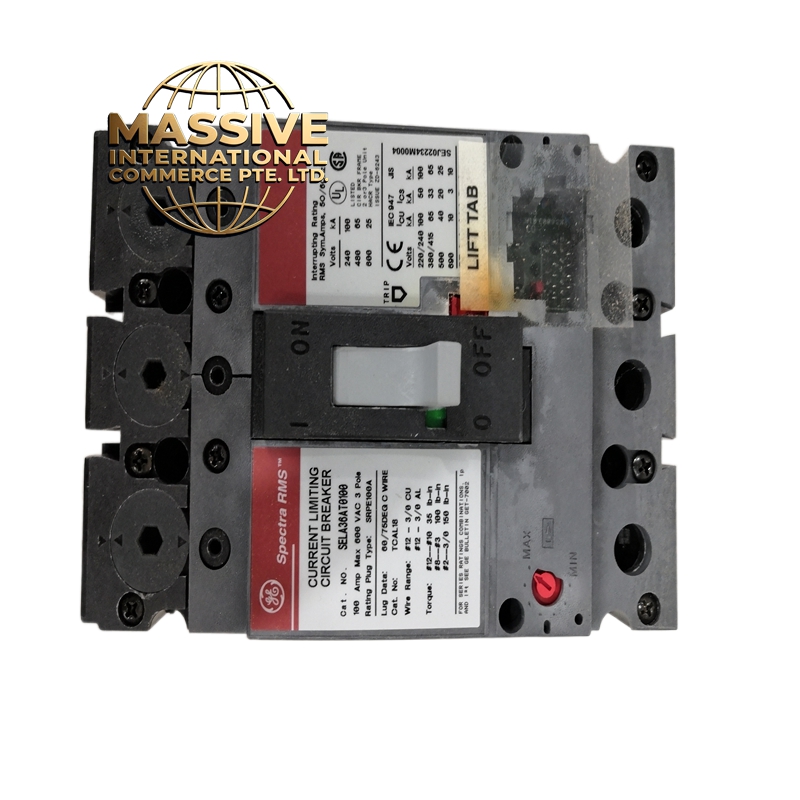
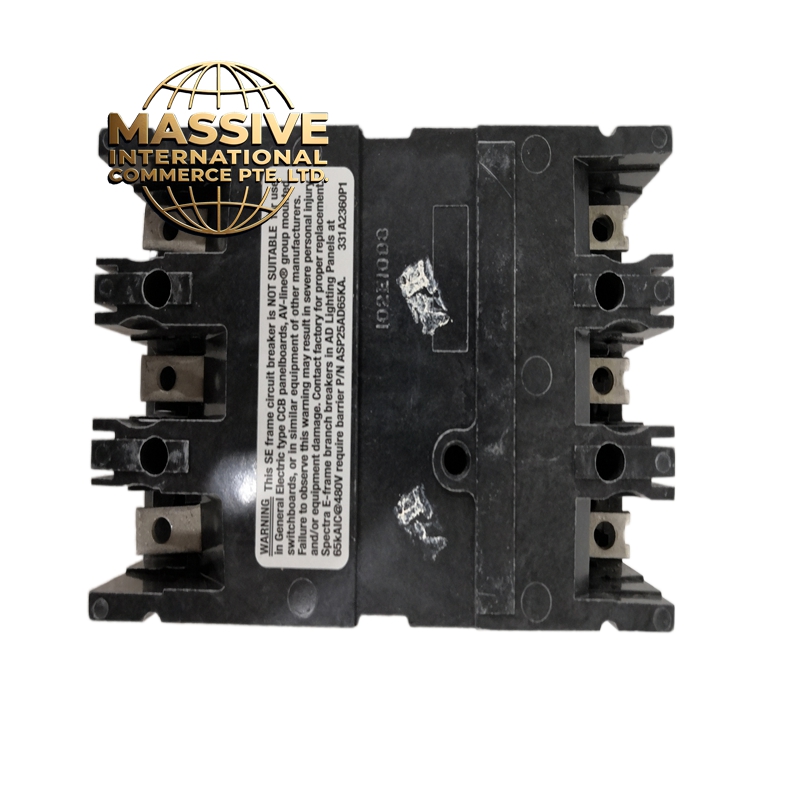
Description
GE SELA36AT0100
Technical Specifications
| Parameter | Specification |
|---|---|
| Product Line | Spectra RMS |
| Type | Molded Case Circuit Breaker |
| Current Rating | 100 Amperes |
| Poles | 3 Pole |
| Voltage Rating | 600 VAC |
| Interrupting Rating | 25 kA at 480V (standard) |
| Frame Size | SELA Frame |
| Trip Unit | Thermal-magnetic or electronic (configuration dependent) |
| Connection Type | Lug terminals |
| Mounting | Panel or DIN rail mountable |
| Operating Temperature | -20°C to 60°C (-4°F to 140°F) |
| Storage Temperature | -40°C to 85°C (-40°F to 185°F) |
| Certifications | UL, CSA, CE |
Functional Features
-
Thermal-Magnetic Protection: Combined thermal overload and instantaneous magnetic short-circuit protection
-
High Interrupting Capacity: Capable of safely interrupting high fault currents up to 25 kA
-
Adjustable Trip Settings: Electronic trip units offer adjustable long-time, short-time, and instantaneous pickup settings
-
Visual Trip Indication: Clear visual indication when breaker has tripped due to overload or short circuit
-
Padlock Capability: Provision for padlocking in OFF position for safety lockout procedures
-
Optional Accessories: Shunt trip, undervoltage release, and auxiliary contacts available
-
Long Service Life: Designed for thousands of mechanical and electrical operations
Structural Characteristics
-
High-strength molded case construction with thermoset composite material
-
Silver alloy contacts for low resistance and long contact life
-
Arc chutes with deionizing grids for efficient arc interruption
-
Mechanical operating mechanism with quick-make, quick-break action
-
Terminal lugs suitable for copper or aluminum conductors
-
Clear ON/OFF handle position indication
-
Compact design for space-efficient panel installation
Working Principle The circuit breaker operates on a thermal-magnetic principle. The thermal element consists of a bimetallic strip that heats up with current flow. During sustained overload conditions, the bimetallic strip bends and eventually trips the mechanism, opening the contacts. For short-circuit conditions, a magnetic coil responds instantaneously to high current, tripping the mechanism within milliseconds. When tripped, the contacts separate rapidly, and the resulting arc is driven into the arc chute where it is elongated, cooled, and extinguished. The deionizing grids in the arc chute split the arc into smaller segments, increasing arc voltage and facilitating interruption.
Installation Requirements
-
Install in suitable electrical enclosure with adequate ventilation
-
Ensure proper torque on terminal connections per manufacturer specifications
-
Use appropriate conductor size for 100A rating
-
Verify correct phase sequence for three-pole applications
-
Maintain proper clearances from live parts
-
Install with proper orientation as specified in installation manual
Application Scenarios
-
Industrial motor branch circuit protection
-
Commercial building electrical distribution
-
Power panel and switchboard applications
-
Transformer secondary protection
-
Generator set output protection
-
HVAC system electrical protection
Usage Precautions
-
Verify breaker rating matches circuit requirements
-
Do not operate breaker beyond rated interrupting capacity
-
Regular inspection of contacts and arc chutes recommended
-
Ensure proper ventilation around breaker enclosure
-
Follow lockout/tagout procedures before maintenance
-
Replace breaker if any physical damage is observed
-
Test trip function periodically to verify proper operation