



Description
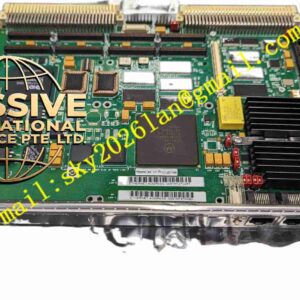
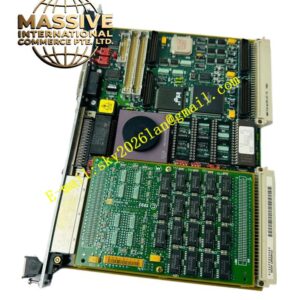
Motorola MVME330-2
Technical Specifications
- Core Processor: Upgraded microprocessor delivering higher MIPS performance.
- Cache Architecture: Enlarged L1/L2 cache to reduce memory access latency.
- Storage Expansion: Supports larger capacities of onboard Flash and external storage devices.
- Bus Interface: Supports higher-bandwidth VME data transfer protocols.
Functional Features
- High-Speed Data Buffering: Optimized DMA controller supports zero-copy data transfers between peripherals and memory.
- Multi-Protocol Support: Serial interfaces support multiple industrial standards, including EIA-232/422/485.
- Global Control Register: Provides hardware support for multiprocessor synchronization and status monitoring.
Application Scenarios
- Medical Equipment: Image reconstruction and real-time display in CT/MRI equipment.
- Aerospace: Flight simulators and radar signal preprocessing.
- Industrial Automation: Complex motion control and multi-axis synchronization systems.
Performance Parameters
- Operating Temperature: 0°C to 55°C (forced-air cooling required).
- Storage Temperature: -40°C to +85°C.
- Humidity: 5% to 90% (non-condensing).
Material Composition
High-reliability industrial-grade PCB equipped with large-area heat sinks to assist in core chip cooling.
Structural Characteristics
- Board Form Factor: Standard VME double-high or single-high module.
- Status Indicators: Front panel provides Power, Run, Fault, and Network Activity LED indicators.
Working Principle
When executing complex algorithms, the processor fully utilizes the high-speed cache and DMA engine. The VME interface logic participates in bus arbitration as a master or slave device, achieving efficient data exchange with other modules in the chassis.