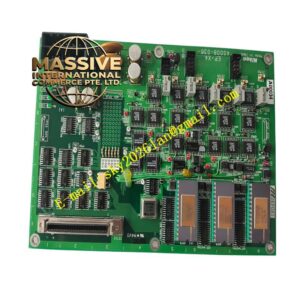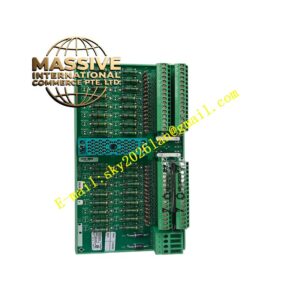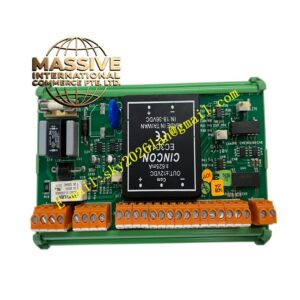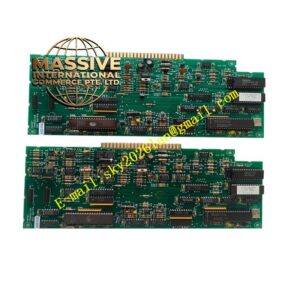



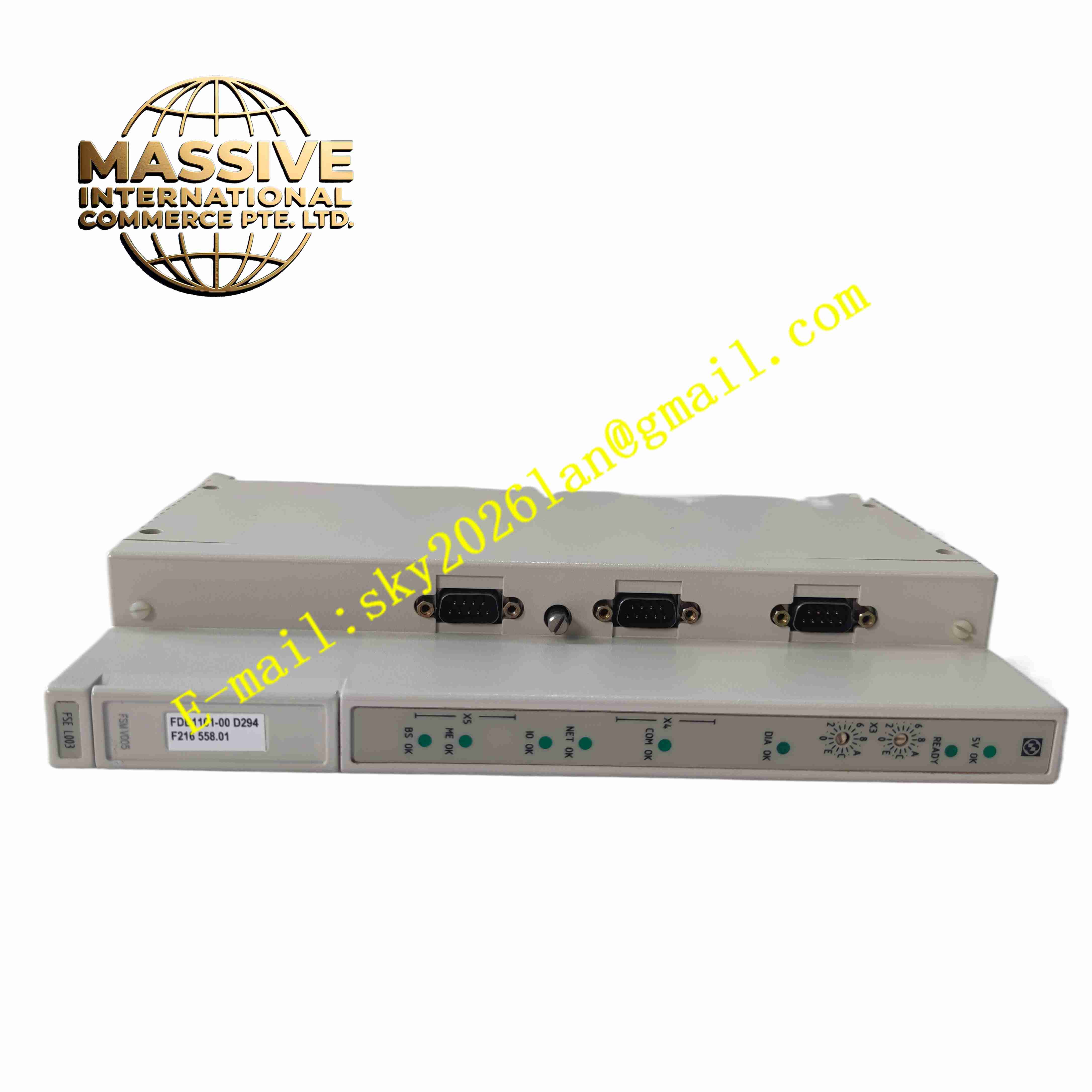
Description
Schenck FSE-L003
Technical Specifications
- Product Type: Gravimetric weighing controller module
- Load Cell Input: Excitation 10 V DC, mV/V strain gauge signal
- Measurement Resolution: 0.1 g
- Accuracy Class: OIML R76 Class III
- Power Supply: 110-240 V AC, 50/60 Hz
- Analog Output: 4-20 mA for feeder speed control
- Communication Interfaces: RS232, RS485, Modbus RTU
- Protection Rating: IP20 for cabinet mounted version
- Operating Temperature: -10 °C to +40 °C
- Storage Temperature: -40 °C to +85 °C
- Dimensions: 500 × 600 × 200 mm
- Net Weight: 10 kg
Functional Features
- High resolution load cell signal acquisition for loss-in-weight feeder measurement.
- Automatic zero tracking and tare compensation eliminates material residue weight error.
- PID closed-loop control adjusts feeder motor speed to maintain target mass flow rate.
- Built-in material density calculation and feeding rate totalization function.
- Vibration filtering algorithm suppresses plant mechanical vibration interference on weight reading.
- Alarm outputs trigger warning for low material level, load cell fault and feeding deviation.
- Modbus RTU communication transmits real-time flow, cumulative weight and fault status to PLC.
- Onboard data logging stores feeding curve and alarm history for recipe audit.
- Multiple material recipe storage supports fast switching between different bulk materials.
- Load cell wire break and short circuit continuous diagnostic monitoring.
Application Scenarios
- Cement plant raw material continuous proportioning feeding
- Plastic compounding powder and pellet gravimetric feeding
- Food and pharmaceutical powder loss-in-weight dosing
- Chemical plant bulk solid continuous blending system
- Mining mineral powder metering and feeding control
Material Composition
- Housing: Stainless steel enclosure
- Main PCB: FR4 printed circuit board with conformal coating
- Signal acquisition components: High precision instrumentation amplifiers
- Processor: Industrial grade microcontroller
- Terminal blocks: Tin-plated copper alloy screw terminals
- Internal protection components: Surge suppression diodes and current limit resistors
Structural Characteristics
- Compact cabinet mounted metal enclosure structure.
- Front panel with LCD backlight display and membrane operation keys.
- Rear terminal blocks for load cell, motor control and communication wiring.
- Internal circuit layout separates low level weight signal circuit and power control circuit.
- Internal EMC shielding reduces electromagnetic interference to millivolt load cell signals.
- DIN rail mounting bracket supports installation inside control cabinet.
Working Principle Load cell generates millivolt signal proportional to material weight. FSE-L003 amplifies, filters and converts the analog weight signal into digital value. The module calculates actual mass flow rate by tracking weight change over fixed time interval. The control algorithm compares actual flow with setpoint and outputs 4-20mA signal to adjust feeder drive speed. When material weight drops below refill threshold, the module triggers refill sequence and switches to volumetric feed temporarily. All weight data and fault events are transmitted to upper automation system via serial communication port.
Installation Requirements
- Mount module on standard DIN rail inside clean control cabinet.
- Use shielded twisted pair cable for load cell wiring, keep cable length consistent.
- Separate load cell signal cable from motor power cable.
- Complete protective earth connection for module metal housing.
- Perform load cell calibration and span adjustment after wiring completion.
- Set recipe parameters, low level alarm and feeding tolerance limits.
- Test feeder speed response and weight alarm function during commissioning.
Usage Notes
- Execute zero calibration after mechanical maintenance of feeder.
- Do not run high voltage insulation test on load cell cables with module connected.
- Keep cabinet dry and free of conductive dust and corrosive vapor.
- Check load cell cable shielding integrity periodically under vibration environment.
- Do not apply overload force to load cells during normal operation.
- Use anti-static protection when replacing module.
- Replace module immediately when permanent signal acquisition fault occurs.