


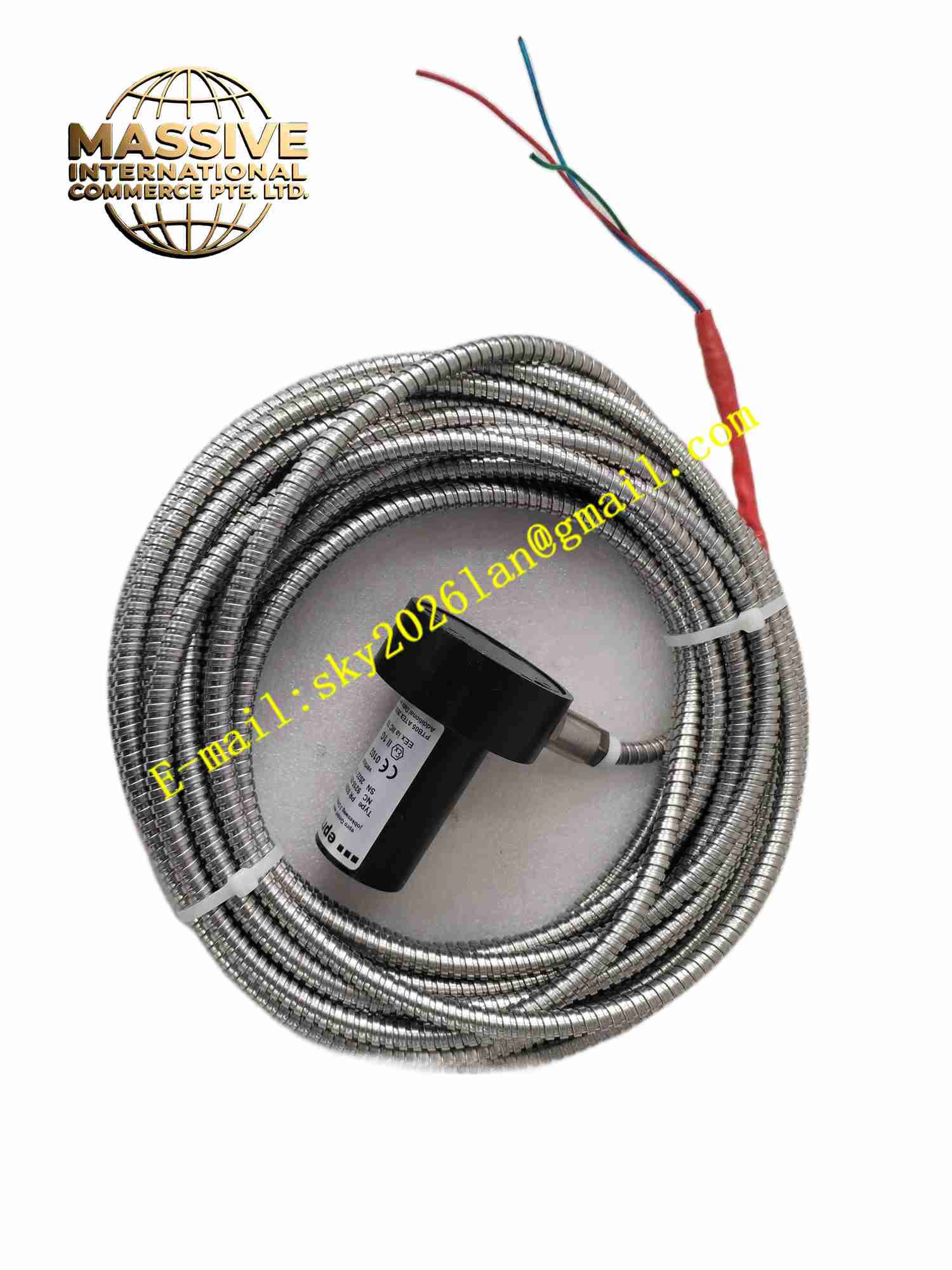
Description
Technical Specifications
- Product type: Electromagnetic velocity sensor
- Measured quantity: Vibration velocity
- Frequency range: 10 to 1000 Hz
- Sensitivity: About 25 mV/mm/s
- Range: ±20 mm/s
- Output: AC voltage
- Operating temperature: -30 °C to +80 °C
- Storage temperature: -40 °C to +100 °C
- Humidity: 95 % non-condensing
- Mounting thread: M10/M8
- Protection: IP65
- Weight: About 300 g
- Cable: 2 m integral
- Certification: CE
Functional Features
- Electromagnetic self-powered, no external supply
- Direct bearing housing vibration velocity measurement
- 10 to 1000 Hz frequency response
- 25 mV/mm/s sensitivity
- Spring-mass low natural frequency
- Stainless steel housing IP65
- Robust vibration resistant
- Long maintenance-free life
- Power plant standard vibration sensor
- Integrates with monitor for integration/differentiation
Application Scenarios
- Steam turbine bearing housing vibration
- Motor bearing vibration
- Fan and pump casing vibration
- Gearbox vibration
- TSI vibration protection
Materials and Construction
- Housing: Stainless steel
- Spring-mass: Magnet and coil
- Cable: Shielded
- Mounting thread: Stainless steel
- Seal: Epoxy potting
- Connector: Cable gland
Structural Features
- Cylindrical stainless steel housing
- Bottom mounting thread
- Top cable exit
- Internal magnet and coil spring-mass
- Bottom magnet attachment
- Sealed potting
Working Principle As the sensor moves with the bearing housing, the internal coil moves relative to the magnet and cuts magnetic flux to induce a voltage. Voltage amplitude is proportional to vibration velocity; frequency matches vibration frequency. The cable feeds the monitor, which displays vibration velocity RMS.
Installation Requirements
- Screw into bearing housing vertical vibration direction
- Sensor bottom magnet flush to measuring surface
- Sufficient cable bend radius
- Away from strong magnetic fields
- Temperature -30 °C to +80 °C
- Calibrate sensitivity in monitor after power-up
- Measuring surface clean and free of oil
Precautions
- Do not drop sensor
- Coil direction consistent
- Cable shield grounded
- Measuring surface clean
- Store spares in dry environment
- Periodically calibrate sensitivity