


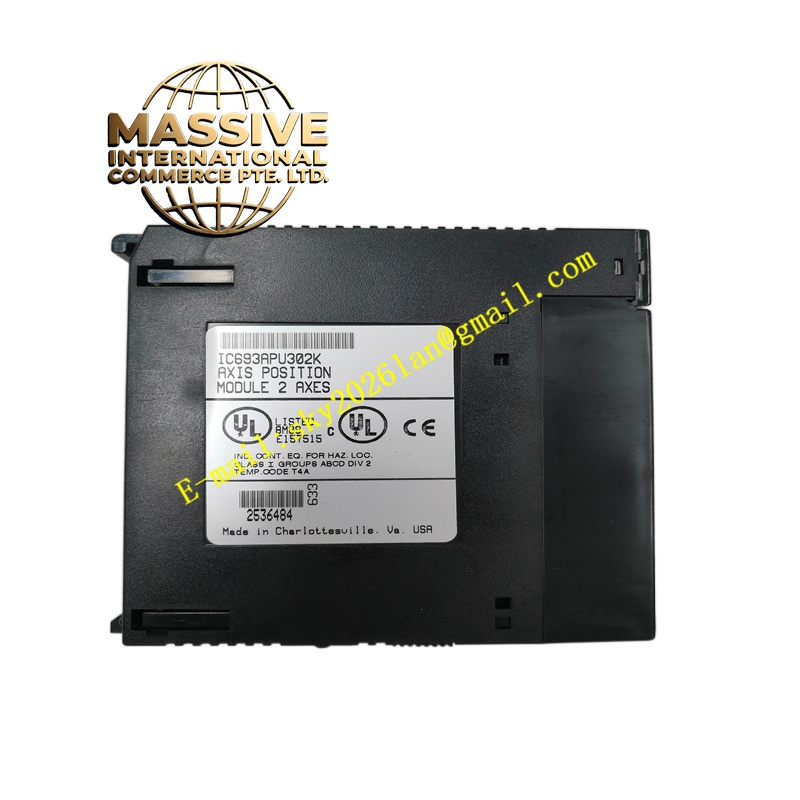
Description
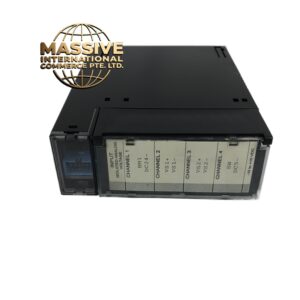
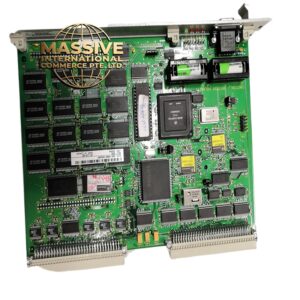
GE IC693CPU351-HT
Technical Specifications:
| Parameter | Specification |
|---|---|
| Processor Type | Intel 80386EX |
| Processor Speed | 25 MHz |
| User Memory | 240 KB (245,760 Bytes) with firmware 9.0 and later |
| Discrete I/O Points | 2,048 Inputs / 2,048 Outputs (4,096 total) |
| Analog I/O Capacity | 32,640 words maximum (each for %AI and %AQ) |
| Register Memory | Up to 32,640 words |
| Binary Global Memory | 1,280 bits |
| Memory Coils | 4,096 bits |
| Temporary Output Coils | 256 bits |
| System Status References | 128 bits |
| System Registers | Up to 28,000 words |
| Serial Ports | 3 built-in ports |
| Power Supply Voltage | 5 Volts DC |
| Backplane Current Draw | 890 milliamps |
| Typical Scan Rate | 0.22 milliseconds per 1K of Boolean logic |
| Floating-Point Math | Supported (firmware 9.0 and later) |
| Battery-Backed Clock | Yes |
| Timers/Counters | More than 2,000 |
| Shift Register | Yes |
| Key Switch | Yes |
| Operating Temperature | Extended high-temperature range (exceeds standard 0°C to 60°C) |
| Weight | 0.91 kg (2.01 lbs) |
| Baseplates per System | 8 (1 CPU baseplate + 7 expansion/remote) |
Functional Features:
-
High-Temperature Operation: Specifically designed and tested for continuous operation in elevated ambient temperatures beyond the standard 0°C to 60°C range. The exact extended temperature specification is determined by GE Fanuc qualification testing for high-temperature environments.
-
Identical Processing Power: The same 25 MHz Intel 80386EX processor delivers identical computational performance as the standard CPU351, with a 0.22 ms scan rate per 1K Boolean logic.
-
Rugged Component Selection: All electronic components are carefully selected and qualified for extended temperature operation, including capacitors with higher temperature ratings, industrial-grade integrated circuits, and thermal stress-tested solder joints.
-
Enhanced Thermal Management: Improved heat dissipation design including optimized PCB layout, thermal vias, and component placement to maximize heat transfer away from critical components.
-
Full Feature Set: All standard capabilities are preserved, including:
-
240 KB configurable user memory
-
Floating-point mathematics (firmware 9.0+)
-
Three serial ports with SNP, SNPX, and RTU protocols
-
Battery-backed real-time clock
-
Sequential event recorder
-
Override capability
-
PCM/CCM module support
-
-
Flash Memory Firmware: Non-volatile storage ensures program retention and enables field firmware upgrades without EEPROM programming equipment.
-
Comprehensive Diagnostics: Built-in self-test routines continuously monitor CPU health, memory integrity, and communication status.
Application Scenarios:
-
Steel Mills and Foundries: Control systems operating near blast furnaces, rolling mills, and casting equipment where ambient temperatures routinely exceed 60°C.
-
Glass Manufacturing: Furnace control, forming machine automation, and annealing lehr control in high-temperature production environments.
-
Chemical Processing: Reactor control, distillation column management, and heat exchanger monitoring in processes with elevated ambient temperatures.
-
Power Generation: Turbine hall control, boiler control systems, and auxiliary equipment in power plants where heat radiation is significant.
-
Cement and Lime Kilns: Kiln control, cooler management, and material handling in high-temperature mineral processing.
-
Outdoor Installations in Hot Climates: Solar power tracking systems, pipeline monitoring, and remote pumping stations in desert or tropical environments.
-
Engine Rooms and Turbine Halls: Marine propulsion control, generator control, and auxiliary machinery in enclosed spaces with limited ventilation.
-
Industrial Ovens and Furnaces: Heat treatment control, baking process automation, and drying system management.
Performance Parameters:
-
Scan Time: 0.22 ms per 1K Boolean logic (typical), identical to the standard CPU351, ensuring no performance degradation in high-temperature environments.
-
Thermal Stability: Processor and memory operate reliably across the extended temperature range with consistent scan times and no thermal throttling.
-
I/O Update Rate: Maintains high-speed I/O performance even at elevated temperatures, supporting critical control loops in thermal processes.
-
Communication Reliability: Serial ports maintain specified baud rates and error-free communication across the full temperature range.
Material Composition:
-
High-Temperature PCB: Multi-layer FR-4 substrate with enhanced glass transition temperature (Tg) rating to prevent PCB warping and delamination at elevated temperatures.
-
Extended Temperature Components: All semiconductors, capacitors, and resistors are industrial-grade or military-grade with temperature ratings significantly exceeding standard commercial specifications.
-
Thermal Interface Materials: Enhanced thermal interface materials between heat-generating components and the PCB to improve heat dissipation.
-
High-Temperature Connector Housing: Thermoplastic housing material with elevated heat deflection temperature to maintain dimensional stability.
-
Thermal Stress-Relieved Solder Joints: Manufacturing process includes thermal cycling to relieve solder joint stress and prevent thermal fatigue failures.
Structural Characteristics:
-
Single-Slot Design: Identical physical dimensions to the standard CPU351, allowing direct replacement in existing installations without mechanical modifications.
-
Enhanced Heat Spreading: PCB design incorporates copper pours and thermal vias to distribute heat evenly across the board surface.
-
Front Panel Interface: Same LED indicators, key switch, and serial port connectors as the standard for consistent user interface.
-
Shield Ground Connection Tab: Dedicated grounding point for EMI protection, critical in high-temperature environments where electrical noise from heating elements is common.
-
Battery Compartment: Accessible battery holder with thermal isolation to protect the lithium battery from excessive heat, extending battery life.
Working Principle:
-
Input Scan: Reads all discrete and analog inputs from I/O modules across the backplane.
-
Program Execution: The 80386EX processor executes the user program using the same instruction set and memory architecture as the standard CPU351.
-
Output Update: Writes calculated output states to the I/O modules.
-
Communication Service: Manages serial port communication and optional network module data exchange.
-
Housekeeping: Performs diagnostics, updates the real-time clock, and manages memory.
-
Thermal Derating Management: Internal monitoring ensures safe operation by managing thermal loads.
-
Extended Temperature Oscillator: Crystal oscillator selected for frequency stability across the extended temperature range.
-
High-Temperature Memory: RAM and Flash memory devices qualified for operation at elevated temperatures.