




Description
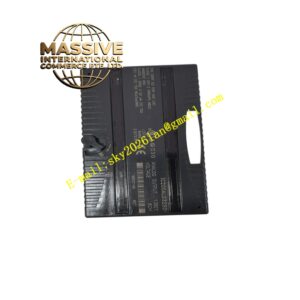
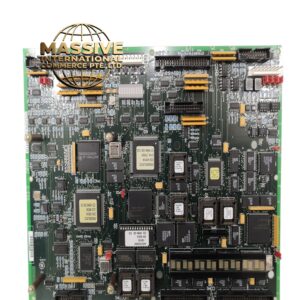
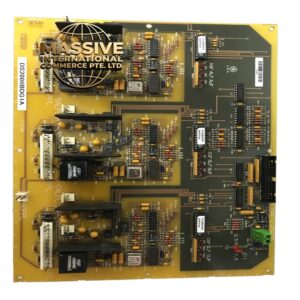
GE IS200VSVOH1BED
Technical Specifications
| Parameter | Specification |
|---|---|
| Function | Servo Valve Driver and Control |
| System Compatibility | Mark VI Speedtronic |
| Output Type | Analog current/voltage for servo valves |
| Output Channels | Multiple servo drive outputs |
| Drive Capability | High-current output for direct servo valve coil drive |
| Feedback Inputs | LVDT/RVDT position feedback inputs |
| Resolution | 16-bit DAC output resolution |
| Update Rate | < 5ms control loop update |
| Board Dimensions | Standard Mark VI VME form factor |
| Operating Temperature | 0°C to 60°C (32°F to 140°F) |
| Storage Temperature | -40°C to 85°C (-40°F to 185°F) |
| Humidity | 5% to 95% non-condensing |
Functional Features
-
High-Current Drive: Capable of driving servo valve coils directly with up to several hundred milliamperes
-
Closed-Loop Control: Integrates position feedback from LVDTs for precise valve positioning
-
Dither Function: Programmable dither signal to overcome valve stiction and ensure smooth response
-
Fault Detection: Monitors for coil open circuits, short circuits, and feedback anomalies
-
Redundant Outputs: Supports redundant servo valve configurations for critical applications
-
Soft-Start Function: Gradual valve opening to prevent hydraulic shock during startup
Structural Characteristics
-
Multi-layer PCB with heavy copper traces for high current paths
-
Isolated output channels to prevent cross-talk between servo circuits
-
High-quality connectors with locking mechanisms
-
Thermal management features for high-current operation
-
LED indicators for output status and fault conditions
Working Principle The module receives position commands from the main control processor via the VME bus. An internal digital signal processor calculates the required drive current based on the position error (difference between commanded position and actual LVDT feedback). The output stage uses high-performance operational amplifiers and power transistors to generate the precise current required by the servo valve coil. A dither signal (small amplitude high-frequency oscillation) is superimposed on the drive current to prevent valve sticking. The control algorithm includes proportional-integral-derivative (PID) compensation for optimal dynamic response.
Installation Requirements
-
Install in VME rack slot designated for servo output modules
-
Connect servo valve cables to front panel terminal blocks
-
Configure LVDT excitation voltage and frequency for specific sensors
-
Set proper current limits to match servo valve coil ratings
-
Ensure adequate ventilation for heat dissipation
Application Scenarios
-
Gas turbine fuel control valve positioning
-
Steam turbine control valve actuation
-
Turbine inlet guide vane adjustment
-
Hydraulic turbine wicket gate control
-
Industrial servo hydraulic positioning systems
Usage Precautions
-
Verify servo valve coil resistance matches output specifications
-
Ensure LVDT mechanical coupling is secure and aligned
-
Monitor for servo fault alarms indicating coil or feedback issues
-
Adjust dither amplitude carefully to avoid excessive valve wear
-
Maintain hydraulic fluid cleanliness to prevent valve sticking