


Description
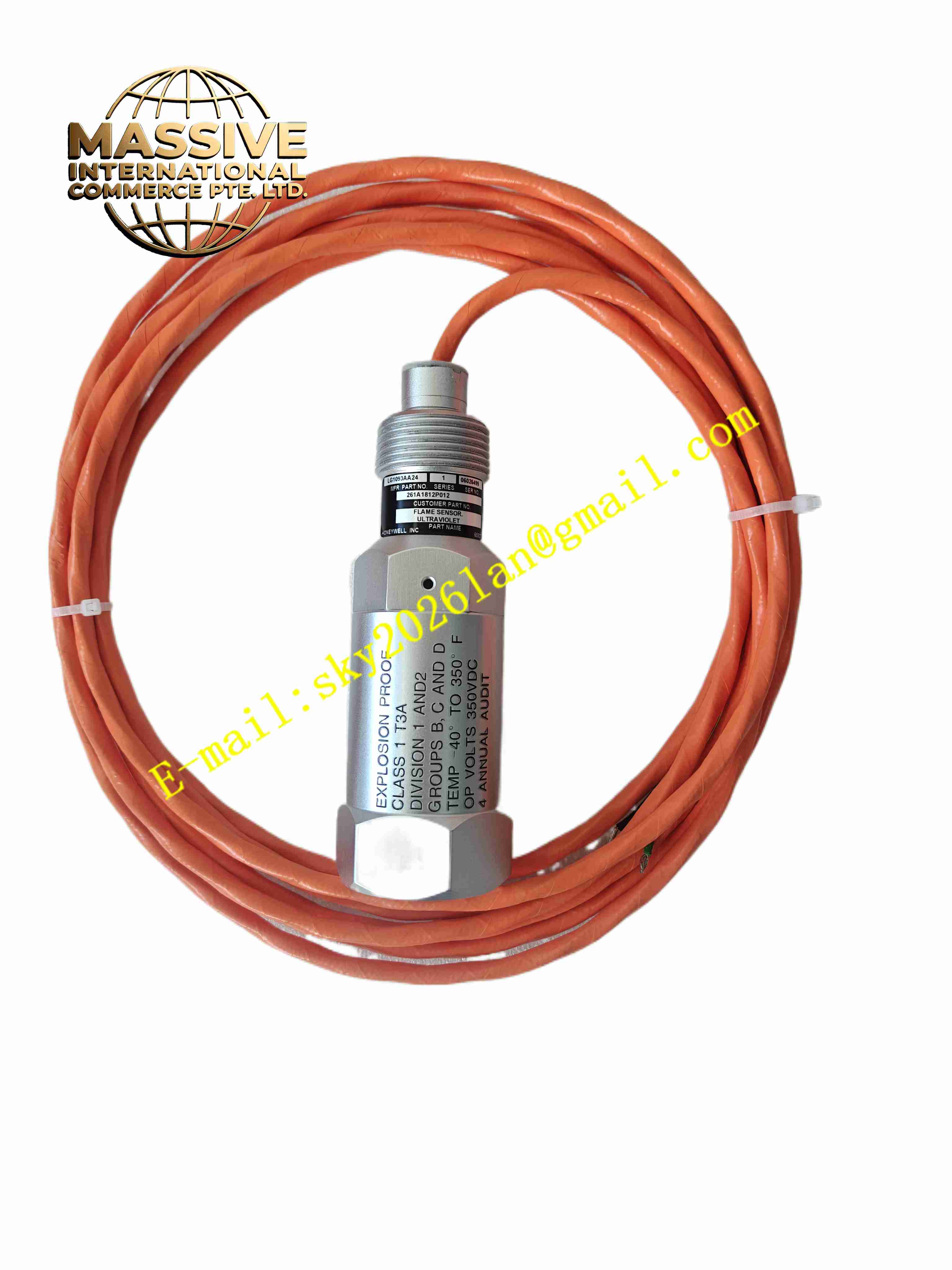
Honeywell LG1093AA24 / 261A1812P012
Technical Specifications
Detection type: ultraviolet flame sensing
Supply voltage: 260 to 350 V DC
Housing material: 1.4571 stainless steel
Window material: fused quartz
Cable length: approximately 4.9 meters
Cable type: PTFE insulated cable
Maximum continuous ambient temperature: approximately 177 °C
Pressure capability: approximately 21 bar at 316 °C
Mounting connection: 3/4 inch NPT thread
Cooling: cooling air circuit required in high-temperature installations
Application class: hydrocarbon flame detection
Output interface: electrical flame signal to burner controller
Functional Features
Ultraviolet flame detection for hydrocarbon combustion
Fast flame presence recognition
High-temperature and high-pressure resistance
Corrosion-resistant stainless steel construction
Fused quartz optical window for UV transmission
Integrated cooling air passage for harsh burner environments
PTFE cable for chemical and thermal resistance
Cross-reference compatibility with GE 261A1812P012
Suitable for main burner and pilot flame monitoring
Application Scenarios
Industrial boiler flame supervision
Process furnace and heater monitoring
Refinery and petrochemical burner systems
Gas turbine combustion monitoring
Waste incineration auxiliary burner detection
Power generation combustion safety systems
Long-flame and pilot-flame proving applications
Performance Parameters
Ultraviolet sensitivity tuned for hydrocarbon flames
Continuous operating temperature up to approximately 177 °C
Short-term thermal exposure capability up to approximately 316 °C
Pressure resistance up to approximately 21 bar at elevated temperature
Robust signal conversion for burner management controllers
Stable operation under smoke, dust, and combustion interference when properly installed
Material Composition
1.4571 stainless steel housing
Fused quartz viewing window
PTFE signal cable
UV-sensitive detection element
Internal signal conditioning electronics
Metal threaded mounting body
Sealing and insulating components
Structural Features
Cylindrical stainless steel probe body
Front-mounted fused quartz optical window
3/4 inch NPT mounting thread
Cooling air passage integrated into the housing
Fixed-length PTFE cable assembly
Compact sensor head suitable for burner mounting
Robust industrial construction for high-temperature zones
Working Principle
When a hydrocarbon flame burns, it emits ultraviolet radiation. The LG1093AA24 detects this UV radiation through its fused quartz window and internal UV sensor. The detected radiation is converted into an electrical signal and transmitted through the PTFE cable to the burner controller. The controller evaluates the signal to confirm flame presence or flame failure. Cooling air protects the sensor body when installed near high-temperature combustion zones.
Installation Requirements
Install on a 3/4 inch NPT burner or furnace opening
Align the optical window toward the flame zone
Connect cooling air when ambient or process temperature exceeds sensor limits
Use clean, dry cooling air at the required flow rate
Wire the detector according to the burner controller schematic
Confirm supply voltage is within 260 to 350 V DC
Maintain proper cable routing away from high-temperature surfaces
Verify flame view is not obstructed by refractory, deposits, or misalignment
Usage Precautions
Do not exceed the rated supply voltage
Do not operate without cooling air in high-temperature applications
Keep the quartz window clean and free of carbon deposits
Verify flame detection during commissioning and periodic testing
Do not use for non-hydrocarbon flame applications without verification
Replace damaged PTFE cables immediately
Follow burner management system safety procedures
Refer to the official Honeywell or GE documentation for final electrical and mechanical limits