


Description
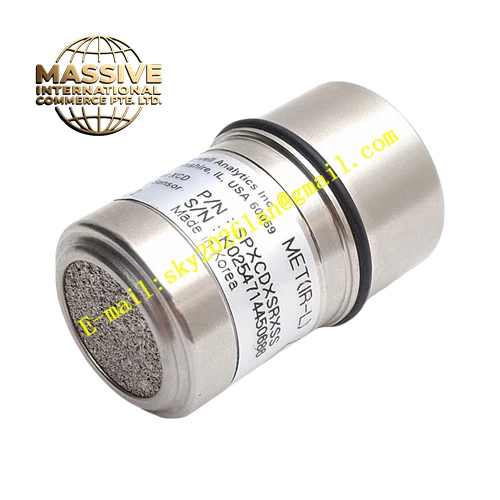
Honeywell SPXCDXSPXSS
Technical Specifications
- Target Gas: Phosphine (PH₃)
- Measurement Range: 0 ppm to 5 ppm
- Resolution: 0.1 ppm
- Power Supply: 12 VDC to 32 VDC, nominal 24 VDC
- Communication Interface: RS485 Modbus RTU
- Analog Output: 3-wire 4-20mA sink/source configurable
- Relay Output: Three programmable relays for high alarm, low alarm and system fault
- Operating Ambient Temperature: -20°C to +55°C
- Storage Temperature: -20°C to +60°C
- Relative Humidity: 10% to 90% RH non-condensing
- Protection Rating: IP66
- Cable Entry: Dual M20 threaded cable glands
- Certification: ATEX, IECEx, UL, CSA
- Sensor Type: Electrochemical Surecell sensor
Functional Features Tri-color backlit LCD shows real-time concentration, alarm status and fault code. Magnetic wand completes zero calibration, span calibration and parameter configuration without opening explosion-proof shell. It supports remote sensor installation up to 30 meters away from transmitter body. It records alarm event history and sensor drift data inside non-volatile memory. It supports independent adjustment of two alarm set points. It supports multi-drop Modbus bus connection to reduce cabling cost. It automatically identifies sensor cartridge information after replacement. It provides sensor depletion pre-warning signal before end of service life. It has built-in reverse polarity and surge protection circuit.
Application Scenarios Grain silo and grain fumigation phosphine monitoring Fumigation warehouse toxic gas safety detection Semiconductor phosphine process gas cabinet leak monitoring Chemical phosphide production workshop gas monitoring Fumigation transport container fixed gas detection Pest control industrial fumigation site safety monitoring
Performance Parameters
- Measurement Accuracy: ±10% of reading or ±0.1ppm, whichever is greater
- T90 Response Time: Less than 40 seconds
- Long Term Drift: Less than 8% of full scale within twelve months
- Sensor Service Life: 24 months under normal operating conditions
- Relay Contact Rating: 5A at 250VAC resistive load
- Maximum Loop Resistance: 600 ohm at 24VDC supply
- Mean Time Between Failures: 700000 hours
Material Composition LM25 flameproof cast aluminum alloy housing Electrochemical phosphine sensing cell SMT signal conditioning and main control PCB Tri-color backlit LCD display module PTFE hydrophobic dust filter membrane Fluorine rubber sealing O-rings Brass cable gland connectors Polycarbonate scratch resistant display window Anti-corrosion internal coating
Structural Features Dual compartment flameproof structure separating electronics chamber and sensor sampling chamber. Front display module can be removed to access internal pluggable terminal blocks. Integrated mounting bracket supports wall and pipe installation. Anti-misalignment locking screw prevents unauthorized opening. Independent gas flow channel isolates sampling gas from electronic components. Internal PCB layout separates weak sensor signal path and power circuit to reduce electromagnetic interference.
Working Principle Phosphine gas passes through inlet filter membrane and enters electrochemical sensing chamber. Phosphine molecules react at working electrode and generate current signal proportional to gas concentration. Signal conditioning circuit amplifies weak signal and compensates temperature drift. Microcontroller converts analog signal into digital concentration value and refreshes LCD display. The unit transmits 4-20mA analog signal and Modbus data to host controller. When concentration exceeds threshold, relay outputs trigger external sound light alarm. Diagnostic circuit monitors sensor aging, wiring breakage and internal circuit fault.
Installation Requirements Phosphine is heavier than air, install detector at low position near potential leakage points. Fix mounting bracket firmly on wall or pipe surface. Use shielded twisted pair cable for signal wiring and pass cable through M20 gland. Complete reliable equipment grounding connection. Power on the unit and wait for warm-up period. Perform zero calibration in clean fresh air and span calibration with certified PH₃ standard gas. Set alarm thresholds and Modbus communication address via magnetic wand. Tighten all sealing components to maintain flameproof and IP66 rating.
Usage Notes Phosphine is highly toxic gas, all calibration and maintenance work must wear designated personal protective equipment. Avoid exposure of sensor cartridge to high concentration acidic or alkaline vapor which causes sensor poisoning. Replace sensor cartridge immediately after service life expiry. Keep gas inlet filter free of dust and insect debris. Do not open explosion-proof housing in hazardous classified area. Carry out function response test after each calibration.