


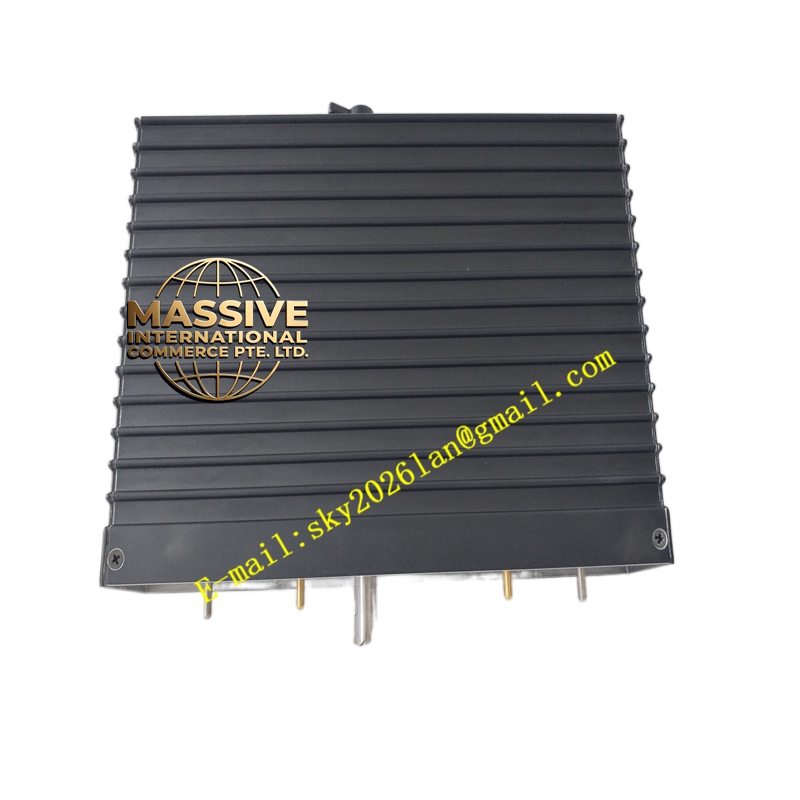
Description
Triconex PI3381 Technical Specifications:
- Input Voltage: Universal AC or DC input (typically 120/240 VAC or 125 VDC).
- Output Voltage: Regulated low-voltage DC for backplane distribution.
- Redundancy: Supports 1:1 or N+1 redundant power supply configurations.
- Protection: Comprehensive overcurrent, overvoltage, and reverse polarity protection.
Functional Features:
- Power Conditioning: Filters input power to remove noise, transients, and harmonics before distribution.
- Hot-Swappable: Designed for live replacement in redundant configurations without powering down the chassis.
- Status Monitoring: Provides real-time feedback on input voltage, output current, and internal temperature.
- Fault Isolation: Automatically isolates faulty power supplies or shorted backplane segments to protect the rest of the system.
Application Scenarios:
- Primary power supply for all Triconex SIS racks.
- Redundant power systems in critical infrastructure.
- Retrofit projects upgrading legacy power supplies.
- Remote unmanned facilities requiring high-reliability power.
Performance Parameters:
- Efficiency: High-efficiency switching power conversion to minimize heat generation.
- Ripple & Noise: Ultra-low output ripple to prevent interference with sensitive analog and digital modules.
- Hold-Up Time: Sufficient energy storage to ride through brief power interruptions without system reset.
Material Composition & Structural Characteristics:
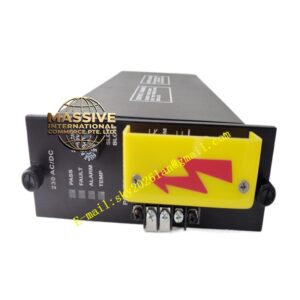
- Enclosure: Metal-shielded housing for EMI containment and thermal dissipation.
- Components: Industrial-grade electrolytic capacitors, MOSFETs, and high-frequency transformers.
- Connectors: High-current backplane connectors and heavy-duty input terminals.
Working Principle: The PI3381 receives raw AC or DC power and converts it to a stable, regulated DC voltage. In redundant configurations, multiple PI3381 modules share the load or operate in hot-standby mode. Internal protection circuits continuously monitor output conditions; if a fault is detected, the module safely shuts down its output or current-limits to prevent damage. Status signals are sent to the main processor for system-wide power health monitoring.
Installation Requirements:
- Input Wiring: Use appropriately sized conductors and torque input terminals to manufacturer specifications to prevent hot spots.
- Ventilation: Ensure adequate airflow across the module’s heat sink; do not obstruct cooling vents.
- Redundancy Wiring: For redundant systems, connect power supplies to independent UPS or power sources to maximize availability.
Usage Precautions:
- Capacitor Discharge: Wait the specified time after power removal before servicing to allow internal capacitors to discharge.
- Load Calculation: Verify that the total chassis load does not exceed the rated capacity of the power module(s).
- Battery Maintenance: If the module contains an internal battery for retention, follow the manufacturer’s replacement schedule.
- Alarm Response: Treat any power supply alarm as a critical event and investigate immediately to prevent loss of redundancy.