


Description
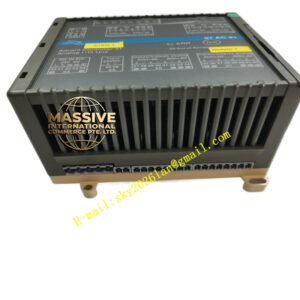
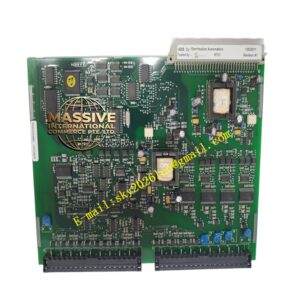
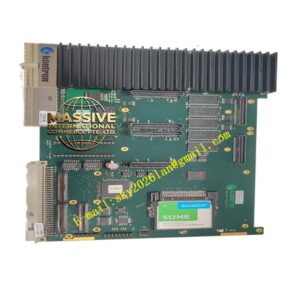
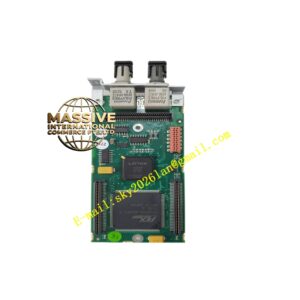
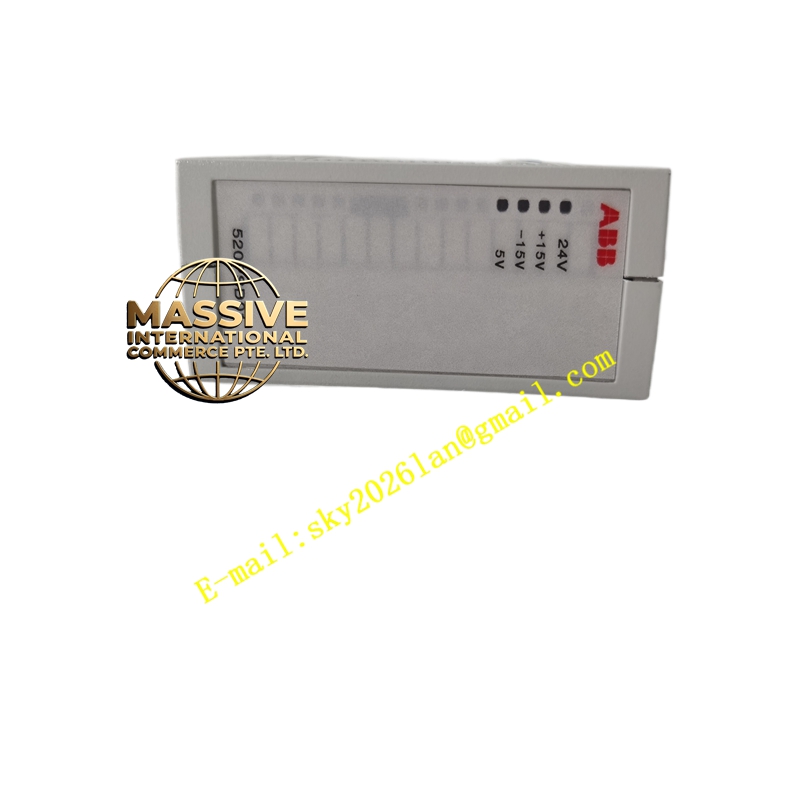
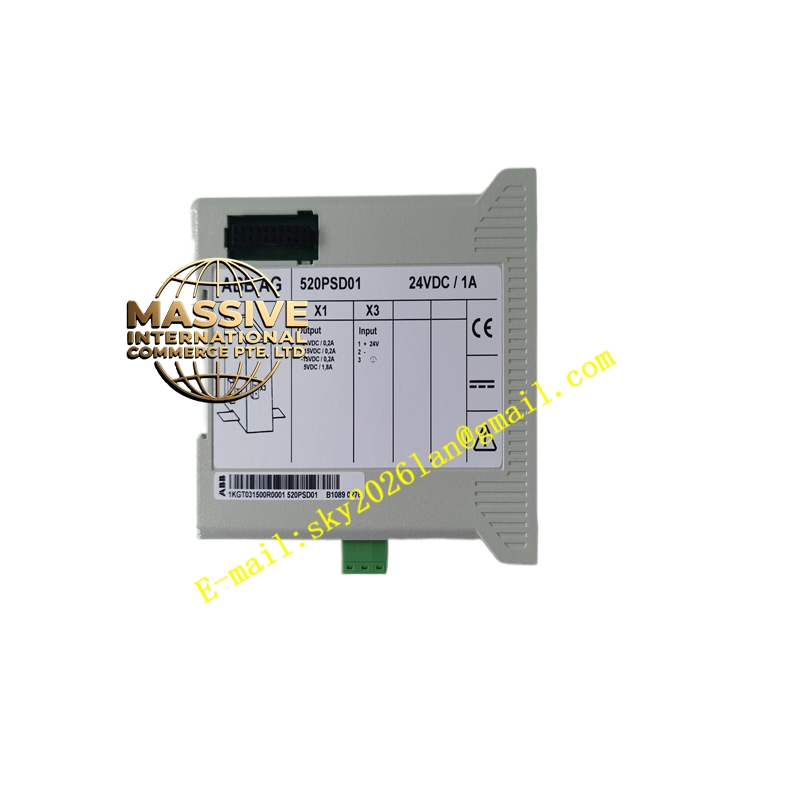
ABB 520PSD01
Technical Specifications:
- Input Voltage: Wide-range universal AC input (typically 100-240 VAC) or high-voltage DC input.
- Output Voltage: Regulated 24 VDC or 5 VDC (depending on specific system architecture).
- Output Current: High-capacity continuous current output to support dense I/O configurations.
- Ripple and Noise: Extremely low output ripple to ensure signal integrity for sensitive analog circuits.
- Isolation: High dielectric strength providing galvanic isolation between primary input and secondary output.
Functional Features:
- Advanced Protection: Built-in over-voltage protection (OVP), over-current protection (OCP), and short-circuit protection to prevent catastrophic system failures.
- Power Good Signal: Provides a digital status signal to the system controller indicating whether the output voltage is within acceptable tolerance limits.
- Hot-Swappable Design: Supports live replacement in redundant power supply configurations without shutting down the control system.
- Thermal Management: Intelligent thermal derating and active cooling mechanisms to maintain efficiency under heavy loads.
Application Scenarios:
- Primary power distribution in ABB AC 800M and Symphony Plus control racks.
- Powering remote I/O stations and distributed automation panels.
- Critical infrastructure in power generation, oil and gas, and marine applications.
- Redundant power architectures requiring seamless failover.
Performance Parameters:
- Efficiency: High-efficiency switch-mode topology minimizing heat generation and energy loss.
- Transient Response: Fast dynamic response to sudden load changes, maintaining voltage stability.
- MTBF: Exceptionally high Mean Time Between Failures, ensuring continuous plant operation.
- Power Factor: Active Power Factor Correction (PFC) for optimal grid compatibility.
Material Composition & Structural Characteristics:
- Enclosure: Ruggedized metal chassis providing EMI/RFI shielding and mechanical protection.
- Internal Components: Industrial-grade electrolytic capacitors, high-frequency transformers, and MOSFETs.
- Connectors: Heavy-duty, vibration-resistant backplane connectors and front-panel terminal blocks.
- Indicators: Front-panel LED indicators for Power OK, Fault, and Overload status.
Working Principle:
The module converts incoming AC or unregulated DC power through an active rectifier and high-frequency switching inverter. A high-frequency transformer steps down the voltage, which is then rectified and filtered. A precision feedback loop continuously monitors the output, adjusting the switching duty cycle in real-time to maintain a perfectly stable DC voltage regardless of input fluctuations or load variations.
Installation Requirements:
- Mounting: Securely mount on standard DIN rails or backplane slots, ensuring proper mechanical retention.
- Ventilation: Maintain adequate clearance around the module to allow for natural convection cooling.
- Wiring: Use appropriately sized copper conductors with proper crimped lugs to prevent localized heating.
- Grounding: Connect the module’s grounding terminal to the system chassis ground to ensure EMC compliance.
Usage Precautions:
- Load Calculation: Ensure the total connected load does not exceed 80% of the module’s rated capacity to allow for future expansion.
- Capacitor Discharge: Always wait at least 5 minutes after power-off before servicing to allow internal capacitors to fully discharge.
- Environmental Limits: Do not operate the module in environments exceeding specified temperature or humidity limits.
- Replacement: Always replace with the exact same part number to maintain system compatibility and safety certifications.