


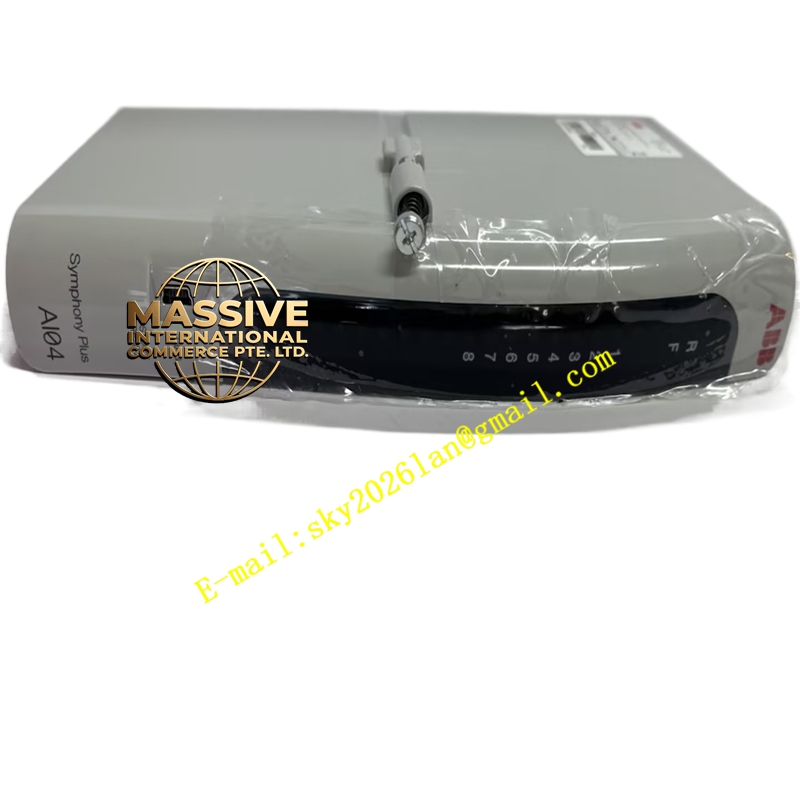
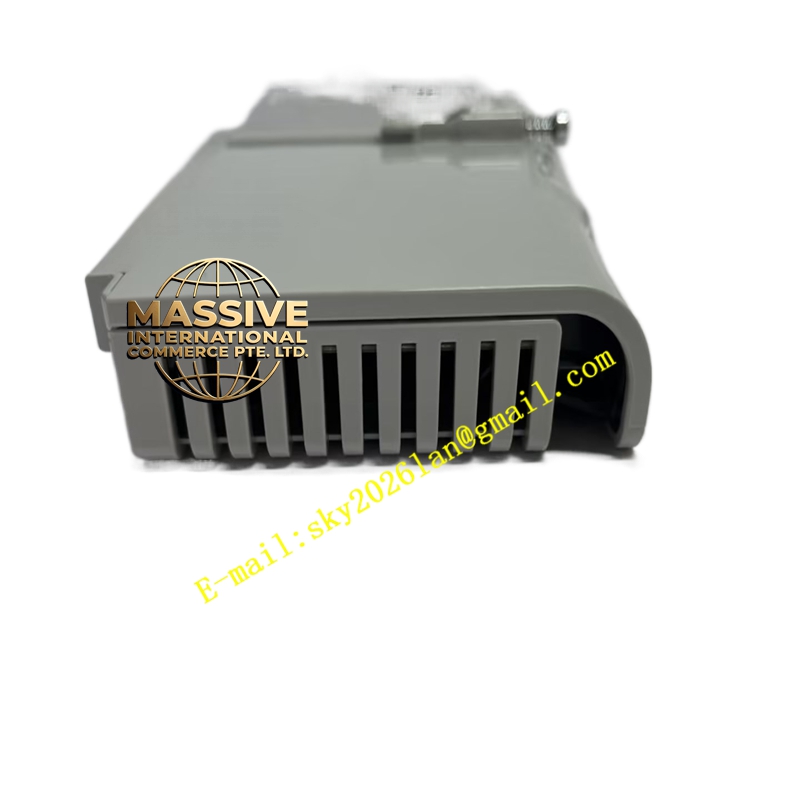
Description
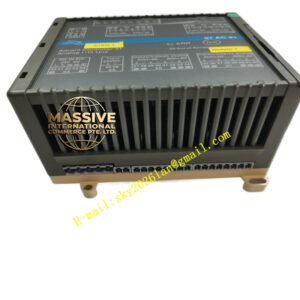
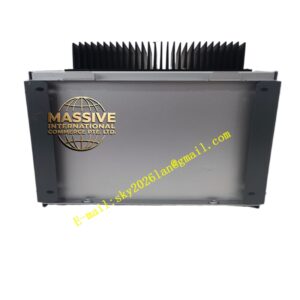
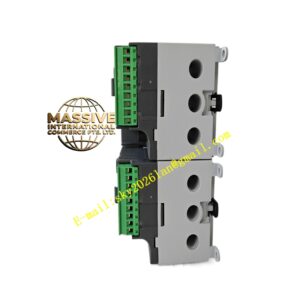
ABB AI04
Technical Specifications:
- Channel Capacity: Features 16 independent analog input channels for high-density signal acquisition.
- Signal Compatibility: Designed specifically for Thermocouple (TC) and millivolt (mV) signal acquisition.
- Resolution: High-precision 16-bit Analog-to-Digital Converter (ADC) with polarity support.
- Sampling Speed: Capable of updating all 16 channels within a rapid 300 ms timeframe.
- Power Supply: Operates on a standard 24 V DC power supply with a low power consumption of approximately 2 W.
- Temperature Range: Standard operating temperature from -20°C to +60°C, with extended capabilities up to -40°C to +70°C.
Functional Features:
- Automatic Calibration: The module is factory-calibrated and features self-calibration routines, eliminating the need for manual field adjustments and significantly reducing maintenance costs.
- Flexible Configuration: Each channel can be independently configured to handle specific engineering units, alarm thresholds, and signal types.
- Cold End Compensation: Supports precise temperature compensation using the module base’s built-in RTD, an external RTD, or user-defined inputs.
- High-Speed Data Processing: Ensures real-time accuracy and responsiveness for fast-changing process variables.
- Advanced Diagnostics: Continuously monitors channel health, open circuits, and signal integrity to provide early warnings of field device failures.
Application Scenarios:
- Power Generation: Monitoring boiler temperatures, exhaust gases, and turbine thermal profiles using various thermocouple types (E, J, K, R, S, T, B, L, N).
- Manufacturing & Processing: Real-time thermal monitoring of machines, heat exchangers, and chemical reactors.
- Building Automation: Integration into HVAC systems for precise environmental temperature tracking and control.
- Energy Management: Monitoring thermal distribution and energy consumption metrics in smart grids and industrial facilities.
Performance Parameters:
- Measurement Accuracy: Exceptional precision of ±0.05% FSR (Full Scale Range) when operating within the 200 mV range.
- ADC Architecture: Utilizes four 16-bit A/D converters, with each converter shared across a group of 4 channels to optimize hardware efficiency.
- Input Impedance: High input impedance to prevent loading effects on sensitive field sensors.
- Update Rate: Guarantees deterministic data refresh rates, ensuring the control system always operates with the latest process data.
Material Composition & Structural Characteristics:
- Physical Dimensions: Compact form factor measuring approximately 35 x 100 x 23 mm, making it ideal for space-constrained control panels.
- Weight: Lightweight design at approximately 0.2 kg to reduce mechanical stress on the backplane.
- Circuit Board: Multi-layer industrial-grade PCB with high-quality surface-mount components optimized for thermal management and EMI shielding.
- Enclosure: Ruggedized, modular housing designed for DIN-rail or backplane mounting in harsh industrial environments.
Working Principle:
The AI04 module receives low-level analog signals from field sensors. These signals pass through internal signal conditioning and amplification circuits before being digitized by the 16-bit ADCs. The onboard microprocessor applies cold-end compensation (for thermocouples) and linearization algorithms to convert raw digital values into accurate engineering units. The processed data is then packaged and transmitted over the high-speed backplane bus to the central controller for logic execution and monitoring.
The AI04 module receives low-level analog signals from field sensors. These signals pass through internal signal conditioning and amplification circuits before being digitized by the 16-bit ADCs. The onboard microprocessor applies cold-end compensation (for thermocouples) and linearization algorithms to convert raw digital values into accurate engineering units. The processed data is then packaged and transmitted over the high-speed backplane bus to the central controller for logic execution and monitoring.