


Description
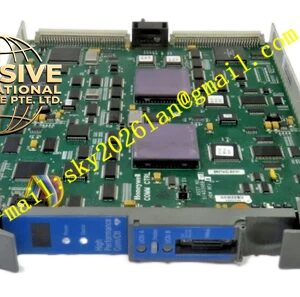
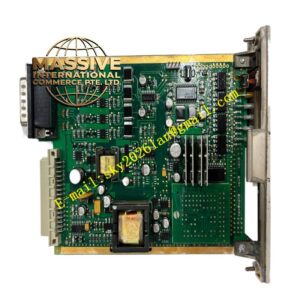
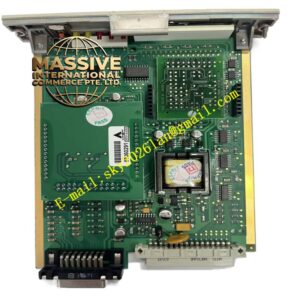
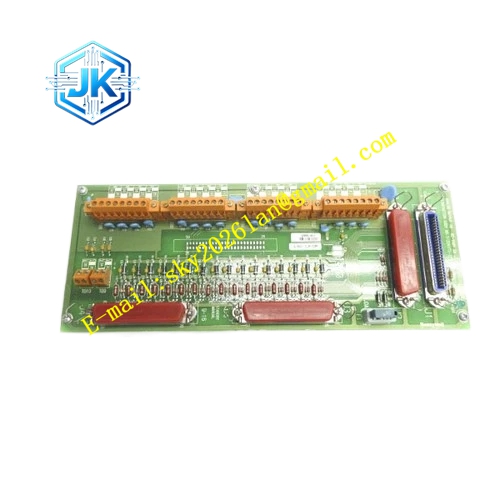
Honeywell 51200845-100
Technical Specifications LCN Bus Rate: 5Mbps Bus Medium: 50Ω coaxial cable Logic Power Supply: 5V DC Power Consumption: 4.7W Operating Temperature Range: 0℃ to 65℃ Storage Temperature Range: -40℃ to 85℃ Isolation Withstand Voltage: 2000V AC Surge Withstand Capacity: 2kV 1.2/50μs surge Relative Humidity: 5% to 95%, non-condensing
Functional Features It provides complete galvanic isolation between node internal circuit and LCN bus cable. It absorbs lightning surge and transient high voltage pulse from trunk cable. It passes bidirectional Manchester encoded data frames without signal distortion. It blocks ground loop current caused by potential difference between different cabinet grounding points. It monitors bus signal amplitude and records surge strike events. It uploads surge alarm and isolation fault information to LCN network diagnostic console. It supports redundant A/B dual LCN bus wiring.
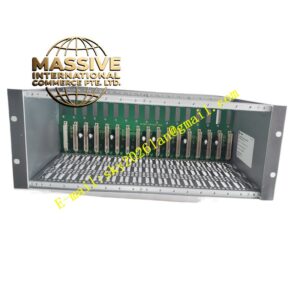
Application Scenarios Isolation protection for LCN nodes connected to long-distance outdoor LCN trunk cables. Ground loop interference suppression for multi-cabinet distributed LCN network. Surge protection for GUS station, HM module and NIM gateway LCN interfaces. Replacement and spare stocking for aging LCN isolation boards of legacy TPS cabinets.
Performance Parameters Signal Transmission Latency: ≤35μs Surge Event Log Storage Capacity: 1500 surge strike records Signal Insertion Loss: ≤0.3dB at 5MHz Isolation Resistance: ≥1000MΩ
Material Composition PCB Substrate: Low-loss high-frequency controlled impedance FR-4 multi-layer board High-frequency isolation transformer TVS surge suppression array RF impedance matching components Gold-plated back edge fingers Gold-plated BNC coaxial connector contacts Cold-rolled steel front panel with electrostatic spray coating
Structural Features Standard pluggable card structure, installed in dedicated isolation slot of LCN node rack. Front panel is equipped with RUN indicator, A-BUS STATUS indicator, B-BUS STATUS indicator and SURGE FAULT indicator. Two groups of BNC connectors are arranged on the side panel for redundant A/B LCN bus connection. High-frequency isolation transformer is placed in independent shielding area to prevent signal leakage. 50Ω impedance matching components are arranged close to BNC connectors to reduce signal reflection.
Working Principle After power-on, the board establishes handshake connection with LCN bus interface board. Incoming RF signals from LCN coaxial bus enter the board through BNC connectors. Surge suppression components absorb transient high voltage pulse. The isolation transformer cuts off DC ground loop current while transmitting AC high-frequency data signal. The conditioned signal passes to LCN bus interface board. Outgoing signal from LCN bus interface board passes through isolation transformer and surge protection circuit to LCN coaxial bus. The monitoring circuit captures surge strike events and records event timestamp. It sends surge alarm message to LCN diagnostic system when surge exceeds threshold.
Installation Requirements Insert the board vertically into the dedicated LCN isolation slot of node rack and tighten fixing screws. Use 50Ω dedicated RF coaxial cables for A/B bus wiring. Install 50Ω terminal resistors at the physical ends of LCN trunk lines. Check link status and surge event count on LCN network diagnostic page after power-on.
Precautions Release static electricity before plugging the board to protect RF and isolation components. BNC connector oxidation and cable extrusion lead to signal attenuation and intermittent communication dropout. Do not bend coaxial cable with radius smaller than manufacturer specification limit. This board must work in series with matched LCN bus interface board, it cannot work independently. Frequent surge alarm indicates insufficient external lightning protection for LCN trunk cable.