


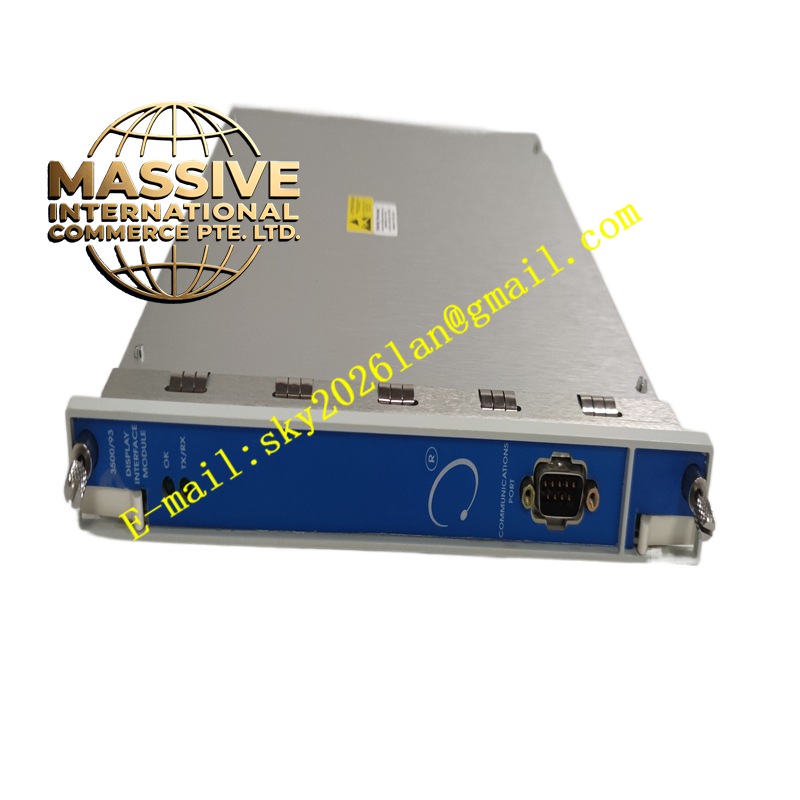
Description
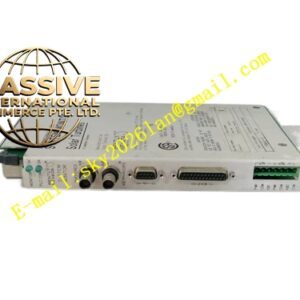
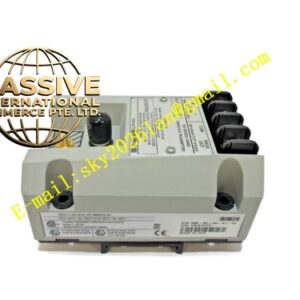
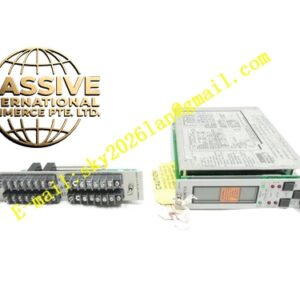
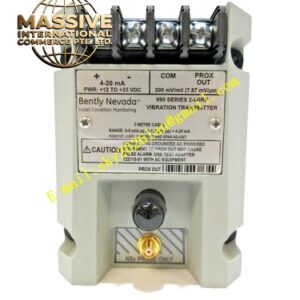
Bently Nevada 123616-01
Technical Specifications
- Product Family: 3300 XL NSv
- Input Excitation: -23 Vdc from monitoring system
- Output Signal: 0 to 5 V peak-to-peak conditioned probe signal into 2 kΩ or greater load
- Bandwidth: 0.5 Hz to 10 kHz at -3 dB
- Gain: Factory-set at 1 mV/µm typical with ±5% tolerance
- Noise Floor: Less than 1 µVrms from 1 Hz to 10 kHz
- Power Draw: 10 mA from probe excitation line, no external power required
- Operating Temperature: -20°C to +85°C
- Humidity: Up to 95% relative humidity when mated and sealed
- Protection: IP67 when connector is properly mated
Functional Features
- Non-contacting eddy-current displacement measurement
- Inline signal amplification and linearization
- Noise filtering for extended cable runs
- Preserves probe excitation integrity
- Reduces susceptibility to electromagnetic and radio-frequency interference
- Compatible with 2300/20, 3500/22, and other monitoring modules
Application Scenarios
- Shaft relative vibration monitoring on fluid-film bearings
- Shaft position and eccentricity measurement
- Gearbox and coupling alignment verification
- Turbo machinery condition monitoring
- General rotating equipment predictive maintenance
Performance Parameters
- High sensitivity for small displacement detection
- Low noise floor ensuring clear signal acquisition
- Stable gain characteristics over temperature range
- Accurate linearization within specified gap range
- Reliable operation in high-humidity environments
Material Composition
- Probe Tip: Polyphenylene sulfide for chemical and wear resistance
- Probe Body: AISI 304 stainless steel
- Cable Insulation: Fluorinated ethylene propylene
- Cable Armor: Optional AISI 302/304 stainless steel braid
- Connectors: Gold-plated brass or beryllium copper contacts
Structural Characteristics
- Compact probe diameter for restricted space installations
- Integral cable with miniature coaxial connector
- Threaded probe body for secure mounting
- Sealed connector interface preventing fluid ingress
- Flexible cable construction for routing in crowded enclosures
Working Principle The probe contains a coil that, when excited by a high-frequency RF signal, generates an alternating electromagnetic field at the probe tip. When a conductive metal target is brought into proximity, eddy currents are induced in the target surface. These eddy currents draw energy from the coil, altering its impedance. The monitoring system or inline conditioner detects this impedance change and converts it into a voltage directly proportional to the physical gap between the probe tip and the target surface.
Installation Requirements
- Mount in a threaded hole perpendicular to the target surface
- Set initial gap within the linear range of the transducer system
- Route cable away from high-voltage power conductors
- Secure cable to prevent fatigue at the probe exit
- Mate connector fully to achieve IP67 environmental seal
Usage Precautions
- Do not strike or scrape the probe tip against metal surfaces
- Avoid bending the cable below the manufacturer-specified minimum radius
- Keep connectors clean and dry before mating
- Verify output voltage at initial gap before enabling alarms
- Replace if the probe tip shows cracking or the cable jacket is compromised