


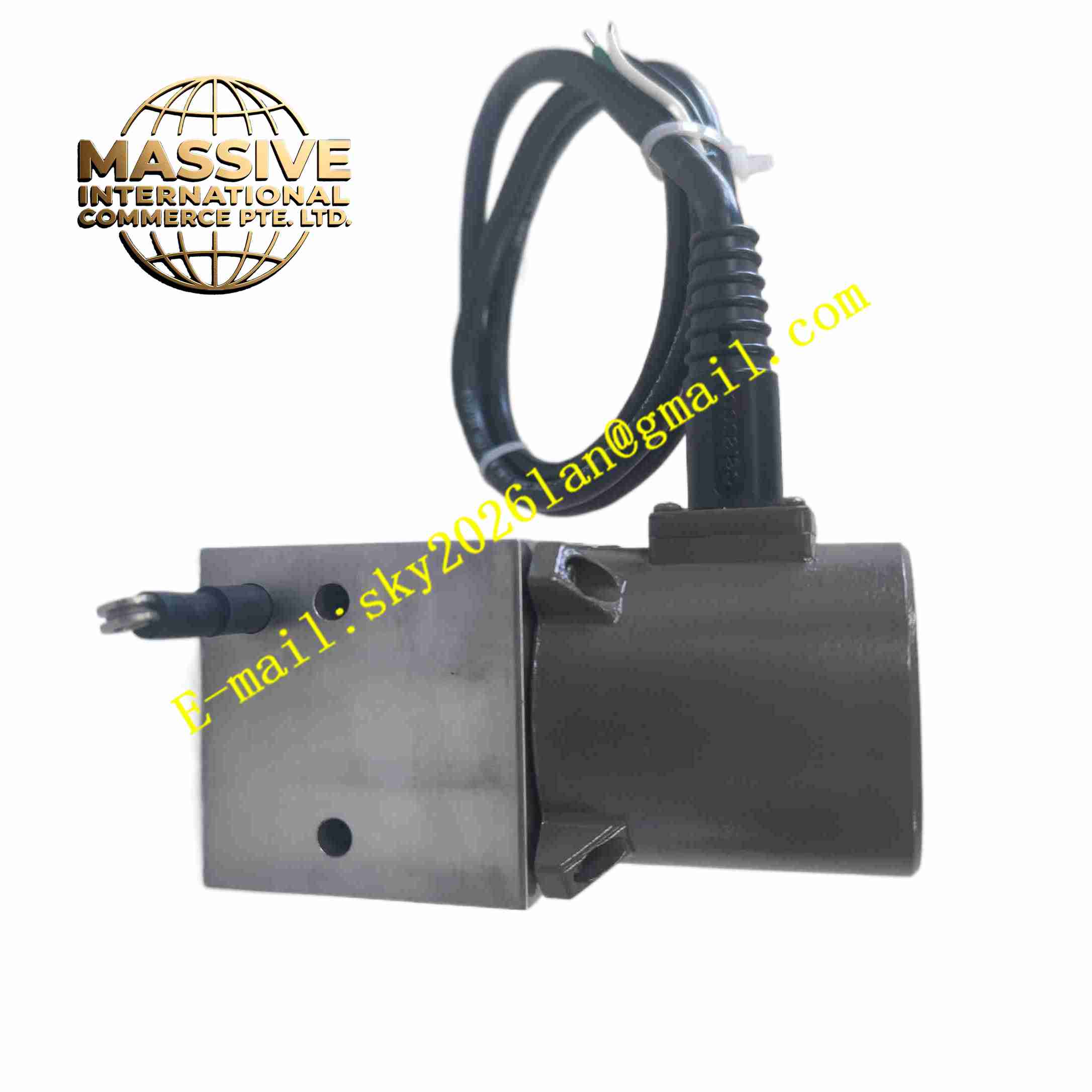
Description
CELESCO PT801-0005-611-111 Cable Extension Position Transducer
Technical Specifications Model: PT801-0005-611-111 Measurement Principle: Draw wire linear displacement measurement Full Stroke Measuring Range: 5 inches Output Signal: Analog signal Housing Material: Die cast aluminum alloy Cable Material: Stainless steel measuring wire Operating Temperature: -30℃ ~ +85℃ Storage Temperature: -40℃ ~ +90℃ Protection Grade: IP65 Mounting Method: Surface mounting with mounting holes Cable Retraction: Constant force internal spring
Functional Features Compact housing structure, flexible installation orientation independent of linear movement direction. Internal constant force spring maintains stable tension on stainless steel measuring cable. Stainless steel wire has high tensile strength and corrosion resistance. IP65 housing protects internal mechanism against dust and splash water. Output signal changes linearly with cable extension length. Shock and vibration resistant internal mechanical structure adapts to mobile equipment. No strict parallel alignment requirement between sensor housing and moving target. Supports continuous linear position measurement of reciprocating moving mechanical components.
Application Scenarios Hydraulic cylinder displacement measurement, mobile machinery boom position monitoring, lifting equipment stroke detection, material handling linear position feedback, civil engineering structural displacement monitoring.
Performance Parameters Linear output characteristic within full 5-inch measuring stroke. Internal spring maintains constant cable tension in whole measurement range. Stainless steel measuring wire resists fatigue under repeated reciprocating movement. Sensor keeps stable output performance under continuous mechanical vibration. Housing sealing prevents dust and liquid splash from entering internal mechanism. Output signal keeps stable with cable extension and retraction cycles.
Material Composition Sensor housing: Die cast aluminum alloy with surface coating. Measuring cable: High strength stainless steel wire. Internal spring: Alloy steel constant force retraction spring. Sensing element: Precision potentiometer. Sealing components: Nitrile rubber sealing ring. Cable outlet: Wear resistant plastic guide bushing. Fasteners: Stainless steel mounting screws. Signal cable: Shielded multi-core flexible cable.
Structural Features Rectangular die cast aluminum housing with mounting holes on housing base. Stainless steel measuring wire extends out from cable guide bushing on housing side. Internal constant force spring spool winds the measuring cable. Potentiometer shaft couples mechanically with cable spool. Sealing ring at cable outlet prevents dust and water splash entering housing. Signal cable exits from sealed cable gland on housing.
Working Principle Sensor housing is fixed on stationary base. The end of stainless steel measuring wire connects to moving mechanical target. When target moves away from sensor housing, measuring cable pulls spool to rotate, internal constant force spring stretches and stores mechanical energy. Spool rotation drives potentiometer shaft to rotate. Potentiometer resistance value changes proportionally with rotation angle, corresponding to linear extension length of measuring cable. The resistance variation converts to analog output signal. When target moves back, spring retracts cable and spool reversely rotates, potentiometer returns to corresponding position, output signal changes back accordingly. Control system receives analog signal and calculates linear displacement value.
Installation Requirements Fix sensor housing firmly on stationary rigid base using mounting screws. Attach the cable end connector to moving target. Ensure measuring cable moves smoothly without lateral friction or sharp angle bending. Route shielded signal cable inside protective conduit, separate from high power cables. Connect power supply and signal output wire according to wiring diagram. Check cable retraction function manually before equipment operation. Adjust installation position to avoid cable collision with surrounding mechanical components during full stroke movement.
Usage Precautions Do not apply overload pulling force on measuring stainless steel wire, overload causes permanent wire breakage. Prevent sharp objects scratching measuring cable surface. Do not bend measuring cable at sharp angle at cable outlet bushing. Check cable tension and surface wear regularly during long-time reciprocating operation. Do not disassemble sensor housing, internal spring can release suddenly and cause injury. Avoid corrosive liquid or gas contacting sensor housing and measuring wire. Replace sensor when output linearity deviates beyond tolerance.