


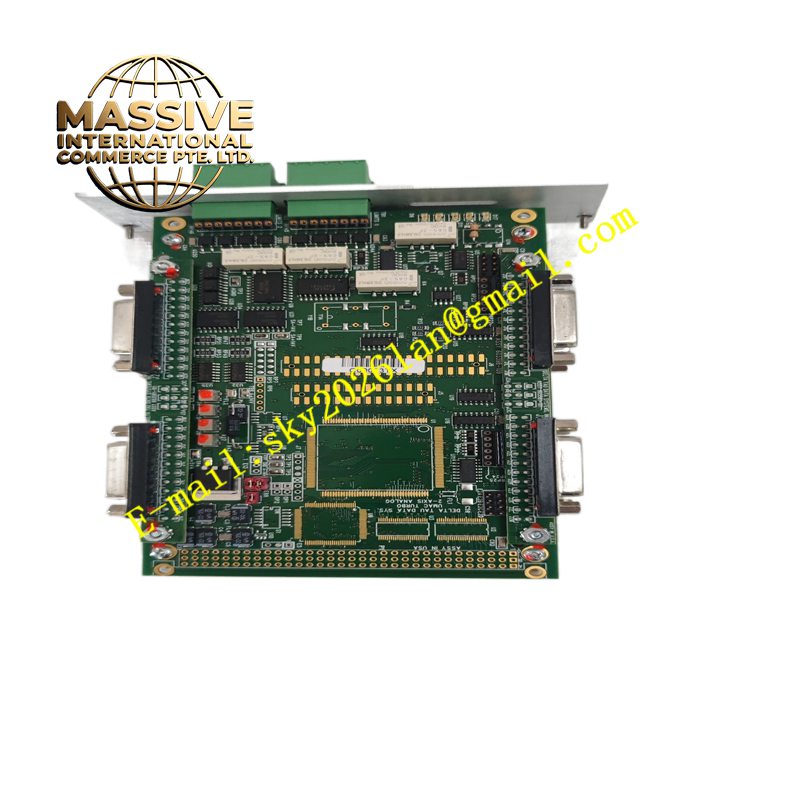
Description
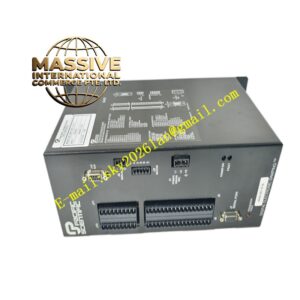
Delta Tau ACC-24E2S
Technical Specifications
- Brand: Delta Tau Data Systems
- Model: ACC-24E2S
- Product Type: Stepper Interface and Encoder/MLDT Expansion Board
- Series: ACC-24E2x Family for UMAC/MACRO Station
- Compatible Controllers: UMAC, Ultralite PMAC, MACRO Station CPU
- Control Channels: 4 channels of stepper interface and/or encoder/MLDT circuitry
- Stepper Output Type: Pulse and Direction (RS-422 compatible)
- Encoder Inputs: 4 channels of encoder/MLDT input circuitry
- Output Compatibility: 5V input drives (differential or single-ended configuration)
- Power Supply: Supplied via UMAC backplane
- Mounting Format: 3U Rack-mount Eurocard (single slot)
- Part Number: 603441-101 (Option TB with Terminal Block Encoder Connectors)
- Terminal Block Mezzanine Board: 603276-100
Functional Features
- Provides 4 channels of PMAC2-style stepper interface for pulse-and-direction motor control
- Supports 4 channels of encoder or MLDT feedback input for position measurement
- RS-422 compatible stepper outputs capable of driving 5V input stepper or servo drives
- Configurable for differential or single-ended output connection modes
- Ideal for dual-feedback systems, processing four encoders on a single 3U board
- Compatible with any UMAC or MACRO Station CPU via high-speed UBUS communication
- Supports up to 8 boards per UMAC system (32 stepper channels total)
- MACRO Station CPU limitation: Only 2 ACC-24E2S boards supported per MACRO Station (8 servo data paths)
- Compact 3U form factor occupying only one rack slot
- No onboard processor; relies on host PMAC CPU for motion control computations
- Terminal block connector options available for simplified field wiring
Application Scenarios
- Stepper Motor Control Systems: Precision positioning stages, linear actuators, and indexing tables
- Dual-Feedback Systems: Machine tools with both motor and linear scale feedback for enhanced accuracy
- MLDT Position Sensing: Hydraulic cylinder position monitoring in industrial presses and testing machines
- Semiconductor Equipment: Wafer stage positioning with high-resolution encoder feedback
- Packaging Machinery: Stepper-driven conveyor synchronization and product handling
- Laboratory Automation: Precision sample handling and instrument positioning systems
- Retrofit Applications: Adding encoder feedback or stepper control to legacy machinery
- Multi-Axis Gantry Systems: Synchronized multi-motor positioning for cutting and engraving
Performance Parameters
- Stepper Output Channels: 4 per board
- Encoder/MLDT Input Channels: 4 per board
- Output Signal Type: RS-422 differential pulse and direction
- Output Voltage Compatibility: 5V logic level drives
- Maximum Stepper Pulse Frequency: Determined by host PMAC servo cycle rate
- Encoder Input Resolution: Dependent on connected encoder and PMAC configuration
- Communication Speed: High-speed UBUS parallel interface to UMAC CPU
- Maximum Boards per UMAC: 8 (32 channels)
- Maximum Boards per MACRO Station: 2 (8 channels)
Material Composition
- PCB Substrate: Multi-layer FR-4 fiberglass epoxy for signal integrity and durability
- Servo IC: Integrated PMAC2-type 4-channel servo/stepper ASIC
- Output Drivers: RS-422 differential line driver ICs for stepper pulse generation
- Input Receivers: Differential line receiver ICs for encoder/MLDT signal conditioning
- Connectors: DB15 or terminal block connectors with gold-plated or tin-plated contacts
- Passive Components: Precision resistors, ceramic capacitors, and transient voltage suppressors
- Front Panel: Metal plate with identification labeling
- Protective Coating: Conformal coating for environmental protection
Structural Features
- Standard 3U Eurocard form factor for UMAC rack mounting
- Single-slot design for space-efficient system configuration
- Front-panel accessible connectors for stepper outputs and encoder/MLDT inputs
- Option TB configuration provides terminal block connectors for easy field wiring
- LED indicators for power and channel status monitoring
- Keyed connector interfaces preventing miswiring
- Robust mechanical construction for industrial vibration environments
- Heat dissipation through chassis airflow (no onboard fans required)
- Clear silk-screen labeling for pin identification
Working Principle
The ACC-24E2S functions as a digital pulse generation and encoder counting interface for the PMAC motion control system. For stepper control applications, the UMAC CPU calculates the required motion profile and generates step and direction commands. These digital commands are sent via the UBUS to the ACC-24E2S, where the PMAC2-type servo IC converts them into RS-422 differential pulse and direction signals. These signals are transmitted to external stepper drives, which convert the pulses into motor current to drive stepper motors.
For encoder feedback applications, the ACC-24E2S receives quadrature encoder signals (A, B, Z) or MLDT position signals from external sensors. The input circuitry conditions these signals through differential receivers and feeds them to the servo IC’s encoder counters. The counted position values are read by the UMAC CPU via the UBUS for closed-loop position verification or dual-feedback control algorithms. This dual capability makes the particularly valuable for systems requiring both stepper motor control and high-resolution position feedback on the same board.
Installation Requirements
- Power down the UMAC system before inserting or removing the board
- Insert the board into an available slot in the 3U UMAC rack chassis
- Ensure the board’s edge connector is properly aligned with the backplane
- Secure the board using front-panel mounting hardware
- For stepper control: Connect pulse and direction output cables to stepper drive inputs
- For encoder feedback: Wire encoder or MLDT signals to the appropriate input terminals
- Use shielded twisted-pair cables for encoder signals to minimize noise
- Ground cable shields at the controller end only to prevent ground loops
- Configure stepper output parameters and encoder input types in PMAC software
- Verify RS-422 termination settings if required by the application
- Test stepper motion and encoder feedback independently before full system integration
Usage Precautions
- Verify drive compatibility with RS-422 differential pulse and direction signals
- Ensure encoder signal voltage levels match the input specifications
- Use proper cable shielding and grounding practices for encoder signals
- Do not exceed the maximum number of boards supported by the host CPU
- For MACRO Station systems, limit to 2 boards per station
- Keep stepper output cables separate from encoder input cables to prevent crosstalk
- Monitor system performance for missed steps or encoder count errors
- Back up PMAC configuration before modifying axis parameters
- Follow ESD precautions when handling the board
- Ensure adequate chassis ventilation for thermal management
- Consult Delta Tau documentation for specific wiring diagrams and configuration details