


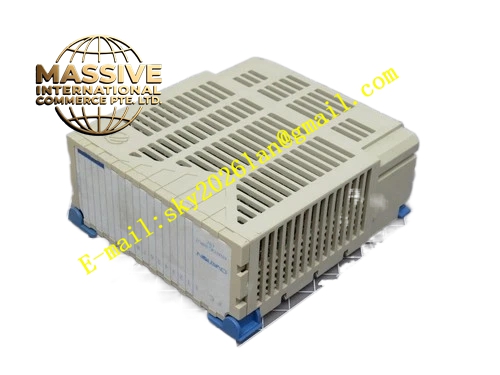
Description
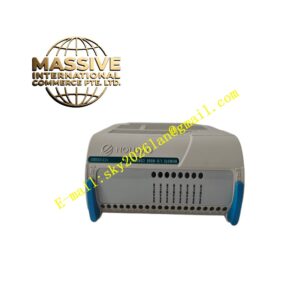
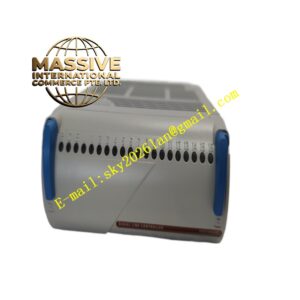
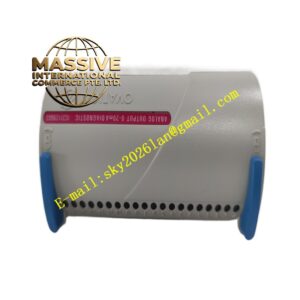
Emerson 1C31179G01
Technical Specifications:
- Brand: Emerson
- Model Number: 1C31179G01
- Product Type: Remote I/O Electronics Module
- System Platform: Ovation DCS
- Signal Compatibility: Supports 4–20 mA current signals and other industrial standard analog signals
- Dimensions: Approximately 12.1 cm × 5.1 cm × 14.0 cm
- Weight: Approximately 0.3 kg
- Input Impedance: Megohm-level high input impedance circuit
- Communication: Ovation I/O bus via backplane
Functional Features:
- Signal Acquisition and Conditioning: Receives analog current signals from field sensors through high input impedance circuits, minimizing load impact on sensor outputs; internal signal conditioning circuits perform filtering, amplification, and anti-interference processing to eliminate noise and stabilize signals
- Sensor Interface: Connects to various sensor types including temperature, pressure, and flow sensors, converting physical process measurements into digital signals for controller processing
- Actuator Control: Interfaces with actuators such as electric valves, motors, and alarm devices, converting controller digital commands into physical operations
- Real-Time Data Acquisition and Monitoring: Enables continuous monitoring of plant status and process parameters for trend analysis and operational awareness
- Alarm and Safety Integration: Interfaces with alarm systems to trigger alerts or initiate safety measures when predefined conditions are met
- Compact and Lightweight: Small form factor facilitates installation in space-constrained industrial environments and simplifies transportation and replacement
Application Scenarios:
- Power Generation: Monitoring and control of generators, transformers, and switchgear in power plants
- Chemical Industry: Process parameter monitoring and control including reactor temperature, pressure, and liquid level
- Oil and Gas: Monitoring and control of oil field extraction, pipeline transport, and storage facilities
- Manufacturing: Production line and equipment monitoring for efficiency and quality improvement
- Environmental Monitoring: Atmospheric, water quality, and soil parameter monitoring
Material Composition:
- Industrial-grade electronic components
- Multi-layer PCB
- Modular electronics housing
Structural Features:
- Compact plug-in electronics module form factor
- Backplane bus connector for Ovation I/O bus communication
- Interface connection to paired personality module
- Lightweight construction for easy handling
Working Principle:
The module receives analog signals (such as 4–20 mA current loops) from field sensors through its paired personality module. The high input impedance circuit minimizes loading on the sensor. The signal then passes through internal conditioning circuits that perform filtering, amplification, and noise rejection. The conditioned analog signal is converted to a digital value by the internal A/D converter and transmitted to the Ovation controller via the I/O bus. For output functions, the module receives digital commands from the controller and converts them to analog or digital output signals to drive field actuators.
Installation Requirements:
- Install as the electronics module within the Ovation local I/O base assembly
- Pair with the appropriate personality module for the target signal type
- Connect to the Ovation I/O bus through the backplane
- Ensure proper grounding of the base assembly
Usage Precautions:
- Verify personality module compatibility before installation
- Use shielded cables for analog signal connections
- Follow proper ESD handling procedures
- Perform loop checks after installation to verify signal accuracy