


Description
Emerson 5X00453G01
Technical Specifications:
- Brand: Emerson
- Model Number: 5X00453G01
- Product Type: Analog Output Module
- System Platform: Ovation DCS
- Output Channels: 8 independent analog output channels
- Output Signal Types: 4–20 mA DC current signals and 0–10 V DC voltage signals
- Output Precision: ±0.1% of full scale
- Load Capacity (Current): Maximum 750 Ω
- Load Capacity (Voltage): Minimum 10 kΩ
- Isolation Voltage: 2500 VAC between channels and between channels and internal circuits
- Response Time: Within 10 ms
- Power Supply: 24 VDC, ±10% allowable fluctuation
- Power Consumption: Within 10 W during normal operation
- Operating Temperature: -40°C to +70°C
- Humidity: 5% to 95% RH, non-condensing
- Dimensions: 19 × 8.5 × 6.3 cm
Functional Features:
- High-Precision Signal Output: Utilizes advanced digital-to-analog conversion technology and precision circuit design to ensure high output accuracy and excellent linearity
- Independent Channel Control: All 8 output channels operate independently; each channel can be individually configured and adjusted without mutual interference
- Strong Anti-Interference Capability: Employs optoelectronic isolation and electromagnetic shielding to resist electromagnetic and power supply interference at industrial sites
- Comprehensive Self-Diagnosis: Real-time monitoring of each channel’s output status, power supply condition, and internal circuit health; generates alarm signals and uploads fault information to the control system for rapid troubleshooting
- Seamless System Integration: As a standard Ovation module, it connects seamlessly with other system modules and the central processing unit; output parameters are configurable and monitorable through system software
Application Scenarios:
- Power Generation: Analog control of boiler feedwater valves, turbine governor actuators, and damper positioning
- Chemical Processing: Precise dosing control and reactor parameter regulation
- Metallurgy: Continuous casting and rolling process control
- Oil and Gas: Pipeline pressure regulation and flow control
Material Composition:
- Industrial-grade electronic components
- Multi-layer PCB with conformal coating
- Standard Ovation card mechanical housing
Structural Features:
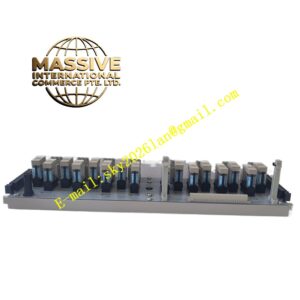
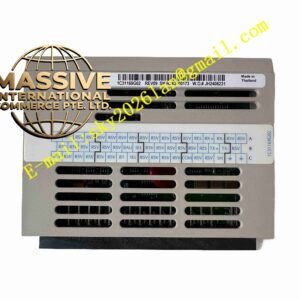
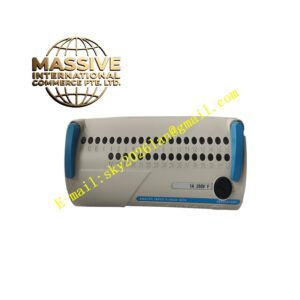
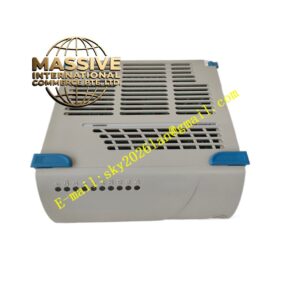
- Standard Ovation plug-in card form factor
- Backplane connector interface for data and power
- Front-panel status indicator LEDs
- 8 independent analog output terminal connections
Working Principle:
The module receives digital control commands from the Ovation DCS controller via the backplane bus. Its internal digital-to-analog converter translates these digital values into precise analog current (4–20 mA) or voltage (0–10 V) signals. Each of the 8 channels operates through independent signal conditioning circuits with optoelectronic isolation, ensuring that output signals are free from cross-channel interference. The module continuously self-monitors and reports diagnostic data back to the controller.
Installation Requirements:
- Install in a compatible Ovation DCS rack slot
- Connect field wiring to the analog output terminals using shielded cables
- Ensure proper grounding and shielding to maintain signal integrity
- Verify power supply voltage is within the 24 VDC ±10% range before powering on
Usage Precautions:
- Verify that actuator input impedance matches the module’s load capacity specifications
- Use shielded twisted-pair cables for all analog output wiring
- Perform periodic calibration checks to maintain output accuracy
- Avoid routing analog signal cables parallel to high-voltage power cables
- Back up system configuration before making parameter changes