


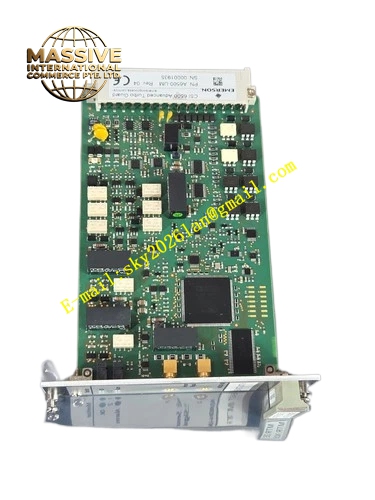
Description
Emerson A6500‑CC
Technical Specifications: Module power‑supply: 24 VDC obtained from AMS6500 rack backplane Internal rack‑bus: AMS6500 proprietary high‑speed parallel bus External communication interface: multiple‑channel Ethernet and serial interface Supported communication protocols: Modbus TCP, Modbus RTU, OPC‑UA, AMS proprietary protocol Operating temperature: 0 ℃‑60 ℃ Storage temperature: ‑40 ℃‑85 ℃ Relative humidity: 5%‑95% non‑condensing
Functional Features: Real‑time cyclic data collection for every monitor module inside rack. Data sorting, packaging and time‑stamping processing. Multi‑protocol conversion realizes interconnection with various upper‑level industrial control systems. Built‑in fault‑event log storage function, recording alarm and diagnostic‑fault historical records. LED indicator lights display internal‑bus, external‑communication and module‑health status. Hot‑swap module supports online replacement. System configuration parameter storage inside module non‑volatile memory.
Application Scenarios: Central data‑communication management unit of AMS6500 machinery‑protection rack for power‑plant turbogenerator set, petrochemical large‑size compressor group, realizing data interaction between machinery‑protection rack and DCS control system.
Performance Parameters: Internal‑bus data refresh cycle: millisecond‑level Vibration resistance: 10 Hz‑150 Hz, 0.5 g Shock resistance: 10 g peak acceleration, 11 ms duration MTBF value: 221000 hours
Material Composition: Module housing: UL94‑V0 flame‑retardant thermoplastic. Main circuit board: FR‑4 glass‑fiber epoxy printed‑circuit substrate. Backplane connector: gold‑plated copper‑alloy multi‑pin connector. Communication‑interface components adopt industrial‑grade Ethernet and serial chips. Side locking latches are high‑strength reinforced engineering‑plastic parts.
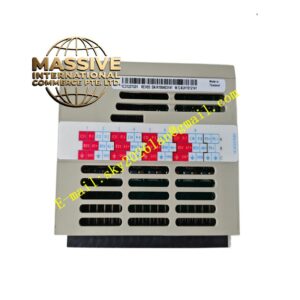
Structural Features: 3U Euro‑card plug‑in module structure, occupies single slot inside AMS6500 rack. Two‑side mechanical locking buckles fix module on rack backplane. Front‑panel arranges multiple LED status indicator lights and external‑communication‑interface sockets. Rear‑side multi‑pin gold‑plated connector connects rack internal bus and power‑supply backplane. Ventilation‑grille distributed on upper shell for passive heat dissipation.
Working Principle: Module obtains working power from rack backplane. It communicates with every monitor module through rack internal high‑speed bus, reads real‑time measurement data, alarm status and fault diagnostic information. Internal micro‑processor completes data sorting, time‑stamping and protocol packaging. Processed data transmits to upper DCS or monitoring host through external Ethernet or serial interface. Configuration parameters store in module non‑volatile memory, and keep data retention after power‑off.
Installation Requirements: Insert A6500‑CC module into designated communication‑controller slot of AMS6500 rack. Fasten two‑side locking latches completely. External communication wiring uses industrial‑grade shielded Ethernet or shielded serial cable. Separate communication cables and high‑voltage power‑cable wiring‑tray. Cut off rack power‑supply before module plug‑in and removal.
Precautions for Use: Do not modify stored configuration parameters without professional‑software authorization. Wear anti‑static wrist‑band for maintenance‑operation. Regularly clean dust on module ventilation grille. Avoid installation in environment with oil mist and corrosive gas. Replace module immediately when communication function is abnormal and hardware fault indicator lights keep on.