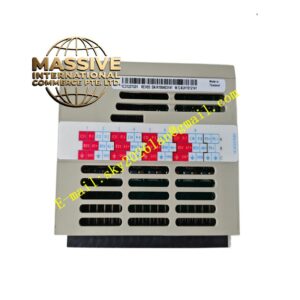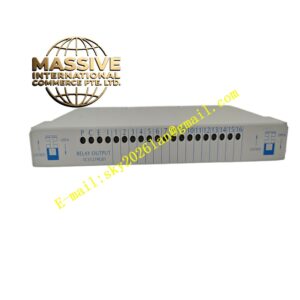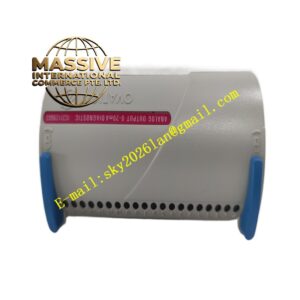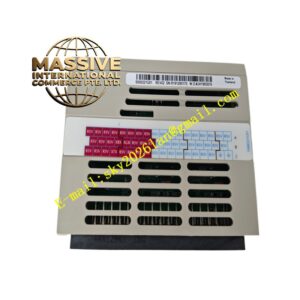



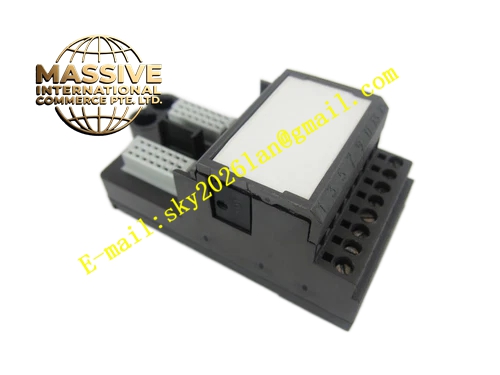
Description
Emerson KJ4001X1‑CB1
Technical Specifications
- Channel Quantity: 16 signal channels
- Per‑Channel Isolation Rating: 1500 VDC galvanic isolation
- Terminal Type: screw‑clamp field‑wiring terminal, accepts 14‑24 AWG wire gauge
- Maximum Field Circuit Voltage: 30 VDC
- Operating Ambient Temperature: ‑40 °C ~ +70 °C
- Storage Temperature: ‑50 °C ~ +85 °C
- Relative Humidity: 5 %‑95 %, non‑condensing
- Airborne Contaminant Classification: ISA‑S71.04‑1985 Class G3
- Protection Class: IP20
- Shock Resistance: 10 g half‑sine wave pulse for 11 ms
- Vibration Resistance: 1 mm peak‑to‑peak amplitude for 2‑13.2 Hz; 0.7 g acceleration for 13.2‑150 Hz
- Mechanical Feature: rotary anti‑mismatch coding key, hot‑swappable together with paired I/O module
- Safety Approval: ATEX, IECEx, FM approval for Zone 2 hazardous‑location installation
Functional Features Sixteen‑channel screw‑clamp terminals provide reliable connection points for field instrument cables. Channel‑oriented galvanic isolation blocks ground‑loop disturbance and cross‑channel signal crosstalk. Rotary mechanical coding key avoids mismatched assembly with incompatible I/O module hardware. Internal contact spring structure maintains stable electrical contact under long‑term vibration environment. Receives bussed field‑power supply from I/O carrier base for field‑loop power distribution. Permit disconnection and replacement together with matched I/O module without modifying field wiring. Terminal label area supports field marking for each signal channel for maintenance convenience. Complies with international hazardous‑area installation certification requirements.
Application Scenarios Petrochemical, chemical processing and thermal‑power plant control cabinets. Used for field wiring termination of 16‑channel M‑Series analog input, discrete input and discrete output I/O modules, connects transmitters, limit switches, solenoid valves and local indicator devices.
Performance Parameters Galvanic isolation performance maintains specification index under full operating‑temperature range. Screw‑terminal contact resistance keeps low and stable for long‑term running. Mechanical anti‑mismatch key structure prevents human‑error hardware mis‑installation. Supports continuous 7×24‑hour operation inside industrial cabinet environment.
Material Composition Flame‑retardant high‑strength engineering‑plastic housing. Copper alloy screw‑clamp terminal contacts with tin‑plated anti‑oxidation surface treatment. Industrial‑grade isolation barrier components for channel‑to‑channel electrical separation. Glass‑epoxy internal circuit substrate. Stainless‑steel hardware for mechanical locking onto carrier base.
Structural Characteristics Modular rectangular shape for front‑face snap‑on installation onto DeltaV I/O carrier base. Front‑facing screw terminals arranged in ordered rows for convenient field‑cable termination. Rotary key dial locates on side surface for hardware compatibility configuration. Rear‑side contact assembly mates precisely with I/O module front contact points. Side locking latches fasten terminal block firmly against carrier base front plane. Surface reserved blank marking zone for channel identification tag application.
Working Principle Field instrument signal cables terminate onto KJ4001X1‑CB1 front‑side screw‑clamp terminals. Signal paths pass internal galvanic isolation barriers inside terminal‑block assembly, eliminate ground‑loop interference generated by field‑side different ground potential. Processed field‑signal routes through rear‑side contact assembly and transfers into corresponding channel circuit of plugged‑in M‑Series I/O module. Bussed field‑power from carrier base distributes through terminal‑block internal traces to field‑loop terminals as required by signal type. Rotary mechanical keying defines hardware compatibility, stops installation of unmatched I/O module onto this terminal‑block unit. All field‑signal conversion and isolation execute passively without software configuration.
Installation Requirements Mount terminal block onto designated slot position of M‑Series I/O carrier base, engage side locking latches until audible click sound appears. Set rotary mechanical coding key according to paired I/O module hardware type before installing I/O module. Field cable wiring strictly follows AWG wire‑gauge specification, apply correct screw‑torque for every terminal screw. Carry out field‑wiring termination work under field‑circuit power‑off condition. Verify no bare copper wire strand exposed outside screw‑clamp terminal area after wiring completion. For hazardous classified Zone 2 locations, comply fully with ATEX and IECEx installation documentation.
Usage Precautions Do not apply field‑circuit voltage exceeding 30 VDC rating onto terminal‑block channels. Maintain specified screw tightening torque for each terminal screw during regular maintenance inspection. Rotary key setting must match physical I/O module hardware type, wrong setting triggers hardware incompatibility risk. Terminal‑block assembly can only be removed after de‑energizing field‑loop power. Never disassemble terminal‑block housing; internal isolation components cannot be maintained or replaced by user.