


Description
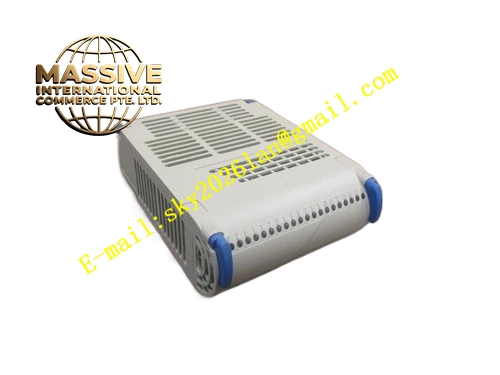
Emerson MV6100COMI
Technical Specifications:
- Brand: Emerson (MVME series)
- Product Type: VMEbus Single-Board Computer
- Microprocessor: MPC7457 PowerPC
- Clock Frequency: 1.267 GHz
- L1 Cache (I/D): 32 KB / 32 KB
- L2 Cache: 512 KB
- L3 Cache: 2 MB
- NVRAM: 32 KB (4 KB user-accessible)
- NVRAM Battery Life: 50 years at 55°C; 5 years at 100% duty cycle, 25°C
- Removable Battery: Yes
- VME Bus: Supports VME 2eSST protocol (320 MB/s data rate)
- Host Bridge: 133 MHz host bus, 133 MHz DDR memory bus
- PCI-X Bus: Dual PCI-X buses; one connected to Tsi148 VMEbus interface, one with two PMC-X sites
- PMC Sites: 2× PMC-X (33 to 100 MHz PCI bus speed)
- Network: Dual Gigabit Ethernet interfaces
- P2 I/O Modes: PMC mode and IPMC mode (jumper-configurable)
Functional Features:
- VME 2eSST Support: Provides 8× bandwidth increase over legacy VME bus, enabling 320 MB/s data transfer rates while maintaining backward compatibility with existing VMEbus backplanes
- High-Performance Processor: MPC7457 at 1.267 GHz with AltiVec SIMD instructions for vector processing and DSP-like computations
- Large Cache Hierarchy: 32 KB L1 + 512 KB L2 + 2 MB L3 cache for reduced memory latency
- Dual Gigabit Ethernet: Supports high-speed network communication for distributed processing and data acquisition
- Dual PMC-X Expansion: Two PMC-X mezzanine sites allow custom I/O expansion with industry-standard PMC modules
- NVRAM with Removable Battery: 32 KB non-volatile RAM with 50-year battery retention for configuration and boot data preservation
Application Scenarios:
- Defense and aerospace command and control systems (naval bunker systems, fixed ground systems, reconnaissance aircraft)
- Semiconductor process equipment (SPE)
- Automated test equipment (ATE)
- Medical imaging (PET, MRI, X-ray, CT scanners)
- High-end industrial automation with vector processing requirements
- Multi-processor configurations using Emerson PrPMC processor modules
Performance Parameters:
- Processor Speed: 1.267 GHz
- VME Bus Bandwidth: 320 MB/s (2eSST)
- Memory Bus: 133 MHz DDR
- PMC Bus Speed: 33 to 100 MHz
- Network: 2× Gigabit Ethernet
- Cache: 32 KB L1 + 512 KB L2 + 2 MB L3
Material Composition:
- Multi-layer high-speed printed circuit board
- MPC7457 PowerPC processor in BGA package
- Tsi148 VMEbus bridge IC
- DDR SDRAM memory modules
- NVRAM IC with lithium backup battery
- Gigabit Ethernet PHY transceivers
Structural Features:
- Standard 6U VME form factor
- Front panel with dual Gigabit Ethernet RJ-45 connectors
- Two PMC-X mezzanine card sites accessible from the top
- P2 I/O connector supporting PMC and IPMC modes
- VMEbus P1 connector for backplane interface
- Handle/ejector mechanism for card insertion and removal
Working Principle:
The MPC7457 processor executes application code using its multi-level cache hierarchy for high-speed data access. The Tsi148 VMEbus bridge connects the processor’s PCI-X domain to the VME backplane, supporting both legacy VME protocols and the high-speed 2eSST protocol. Data-intensive computations leverage the AltiVec SIMD unit for parallel vector processing. The dual PCI-X buses provide independent paths for VMEbus communication and PMC expansion, preventing I/O bottlenecks. Dual Gigabit Ethernet interfaces handle network communication for distributed system architectures.
Installation Requirements:
- Install in a standard 6U VME chassis with 2eSST-capable backplane for full bandwidth
- Ensure adequate cooling airflow across the board surface
- Configure P2 I/O mode jumpers (PMC or IPMC) before installation
- Connect Gigabit Ethernet cables to the front panel RJ-45 ports
- Install PMC modules into the mezzanine sites as required