


Description
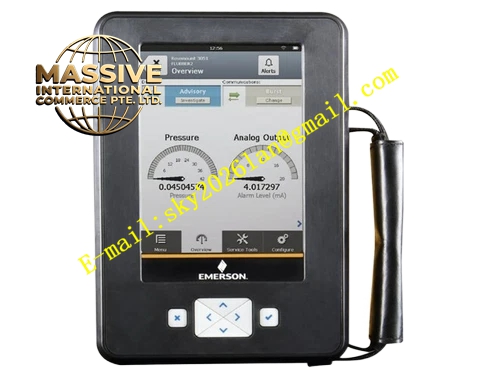
Emerson TREXLHPKLWS3
Technical Specifications
- Supported protocols: HART, FOUNDATION Fieldbus H1
- Display: Color touchscreen, sunlight-readable, anti-glare coating
- Operating temperature: -20°C to +50°C
- Storage temperature: -30°C to +60°C
- Power supply: Rechargeable lithium-ion battery
- Battery continuous runtime: Minimum 8 hours under normal field operation
- Enclosure rating: IP54
- Communication port: HART/FF fieldbus interface
- Built-in memory: For configuration file storage and event log recording
- Language support: Multiple industrial languages
Functional Features
- Complete HART device configuration, parameter modification, tag editing and calibration operation.
- FOUNDATION Fieldbus device commissioning, segment diagnosis, device address assignment and schedule configuration.
- Real-time reading of process variables, sensor raw values, device status and fault alarm information.
- Built-in device diagnostic function to detect instrument drift, loop fault and communication abnormality.
- Support saving configuration snapshots and offline parameter comparison for device replacement.
- Field log recording to store maintenance records, timestamps and fault descriptions.
- The protective rubber sleeve provides shock resistance against drops during field operation.
- On-device battery status monitoring and low battery alert.
- Compatible with thousands of HART and FF smart instrument models from multiple manufacturers.
Application Scenarios Petrochemical plants, refineries, natural gas processing facilities, power plants, pharmaceutical factories, food and beverage plants, water treatment stations. Used for commissioning new smart transmitters, regular instrument calibration, troubleshooting valve positioners and fieldbus network maintenance.
Performance Parameters
- HART communication response speed: Within 1 second for standard parameter reading
- Fieldbus segment diagnostic refresh rate: 2 seconds
- Touch screen response time: Less than 0.3 seconds
- Battery full charging time: 3 hours
- Data retention: Saved configuration files remain intact after battery power depletion.
Material Composition
- Main unit housing: High-strength impact-resistant engineering plastic
- Protective boot: Thick silicone rubber
- Touch panel: Tempered glass with anti-scratch coating
- Internal circuit board: FR-4 flame retardant PCB with conformal coating
- Test leads: Multi-strand copper conductor with insulated PVC outer sheath
- Alligator clips: Nickel-plated copper alloy
- Carrying case: Nylon fabric with reinforced stitching and shock-absorbing foam liner
Structural Characteristics Handheld compact portable structure. Front panel integrates color touchscreen and physical shortcut buttons. Bottom side mounts communication port and charging port. The rubber protective sleeve wraps the whole perimeter of the communicator. The complete kit is stored inside a hard-shell fabric carrying case with separated compartments for test leads, clips and charger. Internal circuit layout separates communication analog circuit and digital control circuit to reduce interference.
Working Principle The built-in protocol circuit establishes electrical connection with field smart instruments through test leads. The communicator encodes user operation commands into HART or FOUNDATION Fieldbus signals and transmits signals to field devices. It receives response data from instruments, decodes signal packets and displays process values, device parameters and diagnostic information on the touchscreen. The internal storage module archives configuration files and maintenance records. The battery management circuit monitors cell voltage and controls charging and discharging cycles.
Installation Requirements
- Inspect the communicator, test leads and clips before field use. Confirm no cable insulation damage.
- Attach the protective rubber boot to the main unit before outdoor or plant site operation.
- Connect test leads firmly to the communication port on Trex device.
- Attach alligator clips to the two terminals of the instrument loop, maintain correct polarity for HART connection.
- Power on the handheld unit and select corresponding communication protocol matching the field instrument.
- Complete battery charging in non-hazardous area before using in explosive classified zones.
- Keep the device away from strong electromagnetic sources during instrument communication.
Usage Precautions
- Do not use the communicator in explosive environments when battery cover is open or during battery charging.
- Do not connect the test leads to high voltage circuits exceeding 42V. High voltage will permanently damage the communication circuit.
- Keep the touchscreen surface away from sharp hard objects to prevent scratch damage.
- Clean the device only with dry soft cloth. Do not immerse the unit in liquid.
- Do not disassemble the main unit housing. No field-serviceable internal components. Replace the whole unit when internal circuit fails.
- Disconnect test leads from instrument loop before disconnecting cable from Trex port.
- Store the complete kit inside the carrying case after field maintenance work to prevent loss of accessories.
- Perform regular battery cycle maintenance to extend lithium battery service life.