



Description
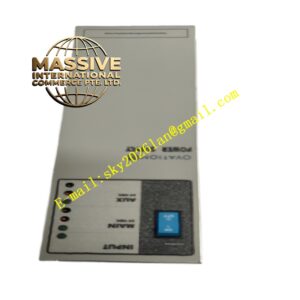
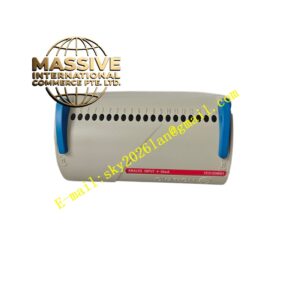
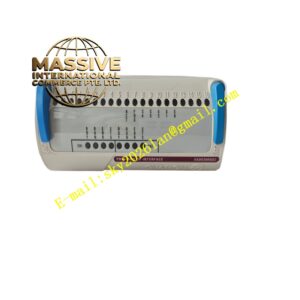
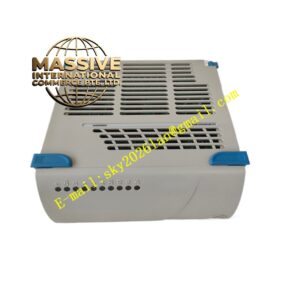
Emerson VS3201
Technical Specifications
- Signal type: AC vibration signal, eddy current probe gap signal
- Channel quantity: 4 channels
- Supported sensor types: Eddy current proximity probe, velocity vibration transducer
- Operating temperature: 0°C to +60°C
- Storage temperature: -40°C to +85°C
- Relative humidity: 5% to 95%, non-condensing
- Mounting: Ovation standard rack backplane installation
- Communication interface: Ovation proprietary rack backplane bus
- Diagnostic functions: Sensor open circuit detection, short circuit detection, signal amplitude abnormal alarm, transducer power fault detection
Functional Features
- 4 independent vibration input channels for rotating machinery multi-point vibration and shaft gap acquisition.
- Built-in transducer power supply to power eddy current proximity probes.
- Calculate vibration peak-to-peak amplitude, vibration velocity and shaft gap value automatically.
- Configurable high and low alarm thresholds for vibration parameters.
- Electrical isolation between field sensor circuit and DCS backplane bus to eliminate ground loop interference.
- Each channel integrates surge protection for transient voltage suppression from field wiring.
- Support hot swap replacement in energized Ovation rack.
- Front panel LED indicators display module running state and channel fault information.
- Power-up self-test and continuous background self-test during normal running.
Application Scenarios Thermal power plant turbine shaft vibration monitoring, compressor shaft vibration and gap monitoring, industrial large pump rotor condition monitoring, gas turbine vibration protection, petrochemical rotating machinery predictive monitoring.
Performance Parameters
- Vibration measurement range: 0 to 800 μm peak-to-peak
- Gap measurement range: 0.25mm to 2.5mm
- Measurement resolution: 16-bit A/D conversion
- Channel isolation voltage: 1500V AC
- Sampling rate: 10kHz per channel
Material Composition
- Front panel: Flame retardant plastic with silk screen printing
- Main PCB: FR-4 flame retardant printed circuit board with conformal coating
- A/D converter: High speed industrial analog-to-digital chip
- Isolation component: Digital isolator
- LED indicator: Industrial high brightness LED
- Backplane connector: Gold plated edge connector
Structural Characteristics Standard Ovation I/O card dimension. Rear gold plated edge connector inserts into rack backplane. Front panel fitted with extraction handle and LED indicator window. PCB layout separates analog vibration signal conditioning circuit and digital backplane communication circuit to reduce electromagnetic interference. Independent signal conditioning and power supply circuit for each channel.
Working Principle VS3201 supplies constant high frequency excitation power to eddy current proximity probe. The probe generates AC signal proportional to shaft gap and vibration displacement. Signal conditioning circuit filters high frequency noise and amplifies weak vibration signal. A/D chip converts analog waveform signal into digital data. Onboard processor calculates vibration peak value and shaft gap. Processed data uploads to Ovation controller via backplane bus. Module continuously monitors signal quality and triggers alarm when sensor wire break, short circuit or vibration threshold violation occurs.
Installation Requirements
- Insert VS3201 into rack guide slot, push fully and lock front handle.
- Use dedicated low capacitance coaxial cable for proximity probe wiring. Separate vibration signal cable from high voltage power cable.
- Configure sensor type, measurement range and alarm threshold for each channel in Ovation engineering workstation.
- Complete loop calibration and point test before putting module online.
- Cabinet protective ground must be reliable, grounding resistance less than 4 ohms.
- Maintain good cabinet ventilation to avoid overheating.
Usage Precautions
- Do not connect high voltage signal to vibration input terminals. Overvoltage damages channel circuit and transducer power supply.
- Keep probe coaxial cable length matching configuration parameter. Cable capacitance mismatch causes measurement deviation.
- Hot swap must follow Ovation official maintenance procedure.
- Do not touch gold plated connector pins to avoid contamination.
- No field repairable parts. Replace whole module upon failure.
- Prevent metal scraps falling into rack slot during installation.