


Description
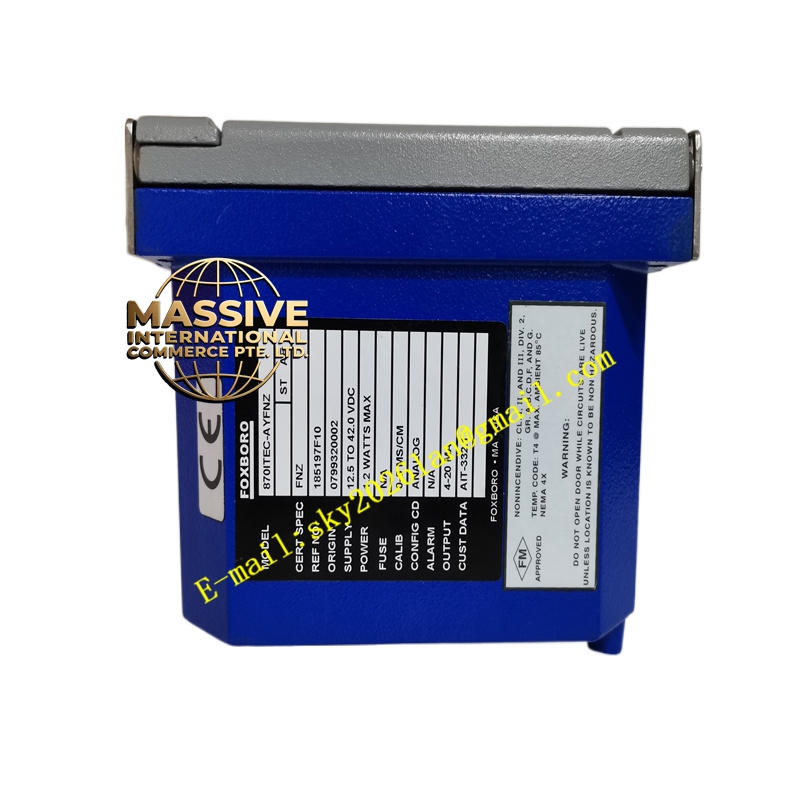
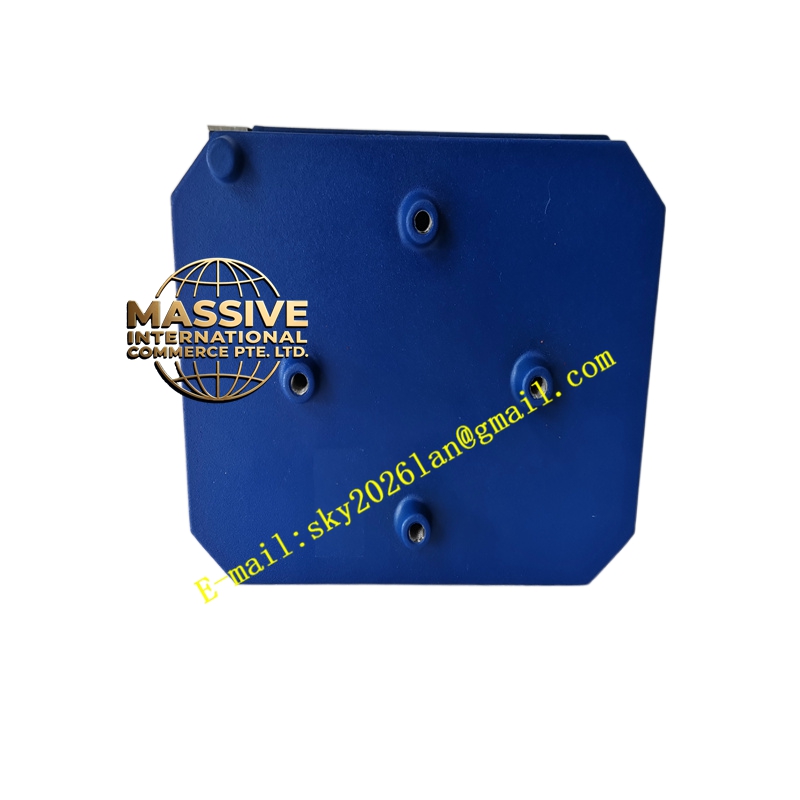
Foxboro 870ITEC-AYFNZ
- Technical Specifications:
- Compatible Sensors: 871EC (non-electrode) and 871FT (flow-through) conductivity sensors, and other electrically compatible sensors
- Measurement Range: Configurable; depends on sensor cell constant and application
- Temperature Compensation Inputs: 100 Ω Platinum RTD, 1000 Ω Platinum RTD, or 100 kΩ NTC thermistor
- Output: 4–20 mA (two-wire, loop-powered); optional FoxCom digital communication (870ITEC‑F) or analog-only (870ITEC‑A)
- Power Supply: 12.5–42 V DC (loop-powered)
- Distance: Up to 30.5 m (100 ft) between sensor and transmitter
- Environmental Temperature: 25 °C to +55 °C
- Humidity: 0% to 95% non-condensing
- EMC: Meets EMC standards when sensor and I/O cables are enclosed in rigid metal conduit
- Functional Features:
- Automatic temperature compensation (selectable RTD/NTC)
- Configurable ranges and units (µS/cm, mg/l, ppm, % concentration)
- Optional digital communication for diagnostics and remote configuration
- High accuracy with stable performance in varying process conditions
- Application Scenarios:
- Acid concentration measurement (e.g., sulfuric, nitric, hydrochloric acid)
- Water quality monitoring (conductivity, total dissolved solids)
- Chemical process control and CIP (clean-in-place) monitoring
- Industrial and municipal water treatment, chemical processing, and food and beverage
- Performance Parameters:
- Stable output with drift reduction via temperature compensation
- Response time consistent with process requirements
- Robust performance across the configured operating temperature range
- Material and Structural Characteristics:
- Housing: Industrial-grade enclosure (material per datasheet; typically corrosion-resistant)
- Connections: Threaded or clamp connections for sensor cables
- Circuit board: Conformal-coated electronics for harsh environments
- Working Principle:
- The transmitter applies an AC excitation to the conductivity cell, measures the resulting current, and calculates conductivity based on cell constant and temperature. The measured value is scaled and transmitted as a 4–20 mA signal. Temperature compensation inputs adjust readings to a reference temperature (commonly 25 °C) for accurate compensation.
- Installation Requirements:
- Mount close to the sensor (within 30.5 m) or per application requirements
- Provide proper grounding per installation guidelines
- Wire into a 4–20 mA loop with a DC power supply meeting the voltage requirements
- Configure measurement ranges, temperature compensation, and output calibration using appropriate tools
- Usage Notes:
- Ensure compatibility between sensor cell constant and transmitter configuration
- Avoid sensor cable lengths beyond the specified maximum distance
- Follow local electrical and safety regulations during installation
- Perform periodic calibration and verification against known standards