


Description
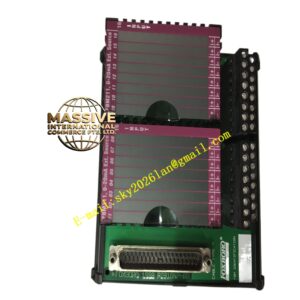
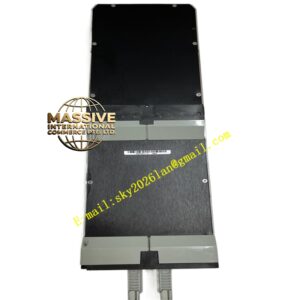
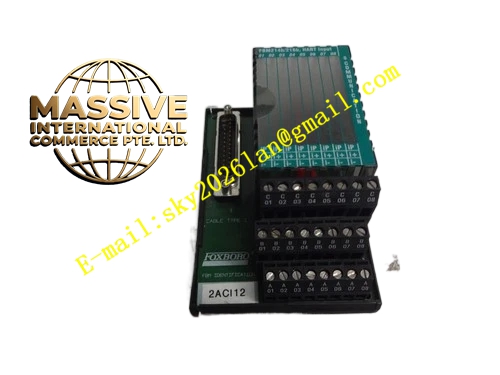
Foxboro FBM214/FBM216BRH924JH
Technical Specifications
- Product Type: Redundant HART Input Assembly.
- Base Module: FBM214B (8-Channel HART).
- Redundancy Hardware: RH924JH Redundancy Adapter.
- System Compatibility: Foxboro I/A Series with redundant controller support.
Functional Features
- Seamless Failover: If the primary module fails, the secondary instantly assumes control with zero data loss.
- Continuous Synchronization: Both modules process HART data in parallel, with the controller validating data quality.
- Hot-Swap Capability: Either module can be replaced without interrupting the process or HART communication.
- Enhanced Reliability: Doubles the MTBF for critical HART loops.
Application Scenarios
Mandatory for safety-critical loops, custody transfer metering, and any HART device where loss of communication could result in production loss or safety hazards.
Performance Parameters
- Failover Time: Bumpless, <100ms transition.
- Data Consistency: Bit-exact synchronization between primary and secondary.
- HART Channels: 8 fully redundant channels.
- Analog Accuracy: Maintains ±0.1% in redundant mode.
Material Composition
Standard FBM214B construction with added redundancy adapter featuring high-reliability relays and isolation circuits. All components are rated for continuous industrial duty.
Structural Characteristics
The FBM214B mounts on the baseplate, and the RH924JH adapter installs in the adjacent slot or integrates into the backplane wiring, depending on the specific redundancy architecture.
Working Principle
Both modules independently poll the HART devices. The redundant control software (e.g., CINR block) compares the data from both modules and uses a voting algorithm to determine the valid process value, rejecting any corrupted data from a failing module.
Installation Requirements
Install the redundant pair in adjacent slots as specified by the baseplate documentation. Connect the redundancy sync cable if required. Ensure both modules have identical firmware versions.
Usage Precautions
- Never remove both modules simultaneously.
- Monitor redundancy status in the system diagnostics; a loss of sync must be addressed immediately.
- Test failover during scheduled maintenance to verify redundancy integrity.