


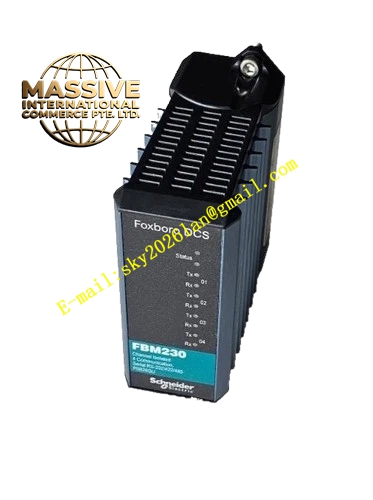
Description
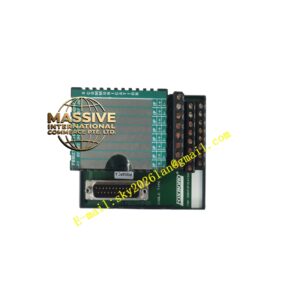
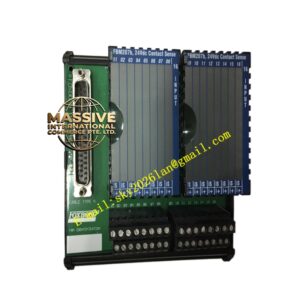
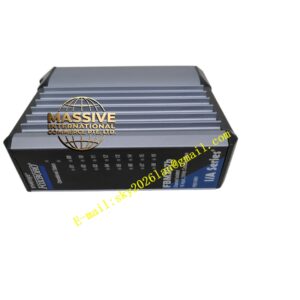
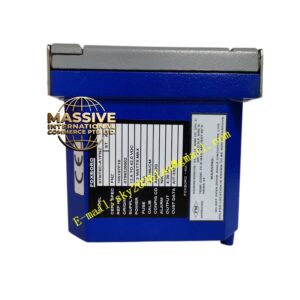
Foxboro FBM230
Technical Specifications
- Module Type: FBM230
- Interface Type: Communication Gateway
- Communication Protocol: Redundant 2 Mbps Module Fieldbus / External Network
- Baseplate Compatibility: Foxboro 200 Series standard baseplate
Key Features
- High-Speed Protocol Translation: Hardware-accelerated communication processing to minimize latency between the DCS and external networks.
- High Throughput: Supports concurrent data exchange, reducing controller CPU load.
- Redundant Communication: Eliminates single points of failure in the communication path.
- Comprehensive Diagnostics: Monitors network health, reporting communication timeouts and cable faults.
Application Scenarios
Widely used in large-scale process plants to integrate third-party equipment, remote I/O stations, and specialized network devices into the central Foxboro DCS.
Performance Parameters
- Operating Temperature: 0°C to 60°C
- Protection Rating: IP20
- Power Supply: 24 VDC backplane supply
Material Composition
Constructed with high-reliability industrial-grade components, featuring strict EMC design and protective coatings for stable operation in electrically noisy environments.
Structural Characteristics
Standard 200 Series FBM single-width form factor. Includes clear channel status LEDs and utilizes a designated Terminal Assembly for robust field connections.
Operating Principle
Receives control commands from the I/A Series controller, translates them into the external network protocol, and cyclically polls devices to update the DCS database with real-time process data.
Installation Requirements
Mount on a compatible 200 Series baseplate. External cabling must use appropriate shielded cables with proper termination and biasing.
Usage Precautions
Ensure unique node addresses are assigned to all connected devices. Verify that the configured communication parameters match the physical network settings. Strictly adhere to ESD handling procedures.