


Description
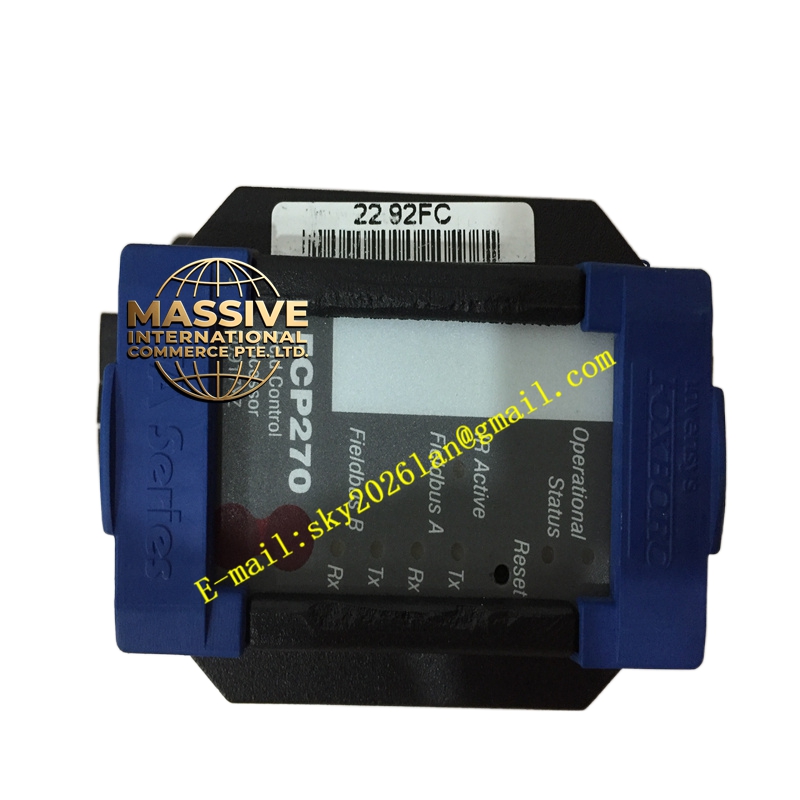
Foxboro FCP270 P0917YZ Technical Specifications:
- Processor: 32-bit RISC
- Memory: 16 MB SDRAM and 32 MB Flash
- Power: 24 V DC (redundant); maximum power consumption 8.5 W per non-fault-tolerant module
- Operating Temperature: 0 °C to +60 °C
- Fieldbus Ports: Supports both 2 Mbps and 268 Kbps HDLC fieldbus per port; supports both 200-series and 100-series FBMs (with limits on total counts)
- FBM Capacity: Up to 32 200-series FBMs; up to 128 200-series FBM with FEM100; up to 64 100-series
- Network Connection: 100 Mbps fiber Ethernet to the MESH control network (via pair of Ethernet adapters)
- Redundancy: Fault-tolerant version uses two interconnected processor modules on a baseboard; bit-for-bit comparison before sending outputs to ensure consistency
- Dimensions: 147 mm × 51.5 mm × 114 mm; weight approximately 0.6 kg
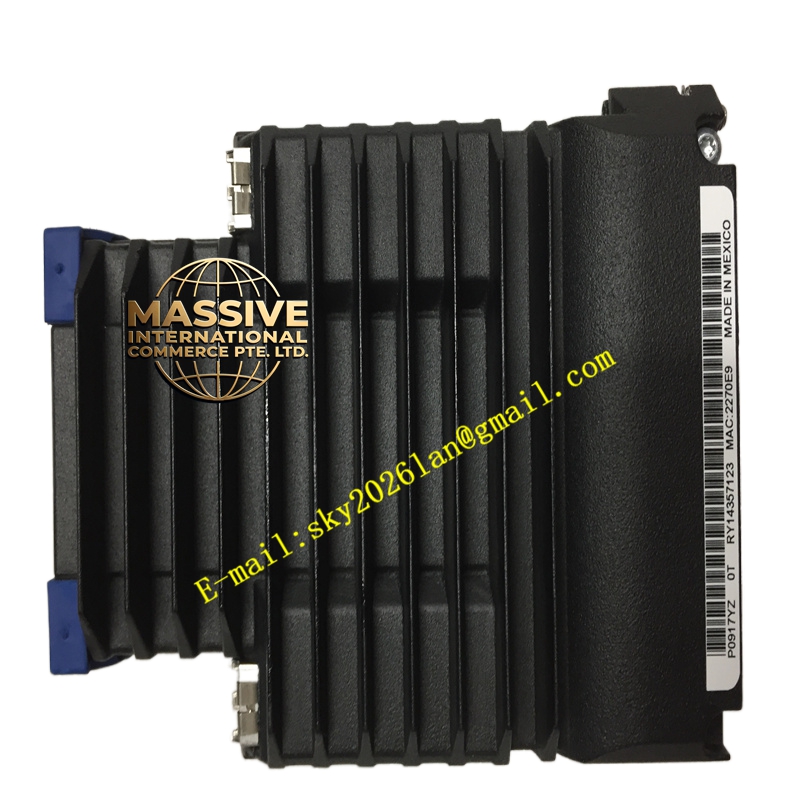
- Environment: G3-class harsh environment rating; rugged aluminum housing
- Certifications: CE; suitable for field installation in enclosures
Functional Features:
- Patented fault-tolerant operation with automatic switchover between two processor modules
- Direct connection to FBM I/O modules via onboard fieldbus (no separate FCM required)
- Supports self-hosted mode: the controller can start and run with a valid control database even if the host workstation is offline
- Optional GPS time synchronization for accurate clock alignment
- Multi-functional control algorithms support complex process applications
Application Scenarios:
- Distributed control of process units (e.g., reactors, distillation columns, compressors)
- Critical control loops requiring high availability and fault tolerance
- Field-mount cabinets near the process to reduce wiring and latency
- Upgrades from legacy Foxboro DCS nodes within I/A Series infrastructure
Performance Parameters:
- Deterministic execution of control strategies with high-speed I/O scanning
- Scalable I/O capacity with FEM100 expansion
- Redundant operation with minimal switchover time, ensuring continuous control
Material and Structural Characteristics:
- Cast aluminum enclosure designed for unventilated cabinets (G3)
- Front panel with status indicators; LCD with soft keys for local configuration (optional on some versions)
- Baseboard integrates two processor modules and provides redundant fieldbus ports to FBM networks
Working Principle: The two FCP270 processor modules run identical control applications in lockstep. All inputs and computations are compared via a bit-matching mechanism; if outputs agree, they are driven to the fieldbus. Disagreement triggers diagnostics, and one module is identified as faulty, allowing the healthy module to take over. The controller communicates with the control network via 100 Mbps Ethernet and with FBM I/O via the onboard 2 Mbps/268 Kbps HDLC fieldbus. Installation Requirements:
- Install the FCP270 baseboard in a control cabinet, ensuring adequate clearance and environmental protection
- Connect redundant 24 V DC power and 100 Mbps Ethernet links (via adapters to MESH control network)
- Terminate fieldbus cables to FBM baseboards, respecting bus termination rules
- Configure control strategies, I/O assignments, and redundancy settings using Foxboro engineering tools
- Verify time synchronization and network settings
Usage Notes:
- Ensure that FBM types and counts are within supported limits; use FEM100 for expansion beyond 32 200-series FBMs
- Follow grounding and bonding practices for industrial control cabinets
- Maintain adequate clearance around the module for heat dissipation
- Do not attempt to replace individual processor modules while power is applied without following approved procedures