


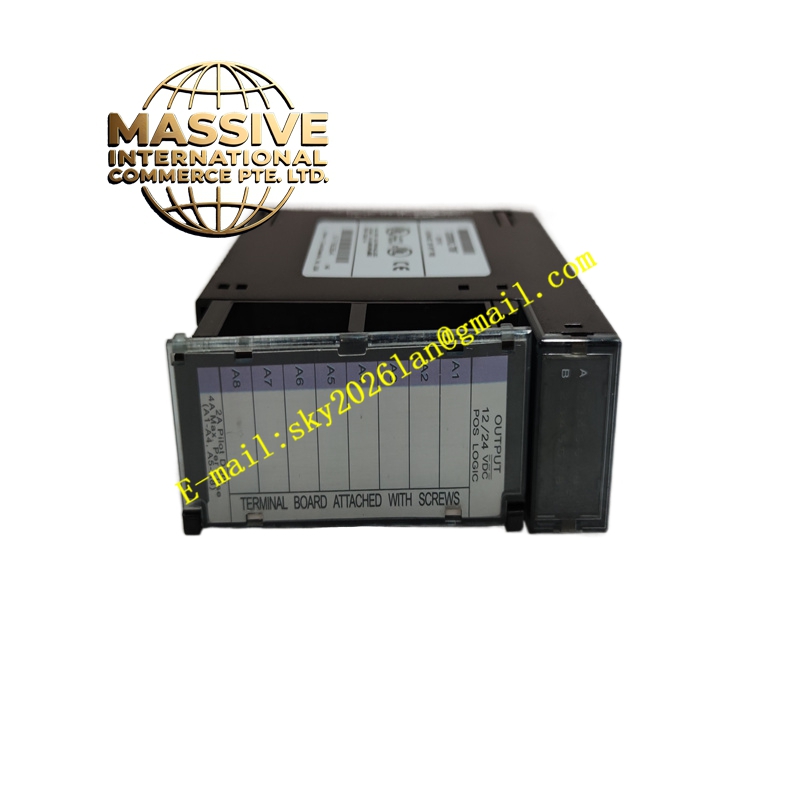
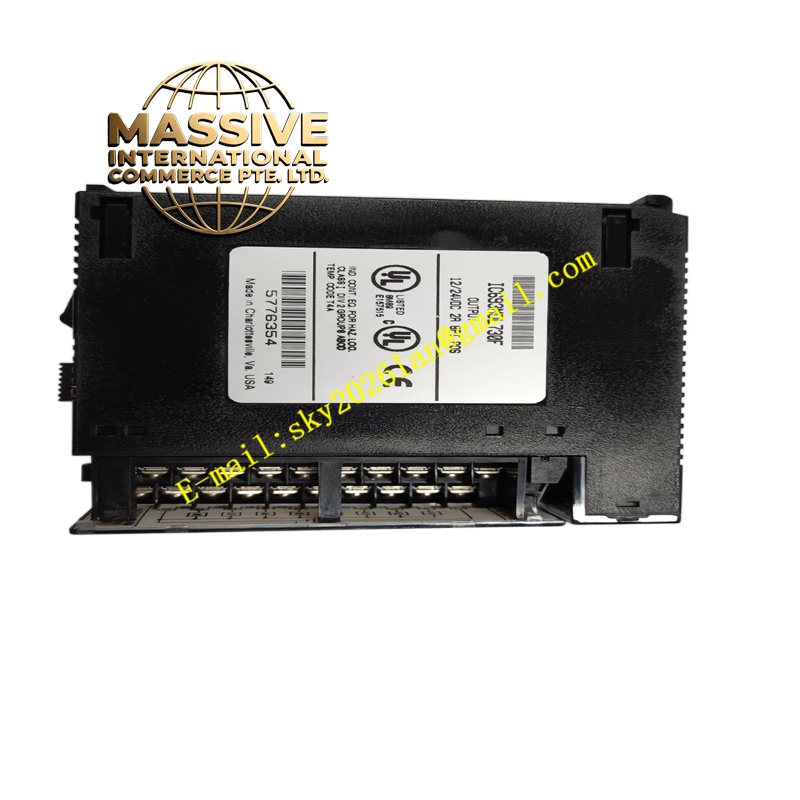
Description
GE IC693MDL730 Technical Specifications:
- Output Type: 24 VDC Positive Logic (Sourcing).
- Number of Points: 8 points.
- Output Voltage Range: 12 to 30 .
- Output Current: 2 A per point.
- Surge Current: 7 A peak for 10 ms.
- Voltage Drop: Maximum 1.0 VDC at full load.
Functional Features:
- High Current Capacity: 2 A per point allows direct driving of heavier DC loads.
- Status Indication: Individual LEDs for each output channel.
- Transient Protection: Internal suppression circuitry protects against inductive load kickback.
- Short Circuit Protection: Electronic protection to prevent damage from accidental shorts.
Application Scenarios:
- Driving intermediate relays and contactor coils.
- Sourcing signals to other PLCs or controller inputs.
- Controlling DC solenoids, valves, and small DC motors.
Material Composition & Structural Characteristics:
- Switching Element: High-current MOSFET or solid-state relay.
- Protection: Integrated flyback diodes and current-limiting circuits.
- Terminals: Standard front-access screw terminals.
Working Principle: When the CPU activates an output bit, the internal MOSFET switches on, connecting the 24 supply to the output terminal. Current flows through the connected load to the 0 VDC common. Internal protection circuits monitor the output and shut it down if a short circuit or overcurrent condition is detected.
Installation Requirements:
- Wiring: Connect the positive side of the 24 VDC supply to the module’s common terminal, and the load between the output terminal and 0 .
- Power Supply: Ensure the 24 VDC supply can deliver the cumulative current of all active outputs.
- Load Type: Suitable for resistive and inductive DC loads.
Usage Precautions:
- Inductive Loads: For highly inductive DC loads (e.g., large relay coils), install external flyback diodes across the load to protect the output transistor.
- Current Limits: Do not exceed 2 A per point or the total power supply capacity.
- Short Circuits: If an output fails to turn on, check for a shorted load or wiring fault before replacing the module.
- Polarity: Observe strict polarity; reverse polarity can permanently damage the module.