


Description
Honeywell C7044A1006
Technical Specifications
- Detection band: 190–270 nm ultraviolet
- Detection response time: ≤0.2 seconds
- Self-test interval: 30 seconds automatic internal check
- Output signal: SPDT dry contact, contact rating 2 A / 220 V AC
- Supply voltage: 120 V AC 50/60 Hz
- Operating temperature: -40 °C to +80 °C
- Protection rating: IP65
Functional Features Automatic periodic internal self-test, verifies UV tube and relay circuit health during operation. Self-test simulates a UV signal, checks detector response without interrupting burner operation. Triggers a dedicated fault alarm output if the detector fails the self-test. Meets SIL2 safety integrity level requirements for critical combustion safety loops. On-board LEDs indicate flame present, self-test active and detector fault status. Compatible with Honeywell RM7800 series flame safeguards with self-check capability.
Application Scenarios Critical burner safety loops requiring continuous proof of detector health SIL-rated combustion safety systems in refineries Unmanned remote boiler installations requiring automatic self-diagnostics Spare part replacement for standard detectors without self-check functionality
Performance Parameters
- Self-test cycle: 30 seconds
- Self-test completion time: ≤100 ms per cycle
- Detection range: Stable detection of main flame within 6 meters
- Safety integrity level: SIL2 certified
- Mounting thread: 1 inch NPT
Material Composition Die-cast aluminum powder-coated housing High-reliability UV photosensitive tube Quartz glass detection window Stainless steel shutter Self-test simulation LED circuit Gold-plated output relay contacts
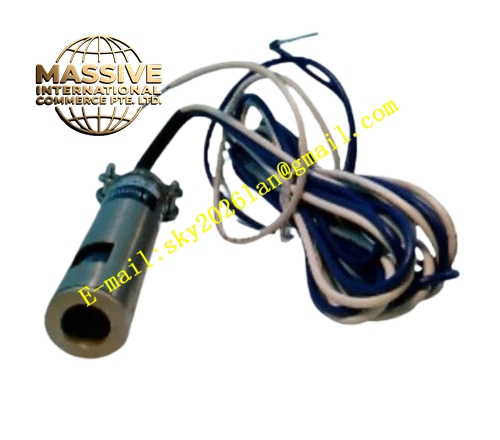
Structural Features Robust cylindrical cast aluminum housing. Front quartz detection window with integral shutter. Rear terminal compartment with three status LEDs. 1 inch NPT mounting thread. Internal self-test photodiode positioned adjacent to the UV sensor.
Working Principle During normal operation, flame UV radiation triggers the UV photosensitive tube to conduct, outputting flame present contact signal. Every 30 seconds, the on-board self-test photodiode emits a controlled UV flash onto the sensor, simulating a flame signal. The detector checks whether the UV tube responds to the test flash; if no response occurs, the sensor has aged or failed, and the dedicated fault contact opens to trigger a safety alarm. On flameout, real UV signal disappears, the detector initiates normal flameout shutdown.
Installation Requirements Mount the detector with direct line of sight to the main burner flame. Connect flame present output and fault output contacts separately to the safety system. During commissioning, trigger a manual self-test, confirm both contact outputs change state. Verify self-test cycle does not cause burner shutdown during normal operation.
Usage Notes Never bypass the fault alarm contact, this defeats the self-check safety function. Self-test failure during operation means the UV tube is aging, replace the detector promptly. Do not block the self-test LED window with dust, this causes false self-test failures. Annual calibration verifies self-test simulation intensity meets specification.