


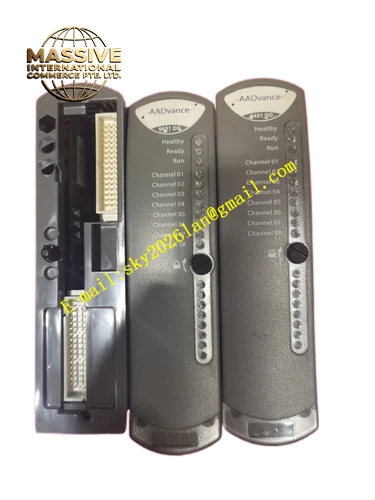
Description
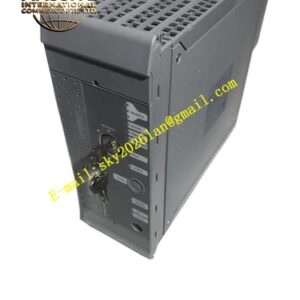
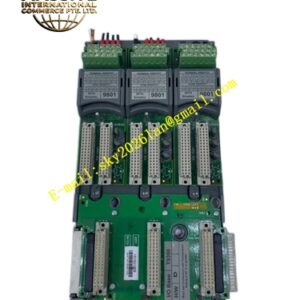
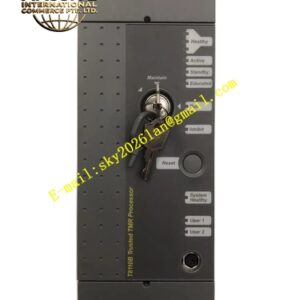
ICS Triplex T3310
Technical Specifications
| Parameter | Specification |
|---|---|
| Manufacturer | ICS Triplex (Rockwell Automation) |
| Product Series | Regent System |
| Module Type | I/O Transceiver / Dual Channel Analog Input |
| Number of Channels | 2 |
| Communication Protocols | Modbus, Profibus, HART |
| Communication Rate | Up to 19.2 Mbps |
| Hot-Swappable | Yes |
| Operating Temperature | -40°C to +85°C |
| Dimensions | 120 mm × 100 mm × 25 mm |
| Weight | 0.5 kg |
| Product Origin | United States |
Functional Features
- Multi-Protocol Communication: Supports Modbus RTU, Profibus DP, and HART protocols for flexible field device integration
- Dual Channel Design: Two independent analog input channels for process variable acquisition
- Hot-Swap Capability: Module replacement supported without powering down the system
- High-Speed Data Exchange: Communication rates up to 19.2 Mbps ensure rapid data updates
- Wide Temperature Range: Extended -40°C to +85°C operating range suits harsh industrial environments
- Compact Form Factor: Small footprint maximizes cabinet space utilization
- Field Device Compatibility: HART pass-through enables communication with smart transmitters
Application Scenarios
- Process variable monitoring in safety instrumented systems
- Smart transmitter interface for pressure and temperature measurement
- Flow meter signal acquisition in pipeline systems
- Tank level monitoring in storage facilities
- Analytical instrument integration
- Valve position feedback systems
- Multi-protocol device integration projects
Performance Parameters
- Analog Resolution: High-resolution A/D conversion for precise measurement
- Communication Speed: Up to 19.2 Mbps serial communication rate
- Signal Accuracy: Precision analog front-end ensures accurate field signal representation
- Isolation: Channel-to-channel and field-to-system isolation protects against ground loops
- Update Rate: Fast scan times support real-time control applications
Material Composition
- Enclosure: Industrial-grade aluminum or steel housing
- Circuit Board: Multilayer PCB with precision analog and digital circuits
- Communication Transceivers: Industrial-grade protocol chips for Modbus, Profibus, and HART
- Connectors: Industrial-grade screw terminals or pin connectors for field wiring
- Isolation Barriers: Optocouplers and isolation amplifiers for signal protection
Structural Characteristics
- Standard Regent Module Size: Compatible with T3300 and other Regent I/O chassis
- Front-Panel Terminals: Field wiring connections accessible from the module front
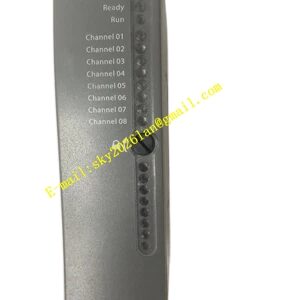
- Status Indicators: LED indicators for channel status and communication activity
- Backplane Connector: Direct plug-in connection to the Regent chassis backplane
- Compact Dimensions: 120 mm × 100 mm × 25 mm form factor
Working Principle
The T3310 receives analog signals from field devices on its two input channels. Each channel passes through signal conditioning circuitry including filtering, amplification, and isolation. The analog signals are converted to digital values by onboard A/D converters. The module’s communication processor packages this data according to the configured protocol (Modbus, Profibus, or HART) and transmits it to the Regent controller via the chassis backplane. For HART devices, the module extracts digital diagnostic information superimposed on the 4–20 mA analog signal.
Installation Requirements
- Install in a compatible Regent I/O chassis slot
- Use shielded twisted-pair cables for field analog signals
- Ensure proper grounding of cable shields at one end only
- Configure communication protocol and address via system software
- Verify hot-swap procedures before online replacement
Operating Precautions
- Verify field device signal range matches module input range
- Monitor communication status LEDs for protocol errors
- Ensure proper termination resistors for Profibus networks
- Maintain shield integrity to prevent noise pickup on analog signals
- Calibrate analog inputs periodically to maintain measurement accuracy
- Follow hot-swap procedures to avoid backplane damage during replacement