


Description
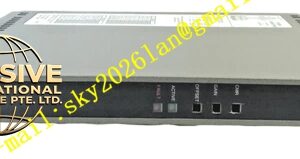
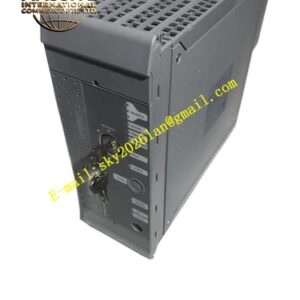
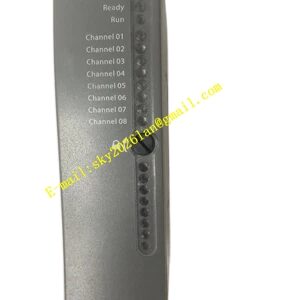
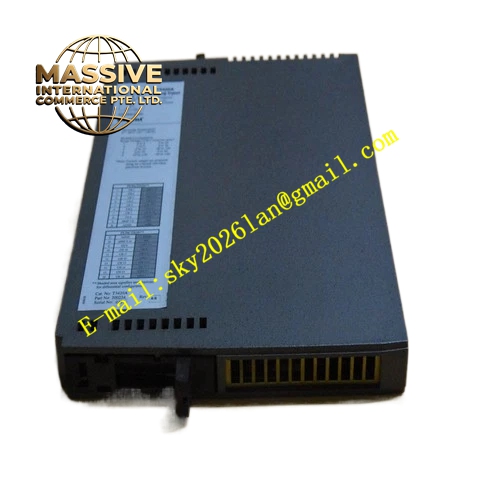
ICS Triplex T8111C
Technical Specifications
| Parameter | Specification |
|---|---|
| Model Number | T8111C |
| Product Type | Trusted TMR Processor Module |
| Brand | ICS Triplex |
| Safety Certification | IEC 61508 SIL 3 |
| Redundancy Architecture | Triple Modular Redundancy (TMR) |
| Fault Tolerance | 3-2-0 with Hardware Implemented Fault Tolerance (HIFT) |
| Voltage Range | 20 to 32 VDC |
| Heat Dissipation | 80 W |
| Maximum Load | 80 W |
| Processor Clock | 100 MHz |
| I/O Interface | Triple redundant Inter-Module Bus |
| SOE Buffer Size | 1000 events, transferred to CI buffer of 4000 events |
| Programming Languages | IEC 61131-3 compatible |
| Diagnostics Interface | RS232 serial port |
| Communications | 2 × RS422/485 (configurable 2-wire/4-wire), 1 × RS485 (2-wire) |
| Time Synchronization | IRIG-B002, B122 |
| Operating Temperature | 0°C to 60°C |
| Non-Operating Temperature | -25°C to 70°C |
| Dimensions | 30.3 cm × 9.3 cm × 26.6 cm |
| Weight | 2.94 kg |
Functional Features
- Triple Modular Redundancy: Operates on a 3-2-0 voting scheme to ensure uninterrupted processing
- HIFT Technology: Detects and corrects hardware faults automatically, reducing nuisance alarms
- Hot-Swap Support: Allows module replacement during operation without reloading programs
- Time-Stamped Fault Historian: Records fault events with precise timestamps for advanced diagnostics
- Flexible Programming: Compatible with IEC 61131-3 languages for easy logic development
- Comprehensive Communications: RS232, RS422/485, and IRIG-B time synchronization interfaces
- Front-Panel Diagnostics: LED indicators and RS232 diagnostic port for real-time monitoring
Application Scenarios
- Emergency Shutdown (ESD) systems
- Turbine and compressor control
- Burner Management Systems (BMS)
- Chemical and petrochemical plant safety control
- Power generation and oil refinery operations
- Fire & Gas detection systems
Performance Parameters
- Processing Speed: 100 MHz clock with deterministic execution
- Fault Detection Speed: Hardware-level detection and response faster than software solutions
- Event Recording: 1000-event SOE buffer with 1 ms resolution
- Communication Speed: High-speed serial interfaces for distributed I/O
Material Composition
- Enclosure: Industrial metal housing with protective finish
- Circuit Board: Conformal-coated multilayer PCB
- Components: Extended-temperature-range industrial-grade processors and memory
- Connectors: High-reliability backplane and communication connectors
Structural Characteristics
- Chassis Integration: Designed for installation in T8100 Trusted chassis
- Front-Panel Interface: LED indicators, diagnostic port, and status displays
- Triple Backplane Connection: Three independent connections to the Inter-Module Bus
- Robust Mechanical Design: Built for continuous industrial operation
Working Principle
Three independent processor modules execute the same control program simultaneously. Each processor reads inputs, executes logic, and computes outputs independently. A hardware voter compares the three output sets and forwards the 2oo3 majority result to the output modules. Internal self-test circuits continuously verify processor health, memory integrity, and clock accuracy. Detected faults trigger automatic channel exclusion and generate timestamped diagnostic records.
Installation Requirements
- Install in a T8100 Trusted chassis slot
- Connect redundant power supplies within the 20–32 VDC range
- Configure IRIG-B time synchronization if required
- Establish RS422/485 communication links to external devices
- Ensure proper chassis grounding and ventilation
Operating Precautions
- Monitor front-panel LEDs for processor status indication
- Maintain all three processor channels for full TMR redundancy
- Replace faulty processors using hot-swap procedures
- Back up application programs before performing maintenance
- Verify time synchronization accuracy for SOE recording