


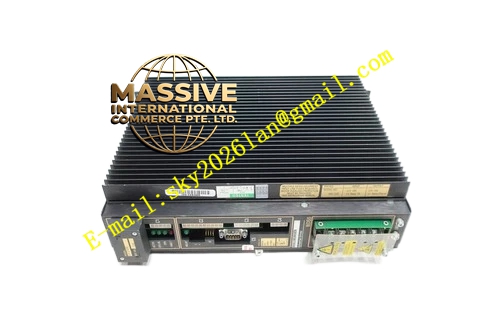
Description
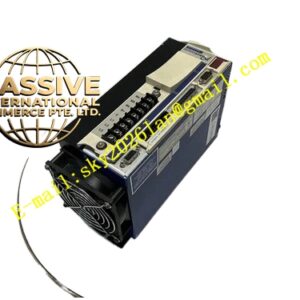
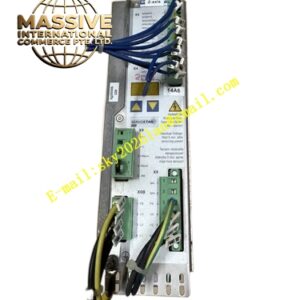
Kollmorgen S20630-DNS
Technical Specifications
- Input Voltage: 90 VDC nominal (20-90 VDC operating range)
- Continuous Output Current: 6 Amps RMS
- Peak Output Current: 18 Amps RMS
- Fieldbus Interface: DeviceNet with ODVA compliance
- Communication Rates: 125 kbps, 250 kbps, 500 kbps
- Node Type: Profile Node with DeviceNet
- Control Logic Supply: 10 to 26 VDC
- Feedback Compatibility: Resolver, incremental encoder, SFD
Functional Features
- Full DeviceNet slave functionality with polled and explicit messaging
- DeviceNet assembly objects for motion commands
- Scanner-configurable I/O assemblies
- 256 motion tasks selectable via DeviceNet
- 16 homing methods configurable through network parameters
- Electronic gearing and camming over DeviceNet
- Torque, velocity, and position mode selection via assembly objects
- Diagnostic object support for fault reporting
- MAC ID hardware switch configuration
Application Scenarios
- DeviceNet-based medium-duty machinery
- Allen-Bradley integrated architecture systems
- Automotive body shop equipment
- Conveyor systems with higher power requirements
- Palletizing and depalletizing machinery
- Legacy system upgrades maintaining DeviceNet infrastructure
Performance Parameters
- 18 Amp peak capability for high-acceleration medium-inertia loads
- DeviceNet poll rate compatible with positioning applications
- Explicit messaging for drive parameter management
- Real-time status feedback through configured I/O assemblies
Structural Characteristics
- Standard S200 mechanical platform with DeviceNet communication port
- 5-pin DeviceNet connector with network power pass-through capability
- MAC ID rotary switches for address setting
- Network and module status LED indicators
Working Principle Operating as a DeviceNet slave, the drive receives command setpoints and control words from a DeviceNet scanner module. The internal motion controller interprets these commands and executes corresponding current, velocity, and position control algorithms. The 6 Amp power stage provides higher continuous torque than 3 Amp variants, enabling control of larger motors within DeviceNet-controlled machines. Status, actual position, and fault information are transmitted back to the network master at each scan cycle.
Installation Requirements
- Connect to DeviceNet network with proper trunk and drop cabling
- Set unique MAC ID via hardware switches
- Match baud rate to network master configuration
- Provide adequate DC power for 18 Amp peak current demand
Operating Precautions
- Verify DeviceNet cable specifications meet ODVA requirements for selected baud rate
- Ensure scanner module I/O assembly configuration matches drive capabilities
- Monitor network status LEDs for communication health
- Configure fault reaction for DeviceNet communication loss conditions
- Allow adequate thermal management for sustained 6 Amp operation