


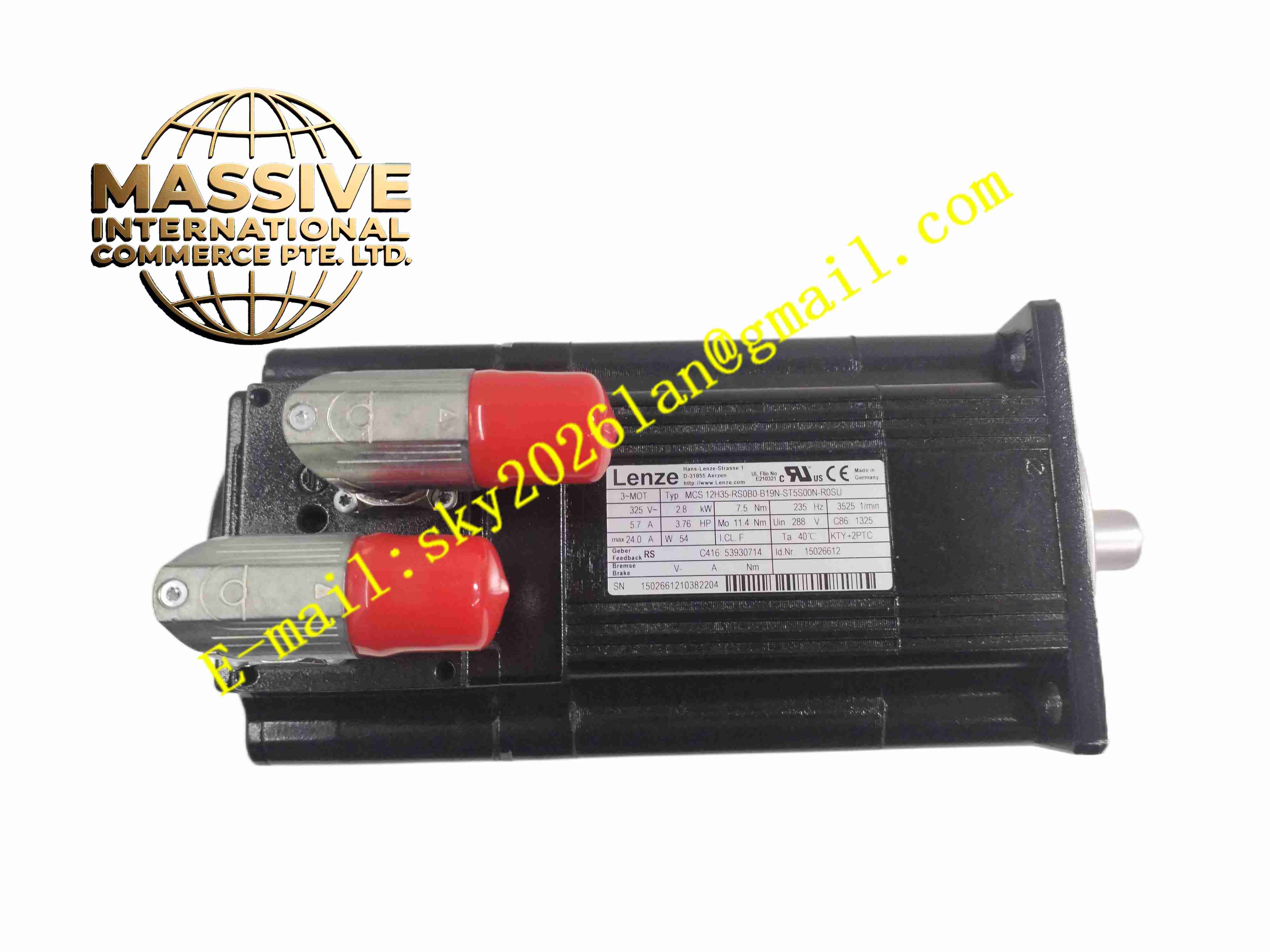
Description
Lenze MCS12H35-RS0B0
Technical Specifications Permanent magnet synchronous servo motor; Rated speed and torque for MCS12H35 frame; Resolver feedback type; Standard shaft and flange mounting; IP65 protection rating; 400V class winding.
Functional Features High torque density compact design; Low rotor inertia for fast acceleration and deceleration; Resolver position feedback for harsh vibration environment; High overload capacity for short peak torque; Low cogging torque for smooth low-speed operation; Integrated motor brake option.
Application Scenarios Packaging machine main drive axis; Material handling and gantry robot axis; CNC auxiliary feed axis; Printing and converting machinery servo axis.
Performance Parameters Operating ambient temperature -20℃ to +40℃; Storage temperature -40℃ to +85℃; Relative humidity 5% to 90%, no condensation; Vibration resistance meets IEC industrial standard.
Material Composition Aluminum alloy motor housing; High strength rare-earth permanent magnet rotor; Laminated silicon steel stator core; Insulated copper winding; Resolver feedback sensor; Sealing lip rings; Stainless steel output shaft.
Structural Characteristics Cylindrical motor body with standard flange mounting; Output shaft at front end; Rear side resolver feedback assembly; Terminal box for power and feedback cable entry; Sealing rings to achieve IP65 rating.
Working Principle Servo drive supplies three-phase variable frequency AC current to stator winding. Rotating magnetic field interacts with permanent magnet rotor and generates torque to rotate motor shaft. Resolver sensor detects rotor angle and speed continuously and sends feedback signal back to servo drive for closed-loop control.
Installation Requirements Mount motor flange rigidly on machine frame. Align coupling to avoid radial and axial misalignment. Connect shielded power cable and resolver feedback cable. Tighten cable gland to keep IP65 sealing. Perform motor parameter setup in Lenze servo drive after power on.
Usage Notes Do not apply radial overload force on output shaft. Keep motor housing ventilation to avoid overheating. Check sealing rings periodically for dust and moisture ingress. Do not disassemble motor body without professional maintenance tools.