


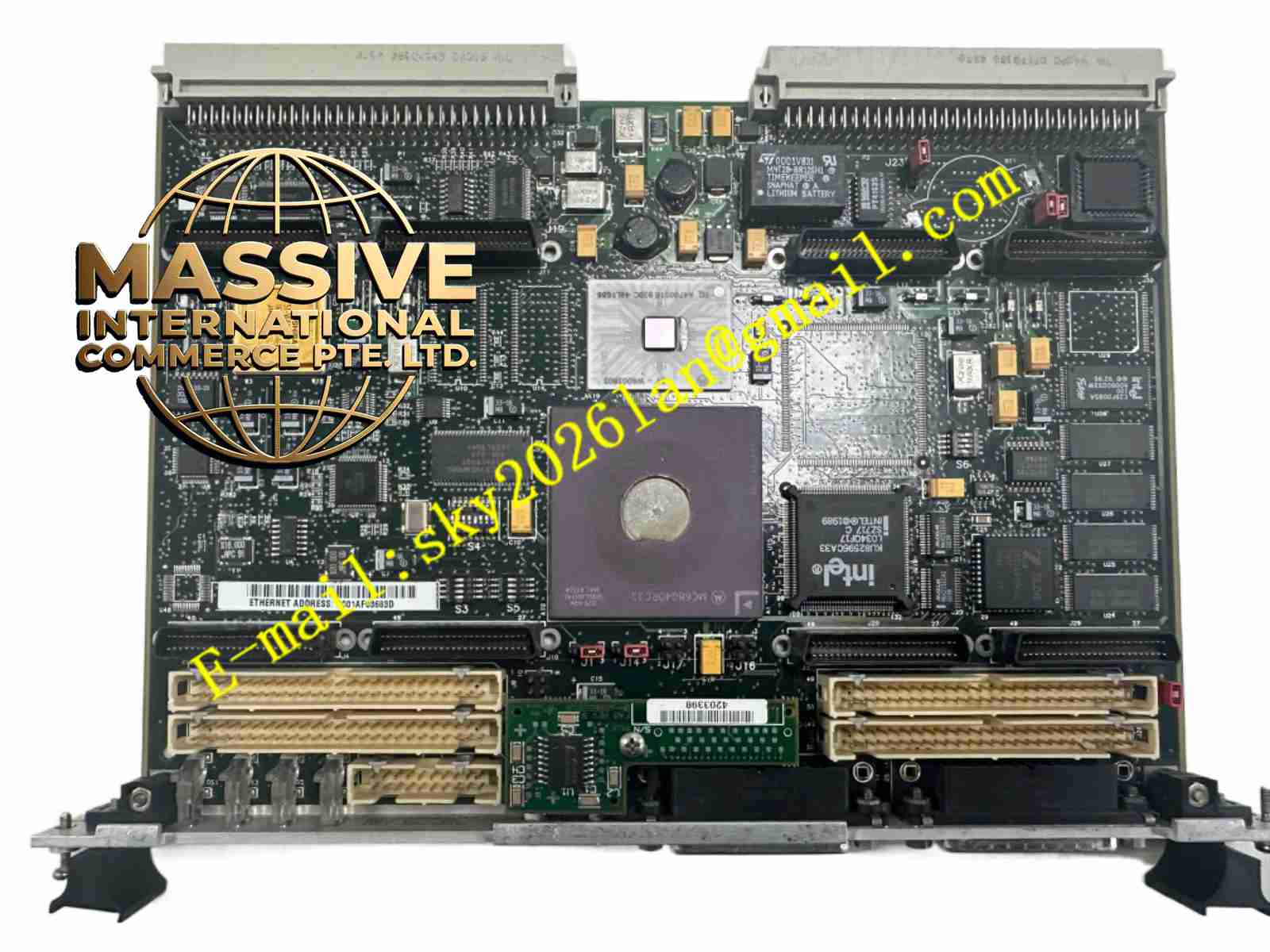
Description
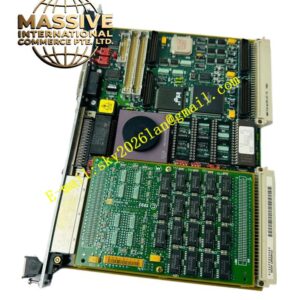
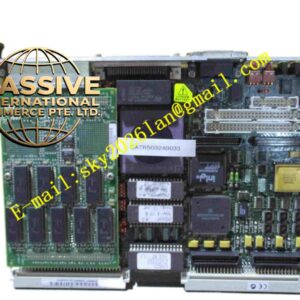
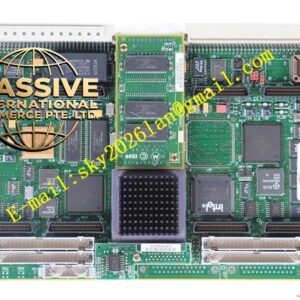
Motorola MVME5500
Technical Specifications:
- Brand: Motorola (SMART Embedded Computing)
- Model: MVME5500
- Processor: 1 GHz MPC7457 PowerPC processor
- Cache: 512 KB on-chip L2 cache and 2 MB L3 cache
- System Controller: Marvell GT-64260B host bridge with dual PCI interface and memory controller
- Storage: Dual soldered flash memory (8MB boot Flash ROM and 32MB expansion Flash ROM)
- Network Interfaces: One 10/100/1000 Gigabit Ethernet port and one 10/100BaseTX Ethernet port
- Serial Interfaces: Two asynchronous serial ports utilizing TL16C550C UARTs
Functional Features:
- High-Performance Computing: Equipped with an AltiVec vector processing unit, making it exceptionally suited for data-intensive and high-performance computing applications.
- Balanced Subsystem Architecture: Provides perfectly matched performance across the processor, memory, dual independent local buses, and I/O subsystems.
- Advanced Expansion Capabilities: Features dual independent 64-bit PCI buses with two PMC (PCI Mezzanine Card) sites, both capable of operating at 66 MHz.
- Optimized Bus Isolation: The Universe II VME interface and PMCspan connector are isolated on a dedicated 33 MHz PCI bus segment, ensuring both PMC sites can simultaneously run at 66 MHz.
- Innovative Firmware: Powered by MOTLoad firmware, which offers interrupt-driven I/O, comprehensive Power-On Self-Test (POST), advanced scripting diagnostics, and a robust debugger interface.
Application Scenarios:
Widely deployed in defense and aerospace systems, industrial automation, medical imaging equipment, telecommunications, and transportation control networks.
Performance Parameters:
- Bus Speeds: Supports a 133 MHz host bus and a 133 MHz SDRAM memory bus.
- Memory Capacity: 512 MB on-board ECC SDRAM (expandable to 1 GB via RAM5500 mezzanine module).
- Reliability: Features a Mean Time Between Failures (MTBF) of 207,058 hours.
- System Timing: Includes an MK48T37V NVRAM/Real-Time Clock with a 32KB SRAM and dual watchdog timers.
Material Composition:
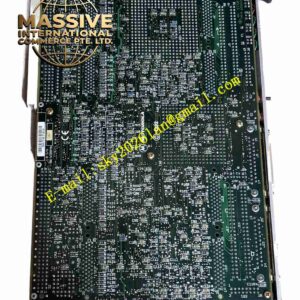
Manufactured using high-reliability, multi-layer industrial-grade printed circuit boards. The components are strictly derated and undergo rigorous screening to ensure long-term stability and electrical integrity in extreme operational environments.
Structural Characteristics:
- Form Factor: Standard 6U VME size with a 4HP width (233 mm x 160 mm x 20 mm).
- Front Panel: Equipped with RJ-45 serial connectors, status LEDs (Run and Board Fail), and an Abort/Reset switch.
- Backplane Connectivity: Utilizes standard VME P1/P2 connectors alongside a 64-bit PCI expansion mezzanine connector for additional PMC support.
Working Principle:
The MVME5500 operates by leveraging the 1 GHz MPC7457 processor to execute complex instructions, while the Marvell GT-64260B system controller orchestrates high-speed data flow between the CPU, 133 MHz SDRAM, and dual PCI buses. The AltiVec coprocessor accelerates parallel data processing, and the MOTLoad firmware initializes the hardware, maps memory, and loads the real-time operating system.
Installation Requirements:
- Cooling: Mandatory forced air cooling is required. A minimum of 400 LFM (linear feet per minute) airflow is recommended for operation at the upper temperature limit.
- Chassis: Must be installed in a standard 6U VME chassis using injector/ejector handles to prevent PCB deformation.
- Environmental Limits: Operating temperature ranges from 0°C to +55°C; storage temperature ranges from -40°C to +70°C.
- Humidity: Operational relative humidity must be maintained between 5% and 90% non-condensing.
Usage Precautions:
- ESD Protection: Strict adherence to Electrostatic Discharge (ESD) protocols is required. A grounded wrist strap must be worn throughout installation and maintenance.
- Mechanical Handling: Always use the injector/ejector levers for board insertion and removal. Never force the board into the slot manually.
- Power Safety: Ensure all AC/DC power is disconnected before installing memory mezzanine cards or PMC modules.
- Vibration Tolerance: The board is rated for 1 G sine sweep (5–100 Hz) in non-operating conditions; ensure chassis fasteners are properly torqued to maintain mechanical integrity.