


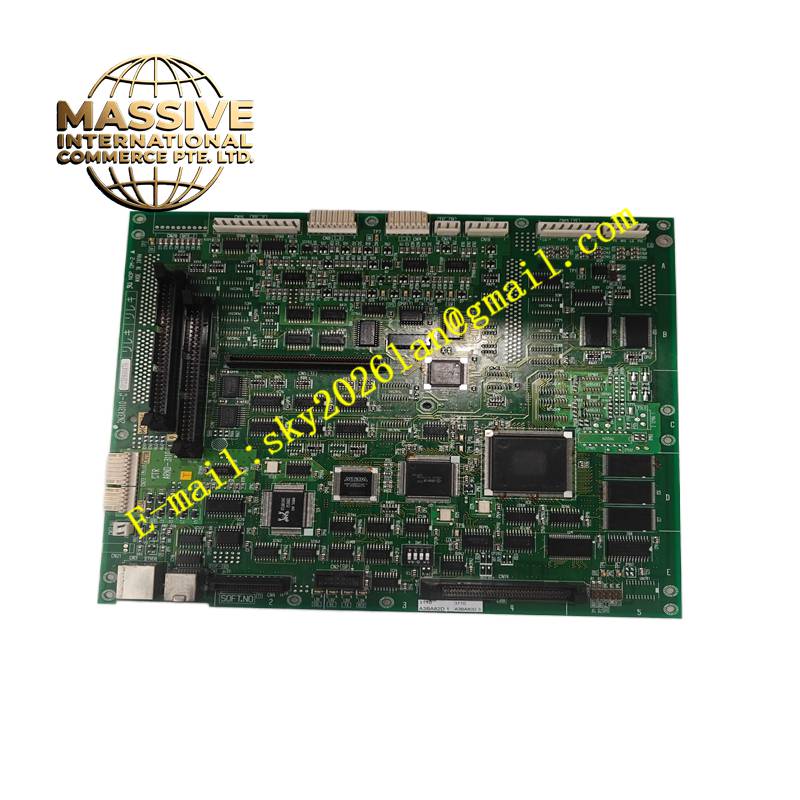
Description
TMEIC ARND-3110
Technical Specifications
- Brand: TMEIC (Toshiba Mitsubishi-Electric Industrial Systems Corporation)
- Model: ARND-3110
- Product Type: Industrial Control/Interface Module
- Product Family: TMEIC Industrial Control System Platform
- Application Domain: Industrial Automation, Process Control, Drive Systems
- Supply Voltage: 24V DC (typical industrial control voltage)
- Communication Interfaces: Fiber optic, Ethernet, or proprietary TMEIC communication protocols
- Processing Capability: Real-time control execution with deterministic response times
- Operating Temperature: 0°C to 55°C (industrial grade)
- Storage Temperature: -20°C to 70°C
- Humidity Range: 5% to 95% non-condensing
- Protection Rating: IP20 (panel-mounted)
- Vibration Resistance: IEC 60068-2-6 compliant
- Shock Resistance: IEC 60068-2-27 compliant
- EMC Compliance: IEC 61000-4 series industrial immunity standards
- Dimensions: Module-specific form factor (typically 1U or 2U rack-mount compatible)
- Weight: Approximately 1-2 kg (module dependent)
Functional Features
- High-reliability industrial control processing for real-time automation applications
- Integration with TMEIC’s distributed control system architecture
- Multiple communication interface options including fiber optic and Ethernet connectivity
- Deterministic response times ensuring precise synchronization in multi-axis systems
- Hot-swappable module design enabling maintenance without system shutdown
- Comprehensive self-diagnostics and health monitoring capabilities
- Event logging and fault recording for maintenance and troubleshooting
- Redundant architecture support for critical process applications
- Field-upgradeable firmware enabling feature enhancements and bug fixes
- Seamless integration with TMEIC drive systems and automation platforms
- Configurable I/O mapping for flexible system integration
- Remote monitoring and diagnostics capability via industrial communication networks
- Comprehensive electromagnetic compatibility (EMC) hardening for industrial environments
Application Scenarios
- Steel and Metal Processing: Rolling mill control, reheating furnace automation, and finishing line control
- Power Generation: Turbine control, generator excitation systems, and balance-of-plant automation
- Oil and Gas: Pipeline compression control, refinery process automation, and offshore platform systems
- Chemical Processing: Batch process control, continuous process automation, and safety instrumented systems
- Mining and Minerals: Conveyor control, crusher automation, and grinding mill control
- Pulp and Paper: Paper machine drive control, reel automation, and process control systems
- Water and Wastewater: Pump station control, treatment process automation, and distribution systems
- Cement Production: Kiln control, mill automation, and material handling systems
- Automotive Manufacturing: Paint shop automation, assembly line control, and testing systems
- Marine and Offshore: Ship propulsion control, power management systems, and cargo handling
Performance Parameters
- Control Loop Execution: Millisecond-level deterministic control loop update rates
- Communication Latency: Microsecond-level inter-module communication via fiber optic links
- I/O Response Time: Sub-millisecond digital and analog I/O response for critical control functions
- System Availability: >99.9% availability with redundant configuration options
- Mean Time Between Failures (MTBF): Designed for >100,000 hours in industrial service
- Operating Temperature Range: 0°C to 55°C continuous operation
- Electromagnetic Compatibility: IEC 61000-4 series compliant for industrial immunity levels
- Vibration Resistance: IEC 60068-2-6 compliant for industrial vibration environments
- Shock Resistance: IEC 60068-2-27 compliant for industrial shock conditions
- Humidity Tolerance: 5% to 95% non-condensing per industrial standards
Material Composition
- Processing Unit: Industrial-grade microprocessor or FPGA for real-time control execution
- Memory: ECC-protected RAM and non-volatile flash memory for program and data storage
- Communication Interfaces: Fiber optic transceivers or Ethernet PHY chips with industrial-grade magnetics
- Power Supply Circuitry: DC-DC converters with input filtering and reverse polarity protection
- I/O Circuitry: Optically isolated digital I/O and precision analog I/O with signal conditioning
- Heat Sink: Aluminum heat sink with optimized fin geometry for conduction and convection cooling
- Housing: Ruggedized metal enclosure with EMI shielding gaskets and mounting flanges
- PCB Substrate: High-Tg FR-4 printed circuit board with conformal coating for environmental protection
- Connectors: Industrial-grade circular or backplane connectors with locking mechanisms
- Internal Wiring: High-temperature insulated wiring with proper strain relief and routing