


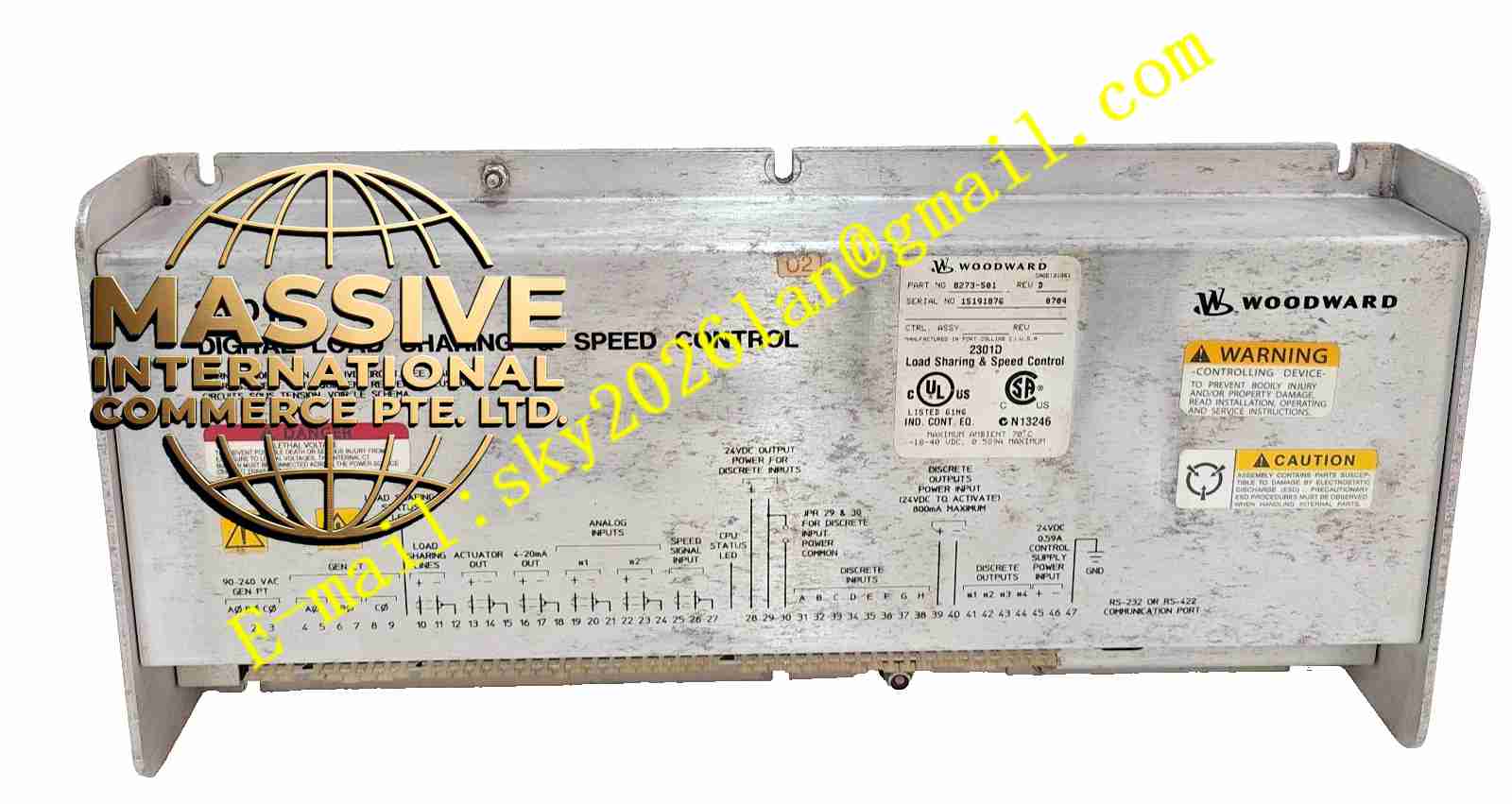
Description
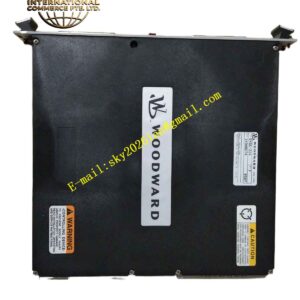
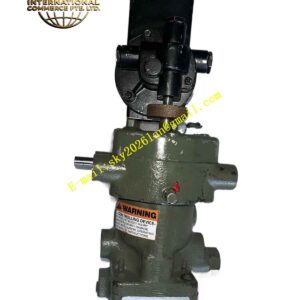
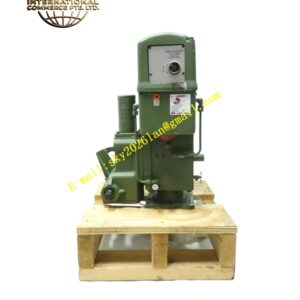
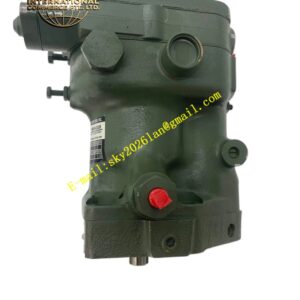
Woodward 8273-501
Technical Specifications
- Product Series: 2301D / 8273 Series Digital Governor.
- Speed Range: Supports engine speeds from 90 to 3600 RPM.
- Frequency Input: Accepts magnetic pickup signals ranging from 100 to 20,000 Hz.
- Communication: Features an RS232 port for connection to a personal computer for configuration and tuning.
- Environmental Rating: Operates in temperatures from -40°C to +70°C (-40°F to +158°F) with up to 95% relative humidity.
Functional Features
- Isochronous & Droop Control: Capable of operating in isochronous (constant frequency) mode for standalone plants or droop mode for utility paralleling.
- Active Load Sharing: Continuously monitors generator output and adjusts fuel to ensure proportional load distribution among parallel units.
- PID Tuning: Allows for precise adjustment of Proportional, Integral, and Derivative parameters to optimize transient and steady-state engine performance.
- PC-Based Configuration: Utilizes dedicated software for initial setup, including engine geometry (cylinders, strokes) and gear tooth counts.
Application Scenarios
Widely deployed in industrial power generation, marine electrical automation systems, and combined heat and power (CHP) plants where multiple generator sets must operate synchronously.
Performance Parameters
- Control Accuracy: High-precision digital processing ensures minimal frequency deviation under rapidly changing loads.
- Response Time: Fast digital scan rates allow for immediate correction of speed droop or load imbalances.
Material Composition
Housed in a rugged, industrial-grade enclosure designed for panel mounting. Internal printed circuit boards feature conformal coating to protect against moisture, vibration, and corrosive atmospheres.
Structural Characteristics
A compact, modular card format that plugs into a standard Woodward control rack. Features front-panel status LEDs and a serial communication interface for local diagnostics.
Working Principle
The module receives a frequency signal from a magnetic pickup on the engine flywheel. It compares this actual speed to a reference setpoint and calculates the required fuel adjustment. In parallel operation, it also reads the generator’s kilowatt output and biases the speed setpoint to shift the load, ensuring all units share the burden equally.
Installation Requirements
Mount in a clean, dry control panel. Use shielded twisted-pair cables for the magnetic pickup and load sensing wires to prevent electromagnetic interference. Connect the RS232 port to a PC for initial commissioning.
Usage Precautions
- Always verify the gear tooth count and engine parameters in the software before starting the engine.
- Ensure all load-sharing CTs (Current Transformers) are wired with the correct polarity; reversed CTs will cause the unit to fight against other generators.
- Perform regular maintenance checks on wiring terminations to prevent contact resistance issues.