


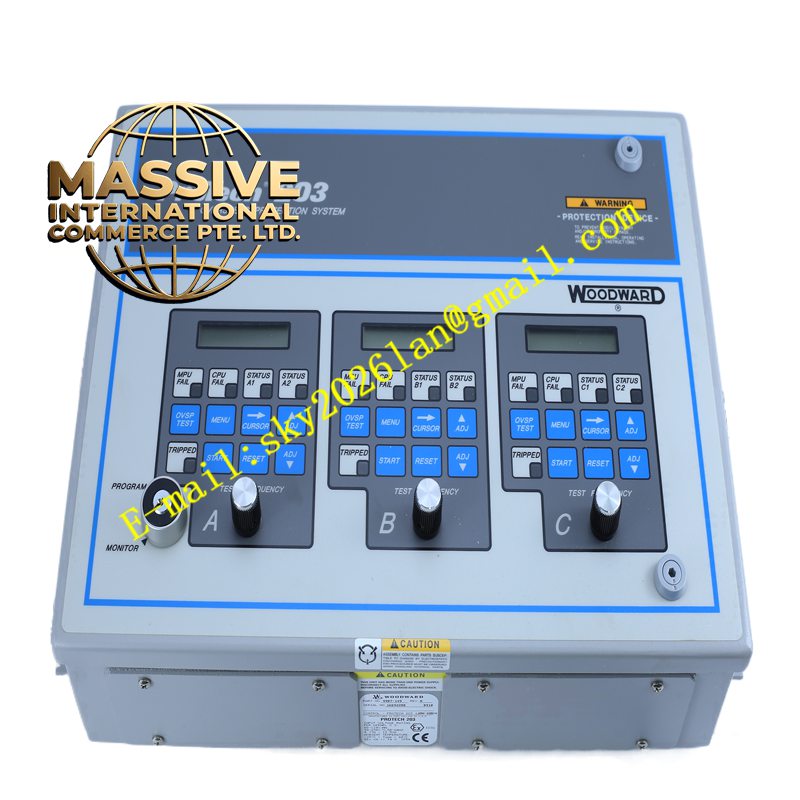
Description
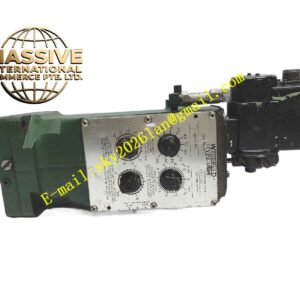
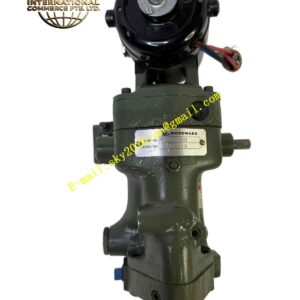
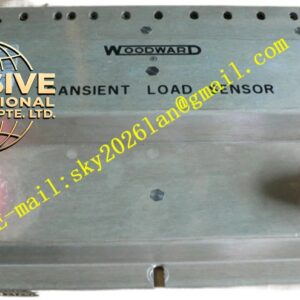
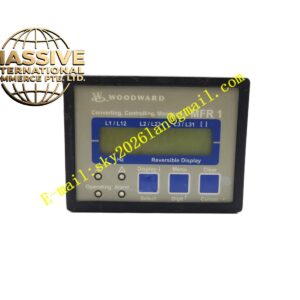
Woodward 9907-572
Technical Specifications
- Control Type: Digital microprocessor-based speed/load control.
- Input Signals: Multiple discrete and analog inputs for turbine monitoring.
- Output Signals: Analog outputs for valve actuation and discrete outputs for alarms.
- Communication: Serial communication for DCS integration.
- Power Supply: Regulated DC power with protection.
- Operating Temperature: Industrial temperature range.
Functional Features
- Precision Governing: Advanced PID algorithms for tight speed regulation.
- Load Management: Load limiting and load sharing capabilities.
- Safety Protection: Comprehensive turbine protection suite.
- Diagnostics: Self-diagnostics and fault indication.
- Flexible Configuration: Field-programmable parameters.
Application Scenarios
- Industrial Steam Turbines: Speed and load control for process turbines.
- Gas Turbines: Governing for industrial gas turbines.
- Turbo-Expanders: Speed control for expansion turbines.
- Mechanical Drive: Compressor and pump drive turbines.
Performance Parameters
- Speed Accuracy: ±0.25% steady-state.
- Load Sharing: ±5% accuracy.
- Response: Fast transient recovery.
Material Composition
- Enclosure: Industrial-grade metal enclosure.
- Electronics: Conformal-coated PCBs.
- Connectors: Industrial-grade connectors.
Structural Characteristics
- Form Factor: Compact modular design.
- Mounting: Panel or rack mount.
- Indicators: LED status indicators.
Working Principle
The module processes speed and load feedback signals, executes control algorithms, and outputs actuator commands to maintain desired operating parameters. It continuously monitors for fault conditions and initiates protective actions when necessary.
Installation Requirements
- Environment: Install in clean, dry, temperature-controlled environment.
- Wiring: Follow proper wiring practices with shielding.
- Grounding: Ensure proper equipment grounding.
Usage Precautions
- Configuration: Verify all parameters before operation.
- Testing: Perform functional tests before commissioning.
- Maintenance: Follow scheduled maintenance procedures.