


Description
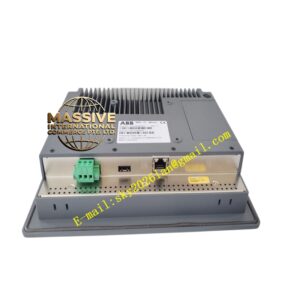
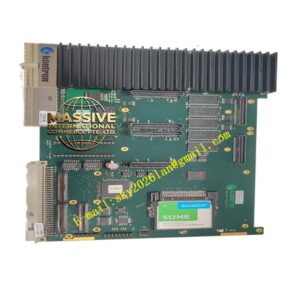
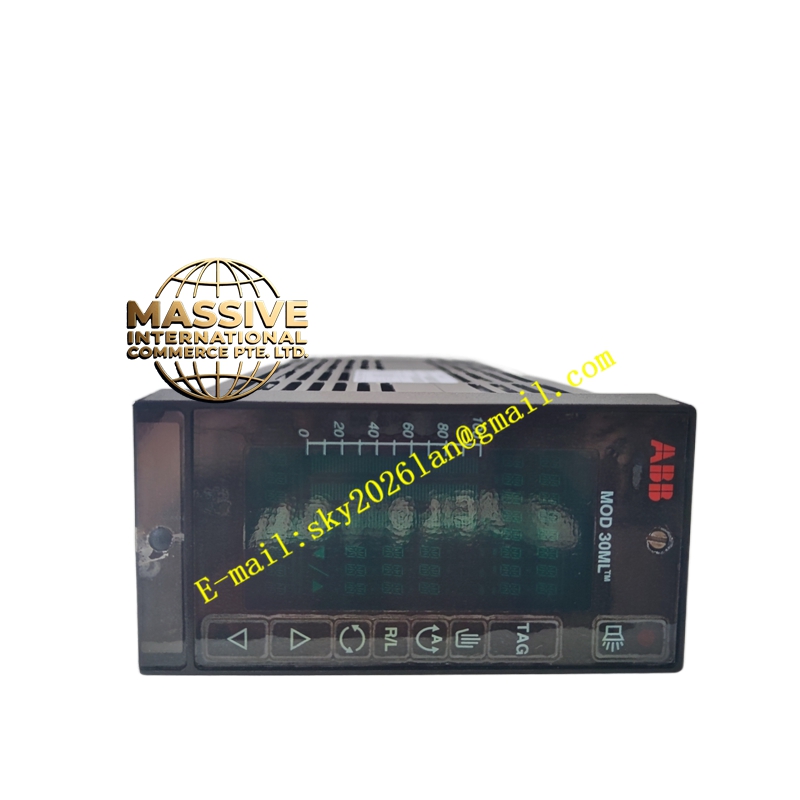
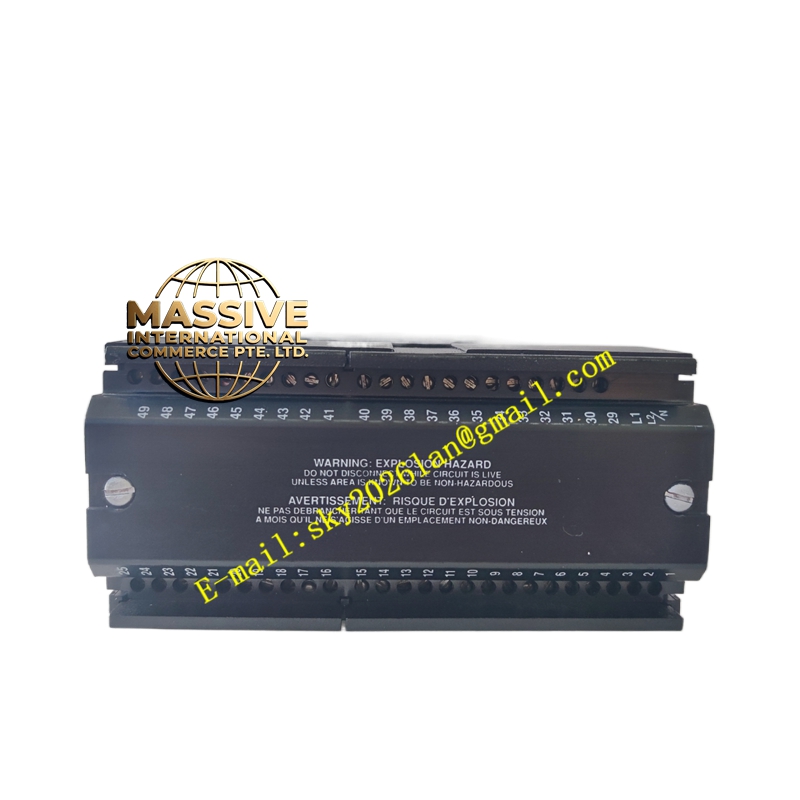
ABB 1800RZ21100A
Technical Specifications
- Analog Input Capacity: Supports 8 channels for analog detection and data acquisition.
- Analog Output Capacity: Provides 8 channels for analog signal output to control external actuators.
- System Expandability: Seamlessly integrates with JMDM-EX2021 motion control expansion boards and JMDM-EX20DIOMT/MR digital I/O expansion boards.
- Digital I/O Scaling: Capable of expanding up to 100 digital input/output points when combined with compatible digital expansion modules.
- Communication: Features built-in serial port monitoring for real-time diagnostics and parameter adjustments.
Functional Features
- Versatile Sensor Integration: Directly interfaces with a wide variety of analog sensors, including temperature, pressure, and displacement sensors.
- Precision Actuator Control: Outputs analog signals to accurately regulate proportional valves, frequency converters, DC motors, and industrial lasers.
- Advanced Motion Control: When paired with the JMDM-EX2021 expansion board, it constructs multi-axis stepper and servo motion control systems as well as precise positioning systems.
- Large-Scale System Architecture: Integrates with digital I/O expansion boards to build massive distributed control systems supporting up to 100 digital I/O points.
- Programmable Logic: Fully programmable to adapt to specific industrial process requirements and customized control loops.
Application Scenarios
- Industrial Process Automation: Continuous monitoring and control of manufacturing processes involving temperature, pressure, and fluid dynamics.
- Multi-Axis Motion Control: Precision positioning systems, robotic arms, and automated assembly lines requiring synchronized servo or stepper motor control.
- Actuator Regulation Systems: Applications requiring precise modulation of proportional valves, variable frequency drives, and DC motor speed controls.
- Large-Scale Distributed I/O Networks: Expanding control capabilities across extensive factory floors or remote monitoring stations.
Performance Parameters
- Control Precision: High-resolution analog-to-digital and digital-to-analog conversion ensuring accurate sensor reading and actuator response.
- Processing Speed: Fast execution cycle for real-time analog signal processing and multi-axis coordination.
- Reliability: Industrial-grade stability designed for continuous 24/7 operation in harsh manufacturing environments.
- Signal Integrity: Robust analog signal conditioning to minimize noise interference from surrounding electrical equipment.
Material Composition
- Enclosure: High-strength, flame-retardant industrial plastic or metal housing designed for DIN rail mounting.
- Internal Circuitry: Multi-layer printed circuit board (PCB) utilizing high-grade electronic components, precision resistors, and integrated circuits.
- Connectors: Gold-plated or tin-plated industrial-grade terminal blocks and pin headers to ensure corrosion resistance and reliable electrical contact.
- Protective Coatings: Internal PCBs feature conformal coating to protect against moisture, dust, and chemical vapors.
Structural Characteristics
- Modular Design: Compact form factor allowing for dense packing within control cabinets.
- Expansion Interface: Dedicated backplane or side-mount connectors for seamless attachment of motion control and digital I/O expansion boards.
- Status Indicators: Integrated LED indicators for power status, communication activity, and channel diagnostics.
- Thermal Management: Optimized component layout and ventilation slots to dissipate heat generated during high-load processing.
Working Principle
The module operates by continuously scanning its 8 analog input channels, converting physical signals (such as 4-20mA or 0-10V) from sensors into digital data. An internal microprocessor executes the user-programmed control logic to determine the appropriate response. It then converts the processed data back into analog signals on its 8 output channels to drive external devices. When connected to expansion boards, it acts as a central processing node, managing digital I/O states and coordinating multi-axis motion commands via high-speed internal bus communication.
Installation Requirements
- Mounting: Securely mount the module on a standard DIN rail within a NEMA-rated or IP-rated control cabinet.
- Wiring: Use shielded twisted-pair cables for all analog signal connections to prevent electromagnetic interference (EMI).
- Grounding: Ensure a solid, dedicated ground connection to the module’s grounding terminal to eliminate ground loops and signal noise.
- Clearance: Maintain adequate spacing around the module as specified in the manual to ensure proper airflow and cooling.
- Expansion Alignment: Carefully align and secure expansion boards to the main module’s connectors before tightening mounting screws.
Usage Precautions
- Power Supply: Always verify that the supplied voltage matches the module’s rated specifications before powering on to prevent catastrophic damage.
- Hot-Swapping: Do not insert or remove expansion boards or wiring while the system is energized unless explicitly designed for hot-swapping.
- Signal Limits: Never exceed the maximum voltage or current ratings on the analog input/output channels to avoid destroying internal circuitry.
- Environmental Protection: Keep the module away from direct sunlight, excessive vibration, and corrosive gases.
- Software Configuration: Always back up the control logic and parameter configurations before performing firmware updates or major system modifications.