


Description
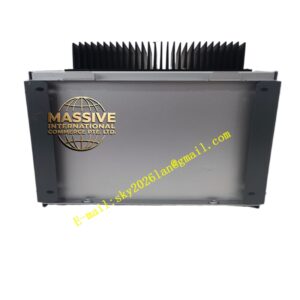
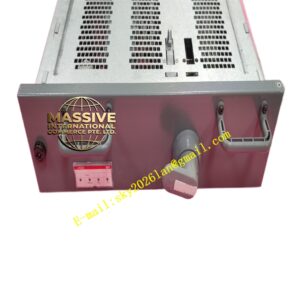
ABB 3BHB026587R0001
Technical Specifications:
- Module Type: Digital Relay Output (DO) Module.
- System Compatibility: ABB DCS and Industrial Control Systems.
- Output Configuration: Multiple isolated relay channels for independent switching.
- Power Supply: Standard industrial DC power bus with internal voltage regulation.
- Communication: High-speed backplane interface for deterministic data exchange.
Functional Features:
- Versatile Switching: Capable of switching both AC and DC loads, making it highly adaptable for various industrial applications.
- Electrical Isolation: Provides complete galvanic isolation between the control logic and field circuits to protect sensitive controllers from voltage spikes and ground loops.
- Status Indication: Equipped with front-panel LED indicators to provide immediate visual feedback on the energized/de-energized state of each relay channel.
- Fault Diagnostics: Features built-in self-diagnostics to detect open coils, contact welding, or communication failures.
Application Scenarios:
- Actuation of solenoid valves in hydraulic and pneumatic control systems.
- Control of motor starters, contactors, and industrial pumps.
- Alarm annunciation and indicator lamp control.
- Safety interlocks and permissive logic in critical process control.
Performance Parameters:
- Contact Rating: High-capacity contacts rated for continuous industrial switching and high inrush currents.
- Response Time: Fast mechanical actuation and release times for real-time control responsiveness.
- Mechanical Life: High-cycle rated relays ensuring long-term operational reliability in continuous duty environments.
- Signal Integrity: Optimized internal circuitry to minimize electromagnetic interference (EMI) during switching events.
Material Composition & Structural Characteristics:
- Enclosure: Ruggedized industrial housing providing IP20 protection against dust and solid objects.
- PCB Assembly: Multi-layer printed circuit board with conformal coating to resist moisture, corrosive gases, and thermal stress.
- Relay Components: Industrial-grade electromechanical relays with silver-alloy contacts for low contact resistance and high wear resistance.
- Terminals: Secure screw-type or spring-clamp terminal blocks for reliable and vibration-resistant field wiring.
Working Principle:
The module receives digital control commands from the central controller via the backplane bus. Internal driver circuits energize the relay coils based on these commands, generating a magnetic field that mechanically closes or opens the contact points. This action switches the external high-power load circuit. Diagnostic circuits continuously monitor the coil current and contact feedback to ensure operational integrity.
Installation Requirements:
- Load Verification: Always verify that the connected load does not exceed the relay’s maximum voltage and current ratings.
- Inductive Protection: Install flyback diodes or snubber circuits across inductive loads to protect relay contacts from arcing and premature wear.
- Wiring Standards: Use appropriately sized conductors and ensure proper torque on terminal screws to prevent hot spots.
- Mounting: Securely mount the module in the designated chassis slot and ensure the backplane connectors are fully seated.
Usage Precautions:
- ESD Protection: Always use electrostatic discharge (ESD) precautions when handling or installing the module to prevent damage to internal microelectronics.
- Maintenance: Periodically inspect relay contacts for pitting or carbon buildup, and replace the module if contact welding is detected.
- Safety: Always de-energize the field circuit before performing any wiring modifications or module replacements.
- Thermal Management: Ensure adequate ventilation within the control cabinet to dissipate heat generated by continuous relay operation.