


Description
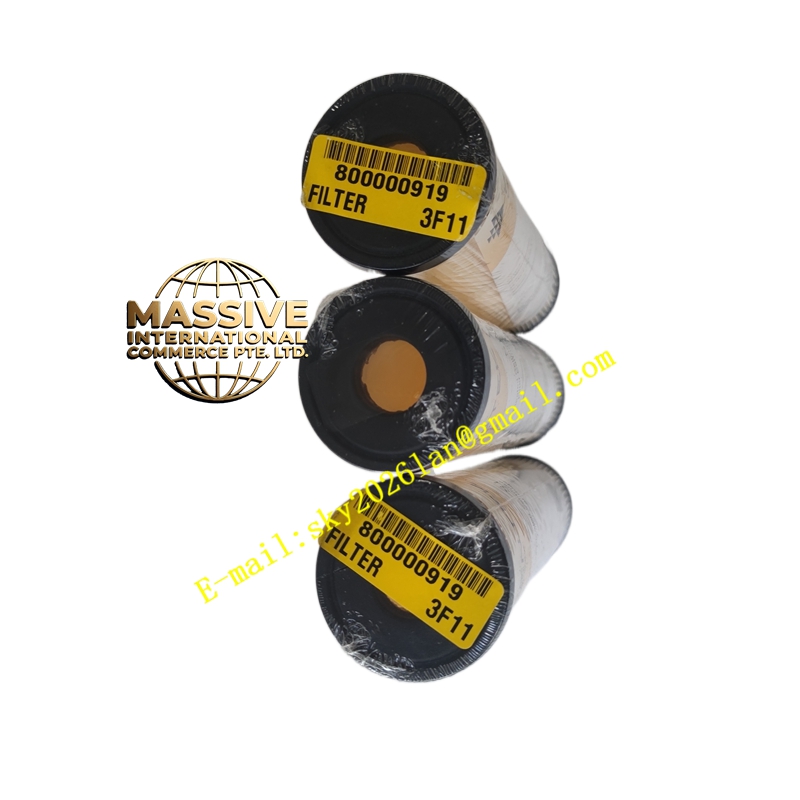
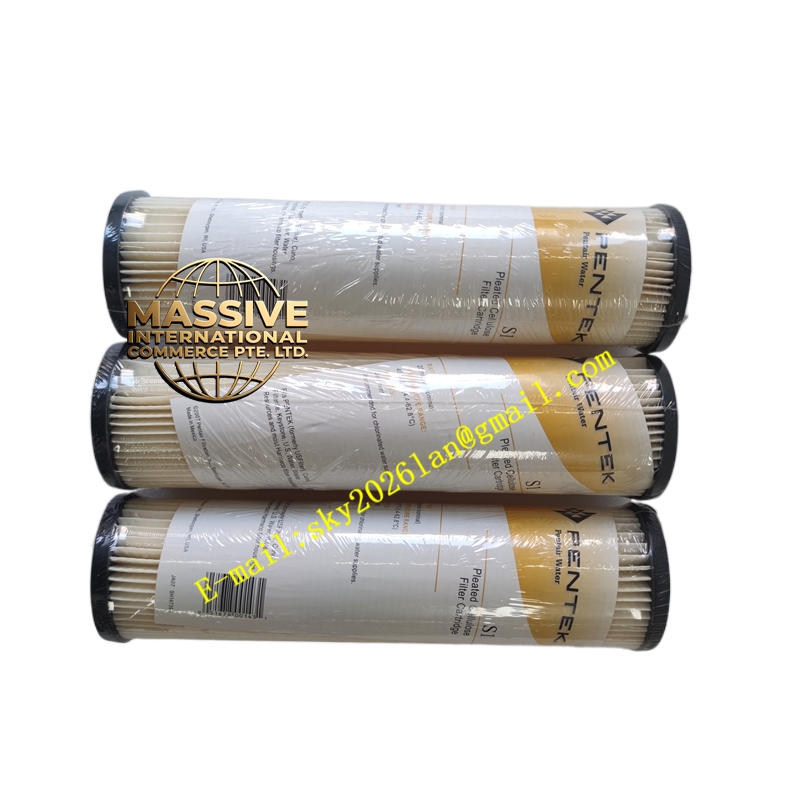
ABB CARTRIDGE20UM5
Technical Specifications
| Parameter | Value / Description |
|---|---|
| Filtration Rating (Nominal) | 20 µm (nominal — ≥85–90 % efficiency for particles ≥20 µm per manufacturer test) |
| Cartridge Length | 9¾″ / 10″ standard (248–254 mm actual) |
| Outer Diameter (OD) | 2.38″ – 2.50″ (60–63.5 mm) |
| Inner Diameter (ID / Center Bore) | 1.00″ (25.4 mm) — Double Open End (DOE) |
| Filter Media | 100 % Virgin Polypropylene, melt-blown gradient-density fibers, no binders |
| End Caps / Netting / Core | Polypropylene (all-polypropylene construction, coreless or PP center core) |
| Maximum Operating Temperature | 140 °F (60 °C) continuous |
| Maximum Operating Pressure | 125 psi (8.6 bar) static @ ambient temp.; recommended change-out ΔP = 15–30 psid (1.0–2.1 bar) |
| Initial Pressure Drop | < 0.5–1.0 psi @ 5 GPM (19 L/min) typical clean water flow |
| Recommended Flow Rate | 1–5 GPM (3.8–19 L/min) depending on viscosity and desired service life |
| pH Compatibility | pH 2 – pH 12 (polypropylene resistant to most acids, bases, salts) |
| Certifications / Compliance | NSF/ANSI Standard 42 (material safety for drinking water contact); FDA 21 CFR 177.1520 (food-contact grade PP) |
| Typical Service Life | 1–6 months depending on influent turbidity and flow — replace when ΔP reaches ~15 psi |
Functional Features
- Gradient Density Depth Filtration: Fibers are spun with decreasing pore size from outer surface (coarse ~50–70 µm) to inner core (fine ~20 µm nominal), providing high dirt-holding capacity and progressively finer filtration through the media thickness.
- No Chemical Additives: Entirely thermal-bonded polypropylene — will not leach extractables, impart taste, odor, or color to filtrate.
- Broad Chemical Resistance: Compatible with most aqueous solutions, mild acids/alkalis, alcohols, and many organic solvents (except strong oxidizers / chlorinated aromatics at elevated temperature).
- Universal Housing Fit: Standard DOE configuration fits all major brands of 10-inch filter sumps (Pentek, GE, Culligan, Watts, etc.) used in ABB analyzer sample conditioning panels.
- Low Initial Pressure Drop: Maintains system flow with minimal head loss when new, preserving pump/valve performance downstream.
Application Scenarios
- ABB Analytical Instrument Sample Conditioning: Pre-filtration of process water / wastewater samples entering ABB AX400 / AX460 / Aztec pH, conductivity, or turbidity analyzers to protect sensor cells from fouling.
- Industrial Process Water Pretreatment: Upstream of RO membranes, ion-exchange resin beds, ultrafiltration skids — protects expensive membrane elements from particulate blinding.
- Cooling / Seal Water Filtration: Removes debris from closed-loop cooling water feeding variable frequency drives (VFDs) or seal flush plans in rotating equipment.
- Food & Beverage / Pharmaceutical Utility Water: Point-of-use pre-filter for ingredient water, CIP rinse water, or boiler feedwater where 20 µm particulate removal is specified.
- General Laboratory / Pilot Plant: Protection of small-bore tubing, solenoids, and spray nozzles from pipeline rust or weld slag.
Material Composition & Structural Characteristics
- Media: Multi-layer melt-blown polypropylene microfiber mat — outer layers looser (pre-screen), inner layers denser (final retention).
- Core / Cage: Either self-supporting coreless design (fibers sintered into rigid cylinder) or integral PP center tube — both 100 % PP.
- End Caps (if present on wrapped version): Injection-molded polypropylene, heat-fused to media body.
- No Metal Parts: Fully non-corrosive, suitable for seawater / high-chloride environments within temperature limit.
- Color Coding (Typical Pentek convention): Blue end cap or band indicates 20 µm rating.
Working Principle
quid enters the filter housing and flows radially inward through the annular wall of the cartridge. Larger particles are trapped in the coarse outer fiber layers; smaller particles penetrate deeper and are captured in the finer inner matrix. This depth filtration mechanism distributes captured solids throughout the cartridge volume rather than only on the surface, resulting in higher dirt-holding capacity compared to screen or surface filters. As the media loads, differential pressure increases — indicating the need for replacement before the pressure drop adversely affects upstream pump performance or downstream flow.