


Description
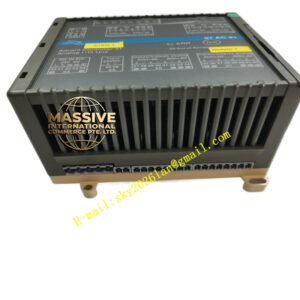
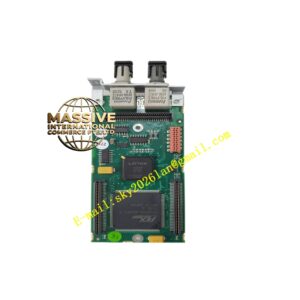
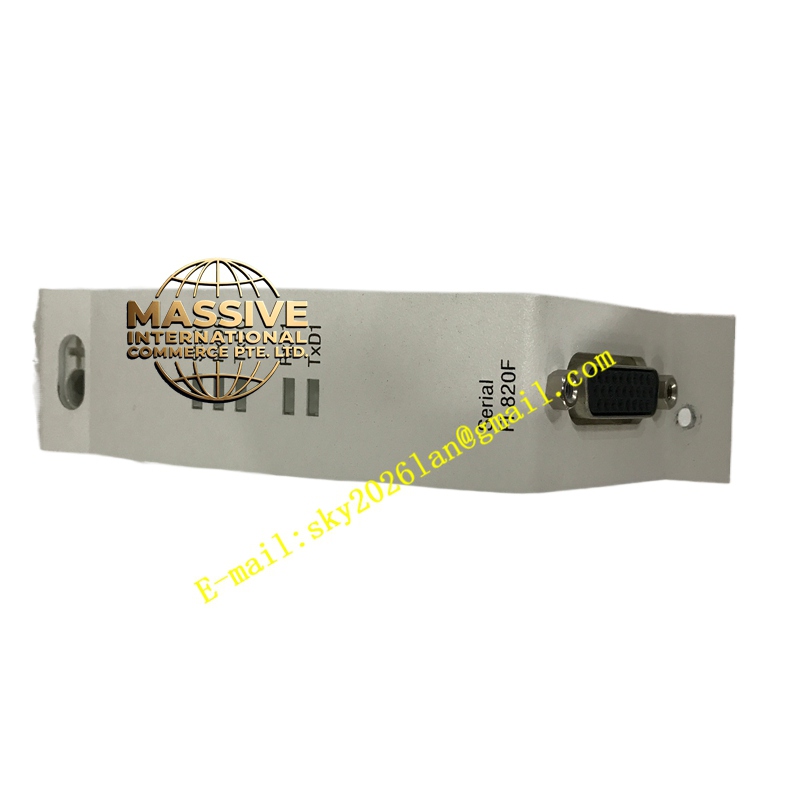
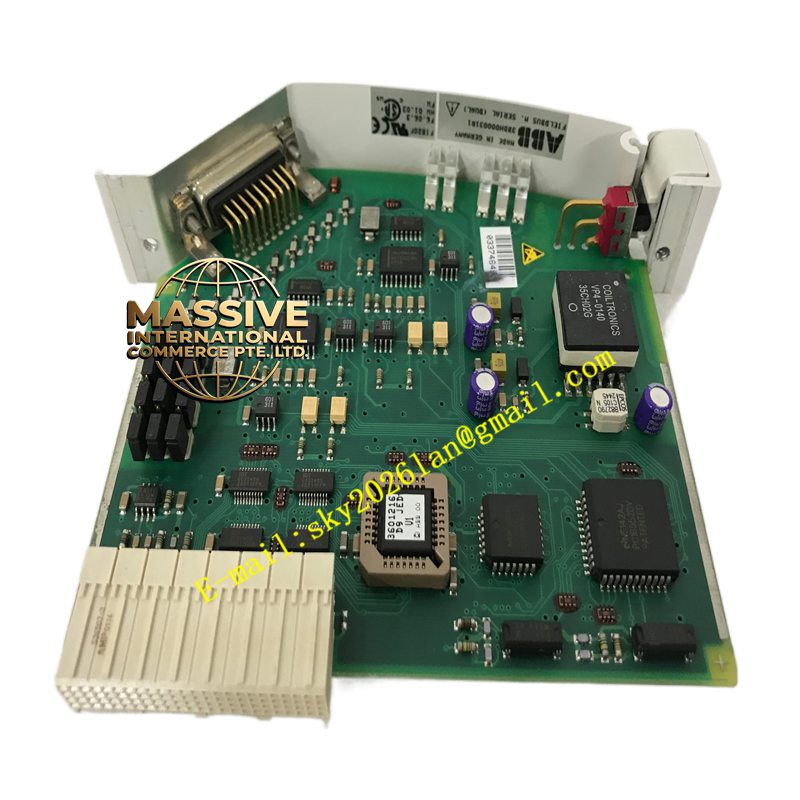
ABB FI820F
Technical Specifications:
- Supported Protocols: PROFIBUS DP, Modbus, or other standard industrial fieldbuses.
- Baud Rate: Configurable up to 12 Mbps for PROFIBUS DP.
- I/O Mapping: Supports cyclic and acyclic data exchange.
- Operating Voltage: 24 V DC supply from the I/O bus or external source.
Functional Features:
- Protocol Translation: Converts internal I/O bus data into standard fieldbus telegrams.
- Hot-Swappable: Supports module replacement without shutting down the fieldbus network.
- Advanced Diagnostics: Provides detailed bus status, error counters, and node identification via LEDs and software.
- Redundancy Support: Compatible with redundant fieldbus configurations for high-availability systems.
Application Scenarios:
- Distributed I/O stations in water treatment plants and power generation facilities.
- Integration of ABB I/O into third-party control architectures.
- Remote monitoring and control in oil and gas pipelines.
Performance Parameters:
- Deterministic Response: Guaranteed cyclic update times for real-time control.
- Node Capacity: Supports maximum network specification limits for connected I/O modules.
Material Composition & Structural Features:
- Enclosure: Rugged industrial housing with high EMI shielding.
- Connectors: Standard DB9 fieldbus connector and internal backplane interface.
Working Principle:
The module continuously polls the local I/O bus for process data, packages it into fieldbus frames, and responds to master controller requests. It also processes acyclic commands for parameterization and diagnostics.
The module continuously polls the local I/O bus for process data, packages it into fieldbus frames, and responds to master controller requests. It also processes acyclic commands for parameterization and diagnostics.
Installation Requirements:
- Configure the node address and baud rate via hardware DIP switches or software tools.
- Install termination resistors at both physical ends of the fieldbus segment.
Usage Precautions:
- Use certified fieldbus cables with proper shielding and grounding.
- Ensure no duplicate node addresses exist on the same network segment.