


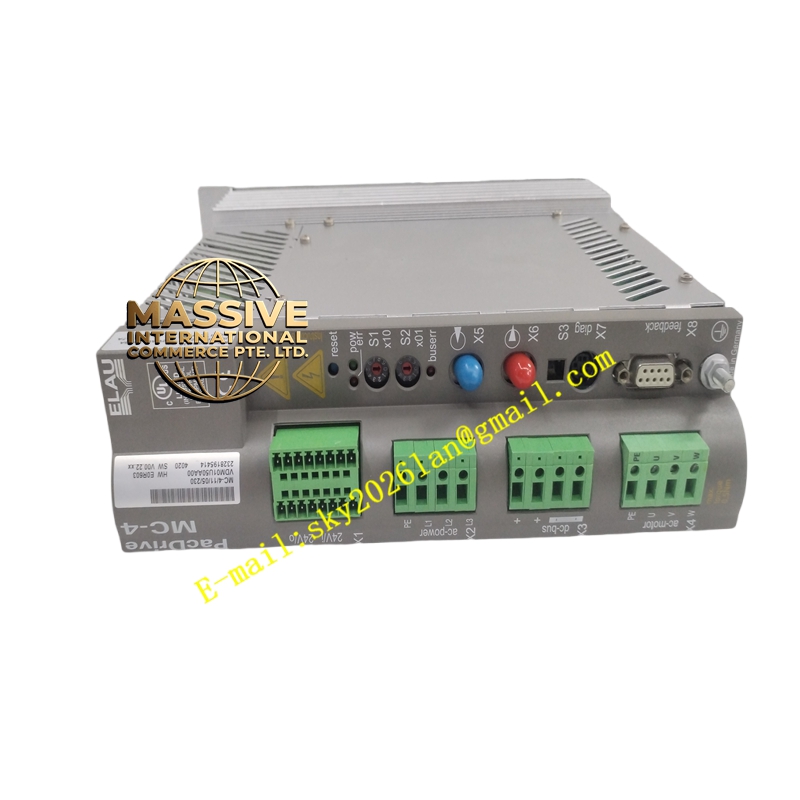
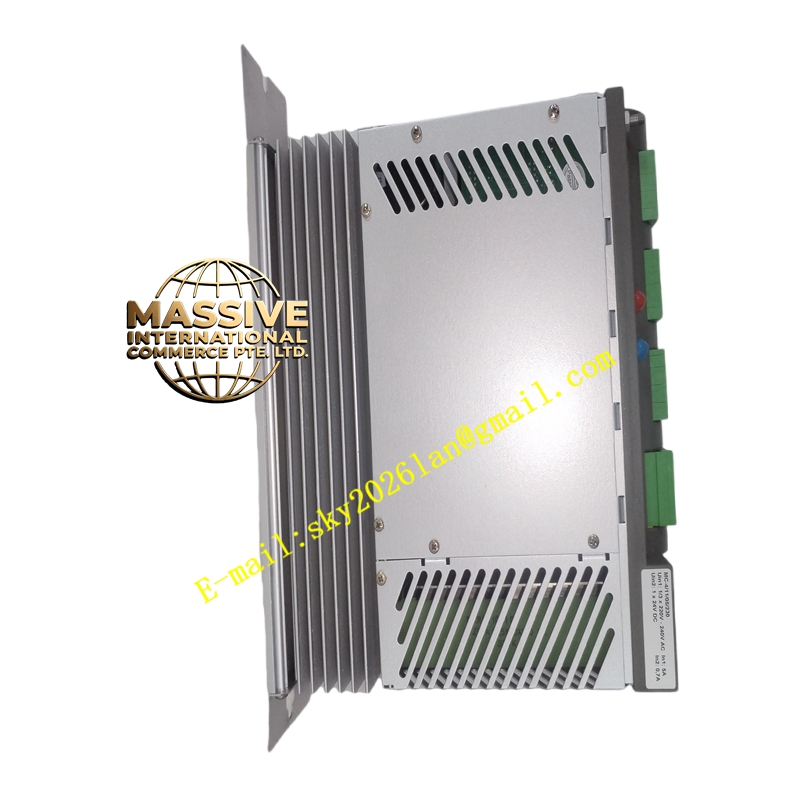
Description
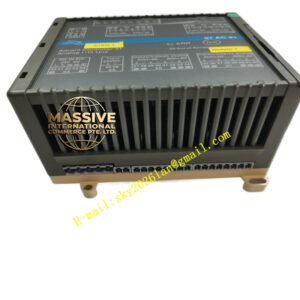
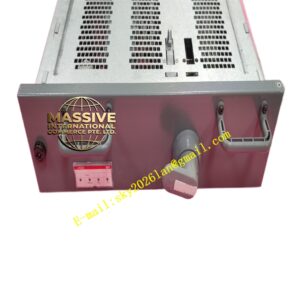
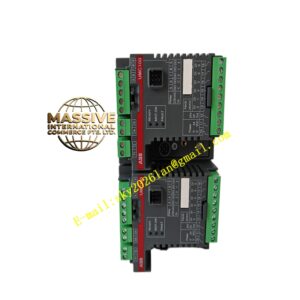
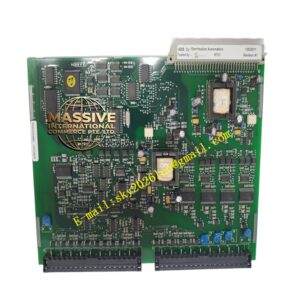
ABB MC-41105230
Technical Specifications:
- Rated Power: 5.2 kW continuous output.
- Input Voltage: Three-phase 380 V AC, 50-60 Hz.
- Output Voltage: Variable 0-480 V AC to match motor requirements.
- Control Mode: Advanced Vector Control.
- Power Factor: Greater than 0.99, minimizing reactive power draw.
- Environmental Rating: IP65 protection against dust and water jets.
- Operating Temperature: Rated for -40°C to +10°C.
Functional Features:
- High-Precision Positioning: Achieves a position accuracy of ±0.01% and an ultra-fast speed response time of 1 ms.
- Multi-Mode Control: Supports position, speed, and torque control modes to accommodate diverse motion profiles.
- Advanced Communication: Equipped with multiple industrial communication interfaces, including CANopen, RS-232, and Ethernet, for seamless system integration.
- Comprehensive Protection: Built-in hardware and software protections against over-current, over-voltage, and over-temperature faults.
Application Scenarios:
- CNC machining centers and metal cutting equipment.
- High-speed packaging and printing machinery.
- Industrial robotics and automated assembly lines.
- Precision semiconductor and electronics manufacturing.
- Medical imaging and testing equipment.
Performance Parameters:
- Dynamic Response: Rapid adjustment to changing load conditions and command signals, ensuring smooth motion trajectories.
- Signal Processing: Real-time monitoring and continuous adjustment of control strategies to maintain motion stability.
- Efficiency: High power factor and efficient switching topology reduce overall energy consumption.
- Reliability: Engineered for continuous 24/7 operation in harsh industrial environments.
Material Composition & Structural Characteristics:
- Enclosure: Rugged, compact metal housing measuring 230 x 130 x 60 mm, designed to withstand industrial vibration and impacts.
- Weight: Approximately 12 kg, reflecting its robust internal components and heat dissipation mass.
- Cooling System: Active forced-air cooling (fan) to manage the thermal load generated by the 5.2 kW power stage.
- Internal Architecture: High-density power electronics with integrated processing units and isolated I/O circuits.
Working Principle:
The MC-41105230 receives digital or analog motion commands (position, velocity, or torque setpoints) from an upper-level PLC or motion controller. Its internal microprocessor executes advanced vector control algorithms to calculate the exact phase currents required by the servo motor. It then uses high-speed power transistors (IGBTs) to synthesize a three-phase AC waveform. Simultaneously, it reads real-time feedback from the motor’s encoder to close the control loop, continuously correcting any errors in position, speed, or torque.
Installation Requirements:
- Mounting: Secure the drive to a flat, vertical metal panel using the provided mounting holes, ensuring adequate clearance for the cooling fan intake and exhaust.
- Power Wiring: Connect the three-phase input power using shielded cables. Connect the motor using shielded servo cables, ensuring the shield is grounded at both the drive and motor ends.
- Grounding: Establish a low-impedance earth ground connection to the drive’s grounding terminal to ensure EMC compliance and operator safety.
- Braking Resistor: If the application involves rapid deceleration or vertical loads, install and wire an external braking resistor to dissipate regenerative energy.
Usage Precautions:
- Thermal Management: Ensure the ambient temperature does not exceed the +10°C rating during continuous full-load operation. Provide additional cabinet cooling if necessary.
- Parameter Tuning: Perform auto-tuning routines after installation to optimize the drive’s control gains for the specific motor and mechanical load.
- Safety: Always disconnect main power and wait for the internal DC bus capacitors to fully discharge (verify with a multimeter) before performing any wiring or maintenance.
- Fault Handling: Utilize the drive’s diagnostic interface to read fault codes. Do not repeatedly reset over-current or over-temperature faults without first identifying and resolving the root cause.