


Description
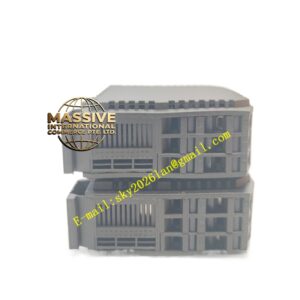
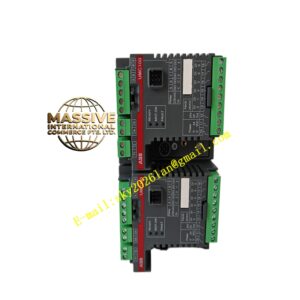
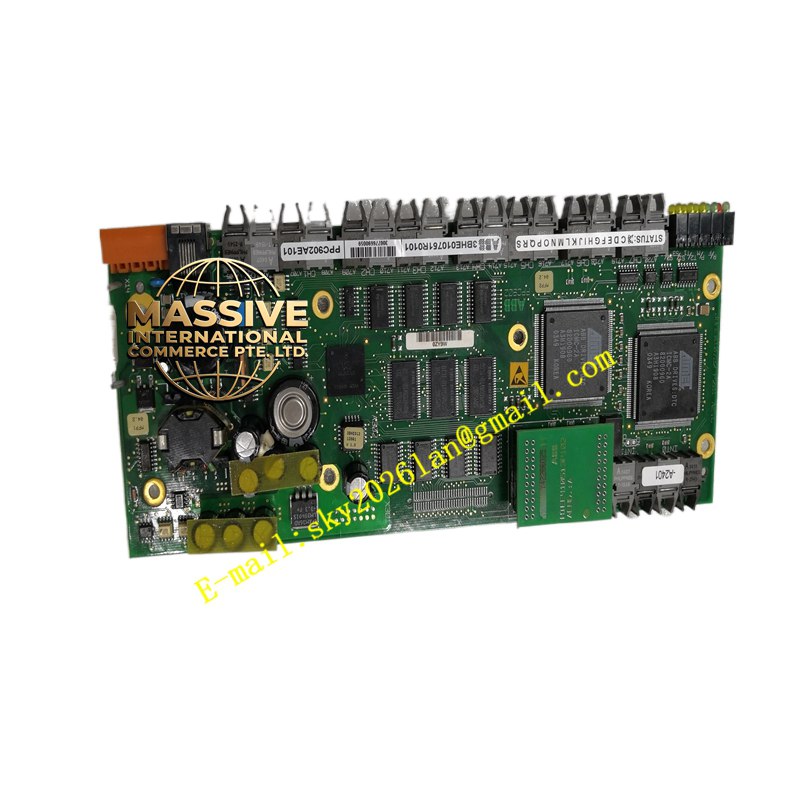
ABB RDCU-12C
- Technical Specifications:
- Processor / Algorithm: 32-bit RISC + DSP; DTC motor control (induction & PMSM/IM)
- Built-in I/O:
- 6 × DI (24 V DC sinking/sourcing selectable) — Start, Stop, Forward/Reverse, Reset, Ext Fault, Sel Mot
- 2 × DO (relay or 24 V DC transistor — Run, Ready/Fault)
- 2 × AI (0–10 V / 4–20 mA — speed ref, PID feedback) — accessible via NAIO if higher precision needed but basic AI on RDCU-12C itself
- Ethernet: 2 × 10/100 Mbps RJ45 (built-in switch) — for Modbus TCP, EtherNet/IP (adapter), PROFINET (on -PN variants), drive config via DriveWindow (USB or Ethernet)
- USB: 1 × Mini-B or Type-B (front) — for local PC connection (DriveWindow Lite / Drive Composer)
- Expansion: RDCO-04C mezzanine slot → NAIO-03F (3 AI + 2 AO), NIOC (extra DI/DO), fieldbus cards (RPBA-01, REBA-01, MFEA-01)
- Motor Support: Induction (IM), Permanent Magnet Synchronous (PMSM/PMSM-HP), Synchronous Reluctance — auto ID (static & rotating)
- Power: From drive internal SMPS (via AINT gate-driver board connection — fiber optic link to power section)
- Indicators: Run (green), Fault (red), Ready (green), Com Act (Eth/USB), Warning (amber)
- Operating Temp.: –20 °C to +60 °C (inside drive enclosure)
- Firmware: ACS880-01/04/07/31… drive firmware (e.g., fw 2.x.x) — must match DriveWindow version for upload/download
- Mounting: Inside inverter module — plugs into AINT-x2 gate-driver board header + fiber transmit/receive to IGBTs
- Functional Features:
- Dual-motor control (two parameter sets — switch via DI or fieldbus)
- Built-in PID controller (single-loop) — for process control (flow/pressure via AI)
- Safe Torque Off (STO) SIL3 via standard DI (complies with IEC 61800-5-2) — no extra safety card needed for basic STO
- Integrated Ethernet — simplifies networking; can daisy-chain drives (2-port switch)
- Energy optimizer, DC link choke monitoring, motor overtemperature input (PTC/NTC/KTY84)
- Supports PPCC (Pulse Pattern Control for low-noise / low-harmonic applications on higher frames)
- Application Scenarios:
- ACS880-01 (wall-mount <90 kW) — RDCU-12C is the entire control; user connects I/O & Ethernet to RDCU-12C directly
- ACS880-04 (book-frame modular) — RDCU-12C + RDCO-04C + NAIO/NIOC in control compartment
- ACS580 general-purpose drive — RDCU-12C variant with simplified feature set (Pump/Fan macros pre-loaded)
- Retrofit of older ACS800 (RDCU-02C) — is NOT backward-pin-compatible — requires new drive frame / retrofit as complete inverter unit
- Material & Structure / Working Principle / Installation / Precautions:
- installs inside drive — not user-serviceable as separate spare in field except as part of complete control unit swap (most users order “ACS880 control unit assembly” as spare)
- After replacement: connect USB → run DriveWindow → download matching firmware & application parameters (or upload from old unit if saved)
- Perform motor ID run (static) before first auto run — essential for DTC accuracy
- Set fieldbus parameters (if using Ethernet/IP, Modbus TCP, Profibus via card) — node address, PPO type (for Profibus), data mapping
- Precautions:
- Firmware version must be compatible with DriveWindow / Automation Builder version — check compatibility matrix
- For STO (Safe Torque Off) wiring: use dedicated STO terminals (typically DI1+DI2 as STO dual-channel) — do NOT use ordinary Start/Stop DI for safety function — wire per EN ISO 13849/ IEC 61800-5-2
- Fiber optic link to AINT must be seated — loose fiber → “Gate Driver Communication Lost” fault
- Keep backup of .dri (parameter) file & .fw file — after RDCU swap, reload params + verify before re-energizing motor contactor
- Handle ESD — RDCU contains sensitive electronics; only trained service personnel should exchange