


Description
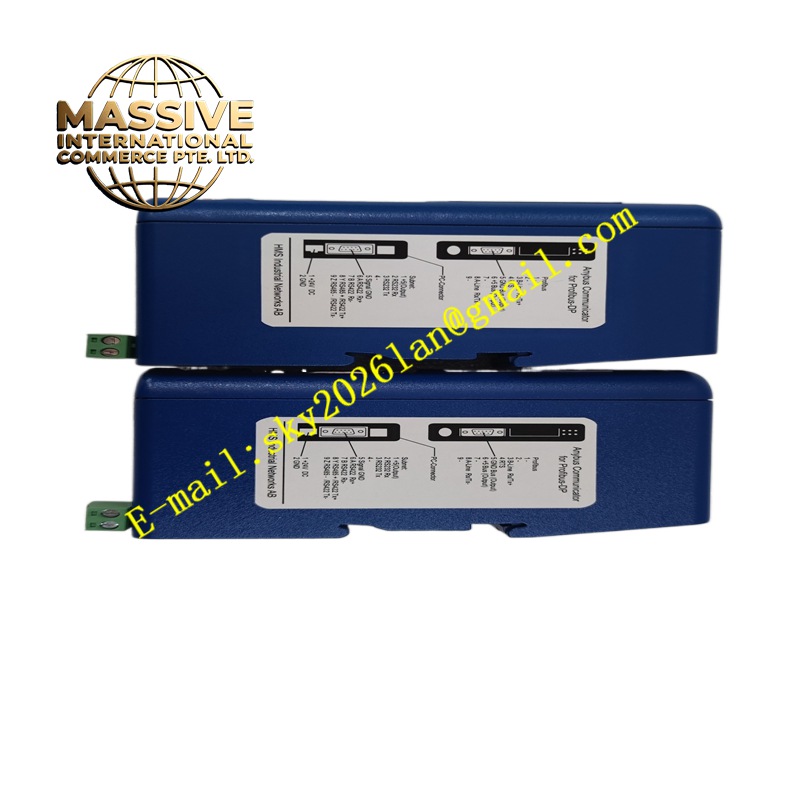
Anybus AB7000-C
Technical Specifications PROFIBUS DP slave interface; serial RS-232/RS-485 master port; power supply 24V DC with reverse polarity and short-circuit protection; DIN rail mounting; operating temperature range -20°C to +70°C; relative humidity 0 to 95% non-condensing; CE, FCC and RoHS certifications; data throughput up to 500 messages per second; PROFIBUS baud rate auto-negotiation.
Functional Features Operates as a serial master to poll serial field devices supporting Modbus RTU, ASCII, DF1 and custom query-response serial protocols. Maps serial read and write data into PROFIBUS I/O process data objects accessible by the PROFIBUS master PLC. Detects serial communication timeout, parity error and framing error and reports diagnostic status over PROFIBUS. Supports PROFIBUS address setting via rotary DIP switches. Provides LED status indicators for power, PROFIBUS link and serial port activity. Allows configuration of data mapping, serial baud rate and parity through Anybus configuration software.
Application Scenarios Retrofit of serial instruments into PROFIBUS-based PLC systems, packaging machine serial device integration, water treatment instrument network upgrade, material handling barcode scanner connection, oil and gas field serial transmitter integration into PROFIBUS DCS networks.
Performance Parameters Deterministic PROFIBUS data exchange cycle; low protocol conversion latency; robust serial communication under industrial electromagnetic interference; automatic PROFIBUS baud rate detection.
Material Composition Main PCB uses FR-4 flame-retardant multilayer printed circuit board; communication processor and transceiver chips are industrial semiconductors; serial and PROFIBUS connectors use gold-plated copper alloy contacts; outer housing is UL94-V0 rated PC/ABS flame-retardant plastic; DIN rail clip is glass-filled nylon.
Structural Characteristics Compact rectangular DIN rail enclosure. Top and bottom spring clip for standard EN 50022 DIN rail installation. Front panel carries PROFIBUS D-sub connector, serial terminal block, power terminal block and multi-color status LEDs. Rotary address switches for PROFIBUS station address setting are accessible from the front panel.
Working Principle The gateway acts as a master on the serial side and polls connected serial field devices according to configured serial protocol rules. Received serial data is stored in internal process data memory. On the PROFIBUS side, the gateway behaves as a PROFIBUS DP slave. The PROFIBUS master PLC reads input data and writes output data from the gateway’s process memory. The gateway converts PROFIBUS write commands into serial write requests to the field devices. Diagnostic counters track communication errors on both network sides.
Installation Requirements Clip the gateway onto standard DIN rail inside the control cabinet. Connect 24V DC power to the power terminal block and observe polarity. Wire serial field devices to the RS485 or RS232 terminal block. Terminate PROFIBUS bus with 120Ω resistor at the physical ends of the PROFIBUS trunk. Set PROFIBUS station address with front rotary switches. Download data mapping and serial communication parameters from Anybus configuration software.
Precautions for Use Use shielded PROFIBUS cable complying with PROFIBUS standard specifications. Maintain proper bus termination at both ends of the PROFIBUS segment. Isolate serial wiring from high-frequency inverter power cables. Do not exceed the maximum number of serial polled devices configured in the software.