


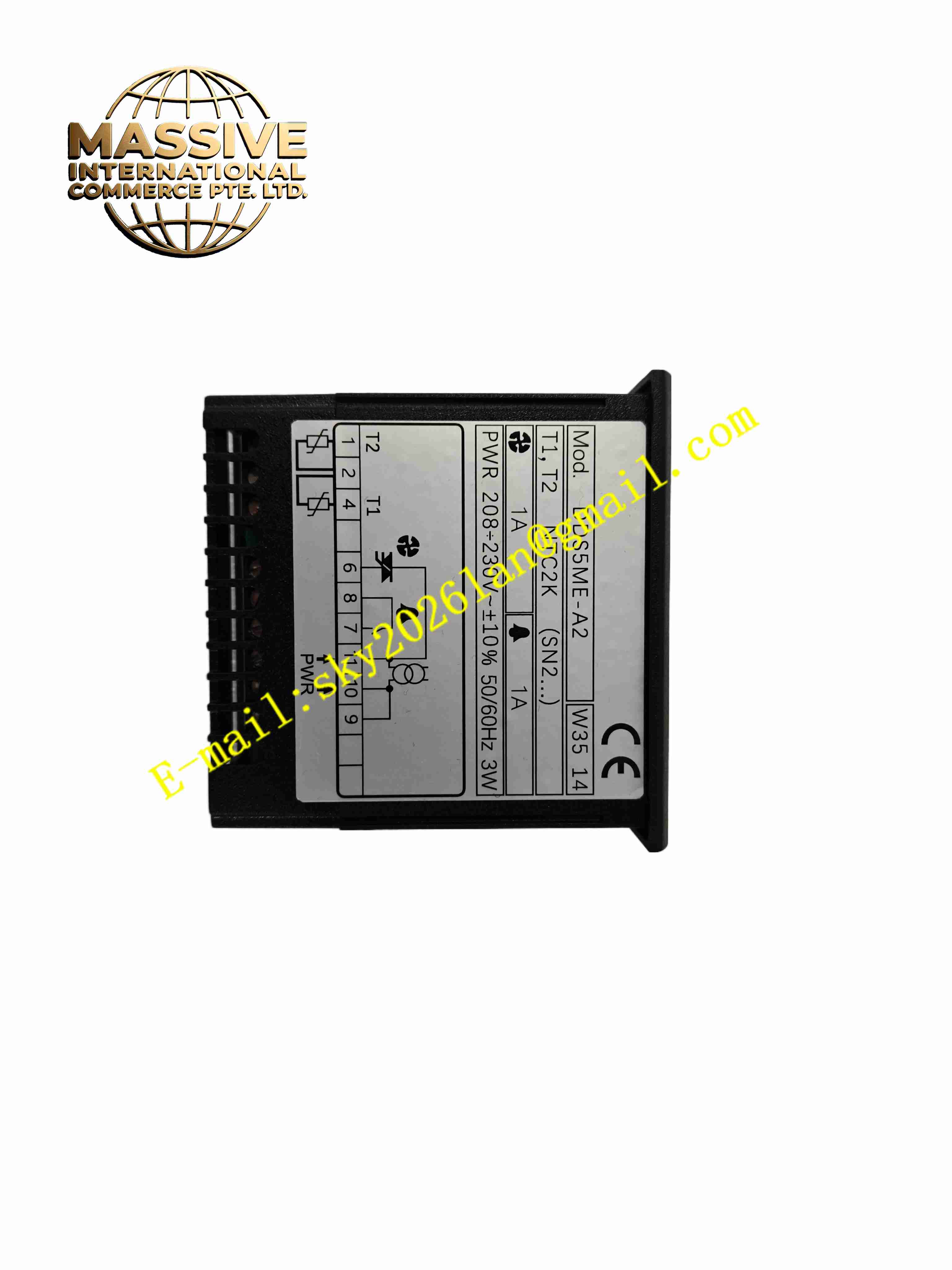
Description
Basler DDS5ME-A2
Technical Specifications:
- Voltage Sensing Mode: Single-phase RMS precision voltage sampling
- Voltage Regulation Accuracy: ±0.5% of generator rated terminal voltage across full load range
- Control Power Supply Input: 120VAC / 240VAC dual adaptive voltage input
- Excitation Output Mode: PWM high-frequency pulse width modulation power output
- Maximum Continuous Excitation Field Current: 10A DC
- Operating Ambient Temperature: -20℃ to +65℃
- Storage Temperature Range: -40℃ to +85℃
- Working Humidity Condition: 5% – 95% relative humidity, non-condensing environment
- Transient Response: Millisecond-level response under sudden load changes
Function Features:
- Precision automatic voltage regulation to compensate voltage deviation from load fluctuation
- Built-in V/Hz overflux protection limiter to prevent generator core overmagnetization damage
- Underfrequency roll-off function to lower excitation output automatically at insufficient generator speed
- Adjustable reactive power droop to achieve stable reactive load sharing for paralleled generators
- Soft field voltage build-up to eliminate voltage overshoot during generator startup
- Fast transient response to handle sudden load rise and drop
- Panel-mounted potentiometers for direct adjustment of voltage setpoint and stability gain, simple on-site commissioning
Application Scenarios:
- Diesel and gas engine driven synchronous generator sets
- Industrial and commercial standby power systems for factories, hospitals, shopping malls and data centers
- Small and medium hydropower generator excitation control
- Retrofit and replacement of old analog AVR regulators for legacy generator units
Material Composition:
- Outer Shell: High-strength die-cast aluminum alloy with electrostatic powder anti-corrosion coating
- Internal Circuit Board: FR4 fiberglass PCB with lead-free solder
- Power Core Components: High-power silicon rectifier diodes, industrial grade power MOSFETs
- Adjustment Parts: Carbon film potentiometers
- Terminals: Tin-plated copper alloy screw terminals
Structural Features:
- Compact enclosed metal casing with IP20 front panel protection
- Front panel fitted with voltage adjustment potentiometer and status indicator LED
- Screw terminal block design for voltage sensing, control power and excitation field output wiring
- Panel mounting structure, compatible with standard cabinet cutout dimensions
Working Principle: The regulator samples generator terminal voltage through potential transformer signals. The sampled voltage value is compared against an internal stable reference voltage. The generated error signal gets amplified and conditioned to adjust the PWM duty cycle of excitation power output. The excitation field current of the generator exciter is modified to maintain constant generator terminal voltage. The droop circuit adds reactive current feedback to realize reactive power sharing when multiple generators operate in parallel.
Installation Requirements:
- Install inside electrical control cabinet, keep away from high heat sources and large inductive contactors
- Reserve 50mm clearance at top and bottom of the unit for heat dissipation
- Route voltage sensing wiring separately from high-current power cables to avoid electromagnetic interference
- Install surge suppressor at sensing input terminals for lightning surge protection
- Tighten all screw terminals to the torque value specified by manufacturer
Usage Notes:
- Confirm generator rated voltage and exciter field rating before powering on
- Do not apply overvoltage to voltage sensing input terminals
- Maintain cabinet ventilation and cleanliness to prevent dust accumulation on circuit board
- Perform regular inspection of terminal tightness to avoid thermal aging
- Disconnect control power supply before opening enclosure for maintenance