



Description
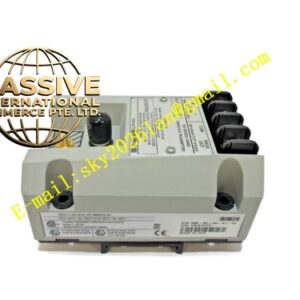
Bently 3300/20-12-01-01-00-00
Technical Specifications
- Product Series: 3300 Vibration Monitoring System
- Part Number: 3300/20-12-01-01-00-00
- Channel Configuration: Dual Channel
- Input Type: Proximity Probe (Eddy Current)
- Application Type: Axial Displacement / Thrust Position
Functional Features
- Dual Channel Redundancy: Monitors two independent axial displacement probes for enhanced reliability and voting logic.
- Precision Axial Measurement: Accurately measures the shaft’s axial position within the linear range of the proximity probe.
- Protective Alarming: Generates independent Alert and Danger alarms to initiate machinery shutdown or operator warnings when axial limits are exceeded.
Application Scenarios
Essential for protecting steam turbines, gas turbines, compressors, and pumps where axial thrust is a critical parameter, preventing catastrophic damage to thrust bearings and internal rotating components.
Performance Parameters
- Measurement Range: Typically -2.0 mm to +2.0 mm (-80 to +80 mils)
- Frequency Response: 0 Hz (DC) to 5 Hz
- Accuracy: ±1% of full scale
- Output Signal: 4-20 mA buffered outputs proportional to axial position
Material Composition
Ruggedized steel chassis with conformal-coated internal circuit boards to protect against moisture, dust, and corrosive gases in industrial environments.
Structural Characteristics
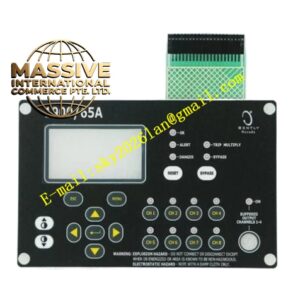
Standard 3300 rack module form factor with front-panel LED indicators for power, normal operation, alert, and danger conditions, along with front-accessible test points.
Working Principle
Receives DC and AC signals from the proximity probe, extracts the average gap (DC component) representing the shaft’s axial position, and compares it against predefined alarm setpoints.
Installation Requirements
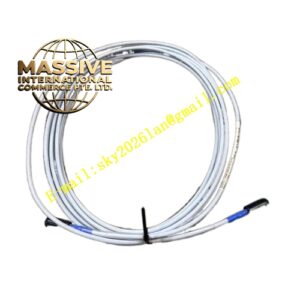
Install in a properly grounded 3300 series rack. Ensure signal cables are properly shielded and routed away from high-voltage power lines to prevent noise interference.
Usage Notes
Initial gap calibration must be performed accurately during installation. Regular verification of the thrust bearing wear limits is recommended to adjust alarm setpoints as the bearing wears over time.