


Description
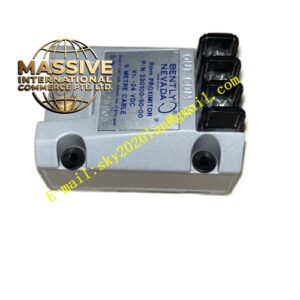
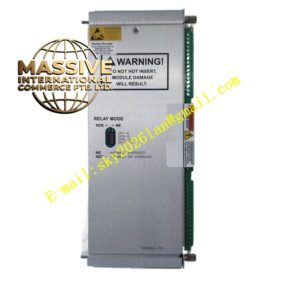
Bently 330500-02-00
Technical Specifications
- Sensor Type: Piezoelectric Velocity Sensor
- Model: Velomitor ST
- Output: Velocity (mV/mm/s or mV/in/s)
- Mounting: Stud Mount
Functional Features
- Absolute Vibration: Measures casing vibration independent of shaft motion, detecting structural looseness, bearing defects, and misalignment.
- Self-Generating: Requires no external power supply, simplifying installation and reducing wiring costs.
- Broad Frequency Range: Accurately captures vibration from low-frequency structural issues to high-frequency bearing defects.
Application Scenarios
Installed on bearing housings, gearboxes, and motor frames across power generation, petrochemical, and manufacturing facilities.
Performance Parameters
- Sensitivity: Typically 500 mV/in/s ±5%
- Frequency Range: 4.5 Hz to 5,000 Hz
- Operating Temperature: -40°C to +120°C
- Shock Limit: 50g peak
Material Composition
Stainless steel housing, piezoelectric ceramic sensing element, and integral shielded cable.
Structural Characteristics
Compact cylindrical body with a central mounting stud hole and an integrated, flexible output cable.
Working Principle
Utilizes a seismic mass and piezoelectric crystal. As the casing vibrates, the mass exerts a varying force on the crystal, generating a charge proportional to the velocity of the vibration.
Installation Requirements
Must be rigidly stud-mounted to a clean, flat, machined surface on the bearing housing. Do not use magnetic bases for permanent installation.
Usage Precautions
Ensure the mounting surface is free of paint, rust, and debris. Torque the mounting stud to the manufacturer’s specification to maintain frequency response.